
Summer care for ducks is the season where the species' advantages show and its specific risks concentrate. Ducks handle heat better than chickens — they regulate temperature through their bill and their water access, which is why a duck with a pool or pond stays productive through afternoons that shut a chicken flock down. The specific risks: water quality in warm weather (stagnant water grows pathogens faster than cold water, and ducks foul water far more than chickens do), and the fly-and-parasite load that wet duck runs attract. This page covers the duck summer: the water discipline that makes the species' heat advantage real, and the hygiene questions that come with it.
The Duck Summer Advantage — And Its Cost
| Factor | The Advantage | The Cost / Risk |
|---|---|---|
| Heat regulation | Ducks regulate temperature through bill vasculature and water contact — a duck with swimming access stays productive through heat that suppresses chickens (the water guide covers the intake ratios, which run higher for ducks) | The advantage is conditional on water access — a duck without water in heat is worse off than a chicken with shade, because the cooling mechanism requires the water |
| Water as habitat | Swimming and dabbling are behavioral needs — a pool or pond serves thermoregulation and welfare in one structure (the swimming guide covers the habitat question) | Ducks foul water far faster than chickens — summer water changes from weekly to several-times-weekly as temperatures rise; the water quality guide covers what warm, fouled water grows |
| Foraging | Ducks are effective foragers — slugs, insects, and aquatic plants (the dabbling guide covers the behavior) | Wet foraging grounds concentrate parasites — the worms guide covers the burden question that wet access amplifies |
The Duck Summer Discipline
- Water changes scale with temperature. The pool that needed changing weekly in spring needs it multiple times weekly in summer — warm, fouled water is the summer duck flock's primary health risk, not heat itself. The water quality guide covers the testing discipline; the electrolytes guide covers the stress-time supplement that pairs with heat events.
- Shade still matters — for the feed and resting hours. Ducks thermoregulate through water, but they still eat and rest in shade; the chickens' summer guide's shade hierarchy applies unchanged to the duck run.
- Evening feeding follows the summer pattern. Cool, fresh feed in the evening recovers the intake that afternoon heat suppressed — the egg profit guide's per-dozen math shows the summer dip as what it is: the ration's fixed costs over fewer dozens.
- The niacin question persists. Summer's garden abundance tempts corn-heavy supplemental feeding — the niacin guide covers the leg-weakness consequence of corn-heavy duck diets; formulated feed stays the base.
The Money Connection
Duck eggs carry premium channels (the pricing guide covers the cost-first method), and summer's production dip lands directly on the per-dozen economics the egg profit guide frames. What makes the season survivable is the species' own advantage — water access doing the thermoregulation work — purchased with the water-change labor it demands. The margin framing scales the same seasonal question from coop to commercial house.
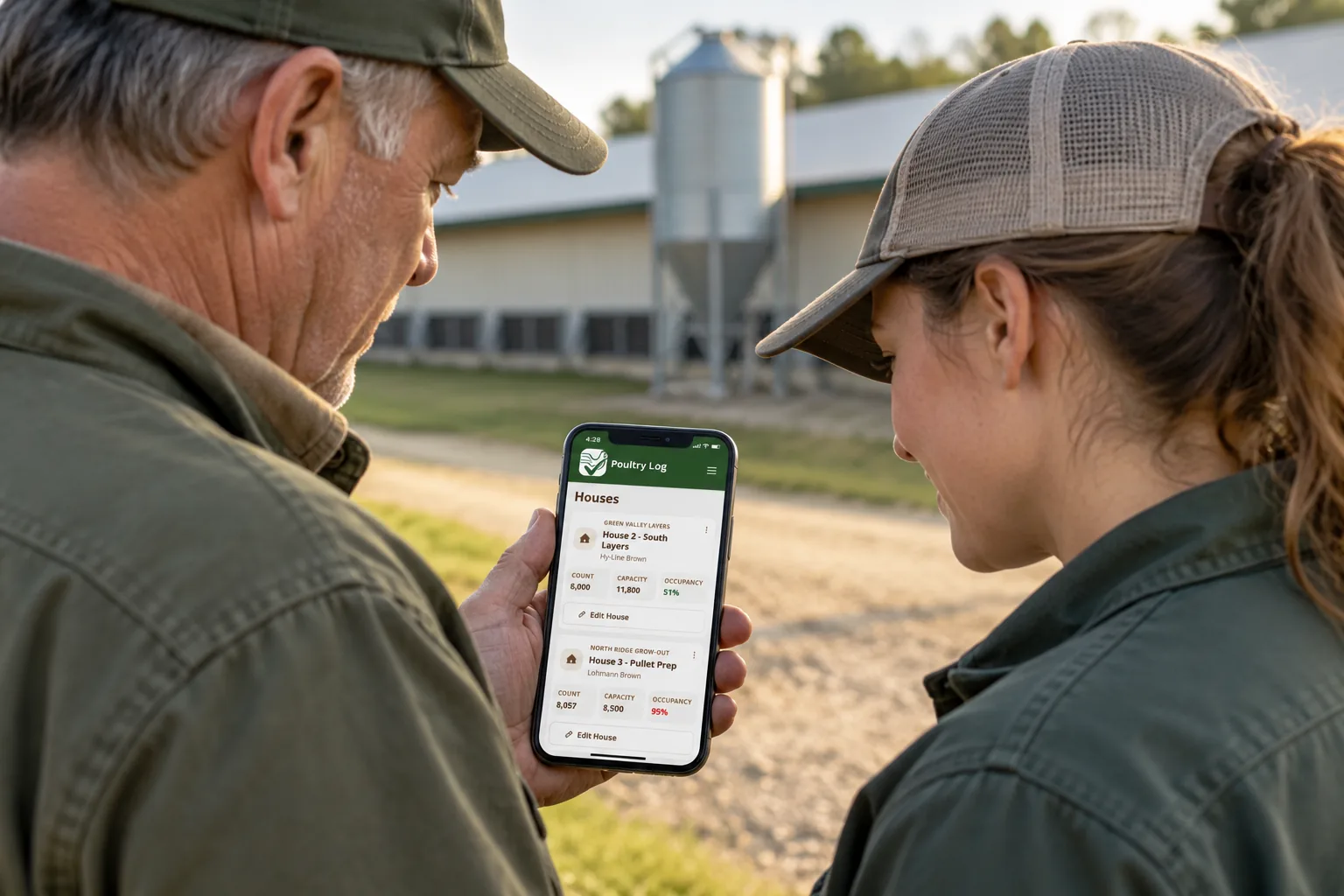
Tracking Duck Records In Poultry Log™
Feed, water, and egg records on one timeline let each summer's dip be measured against the last — whether the water expansion moved the numbers, and what the season cost per dozen. The water early-warning guide covers the pattern-reading; the profitability dashboard carries the trend across flocks.
- 2026-10-06: Comprehensive rewrite — duck summer advantage/cost table and water-change discipline section — replacing the earlier boilerplate version.
- Earlier version: short first-person note on ducks care in summer.