
Electrolytes for poultry are the minerals — sodium, potassium, chloride, and bicarbonate — that govern water balance, and they matter most exactly when the bird is losing them fastest: through panting in heat stress, through diarrhea, and through the reduced feed intake that accompanies both. A panting bird evaporates water from its respiratory tract and loses electrolytes with it; a bird with loose droppings loses them through the gut. Replacing water without replacing electrolytes can dilute what remains — which is why electrolyte programs accompany heat stress response and recovery, not just plain water. This page covers what electrolytes do, when supplementation earns its place, and how the water record connects to the decision.
What Electrolytes Do
| Electrolyte | Role | What Loss Looks Like |
|---|---|---|
| Sodium and chloride (salt) | Water balance and acid-base regulation — the pair the ration's salt line supplies (the salt guide covers the dietary baseline) | |
| Potassium | Intracellular fluid balance and nerve function — lost through panting and droppings faster than the ration replaces it under stress | |
| Bicarbonate | Acid-base buffering — panting blows off CO2 and drives the blood alkaline; bicarbonate counteracts the shift |
When Supplementation Earns Its Place
- Heat stress, active and recovering. Panting birds lose water and electrolytes simultaneously — the heat stress guide covers the response bands, and electrolytes in the water are part of the recovery protocol alongside cooling. The water guide's intake-ratio story shows why: water intake spikes hours before feed intake drops, and electrolyte demand tracks the water loss.
- Diarrhea and gut upset. Loose droppings drain electrolytes through the gut — the diarrhea guide covers the dehydration risk, and electrolyte support in the water is the standard complement while the cause is being identified.
- Feed transition periods. Ration changes (phase transitions, ingredient shifts) can transiently disturb gut water handling — some programs electrolyte the water through the transition window as insurance.
- Not a routine additive. Electrolytes in the water year-round are unnecessary for birds on adequate feed and water — the supplement earns its place at stress events, not as a default.
The Water-Record Connection
The water chart gives the age-by-age intake reference; a spike ahead of a heat event or a drop alongside loose droppings are the patterns that trigger the electrolyte decision. The water early-warning guide covers the pattern-reading method — water intake responds to problems before feed intake, weight, or visible symptoms do, which makes the water record the trigger system for electrolyte intervention. The money framing from the feed budget guide: electrolytes cost little per flock — the expensive alternative is the performance loss from untreated heat stress or dehydration, which the growth bands guide prices at catch.
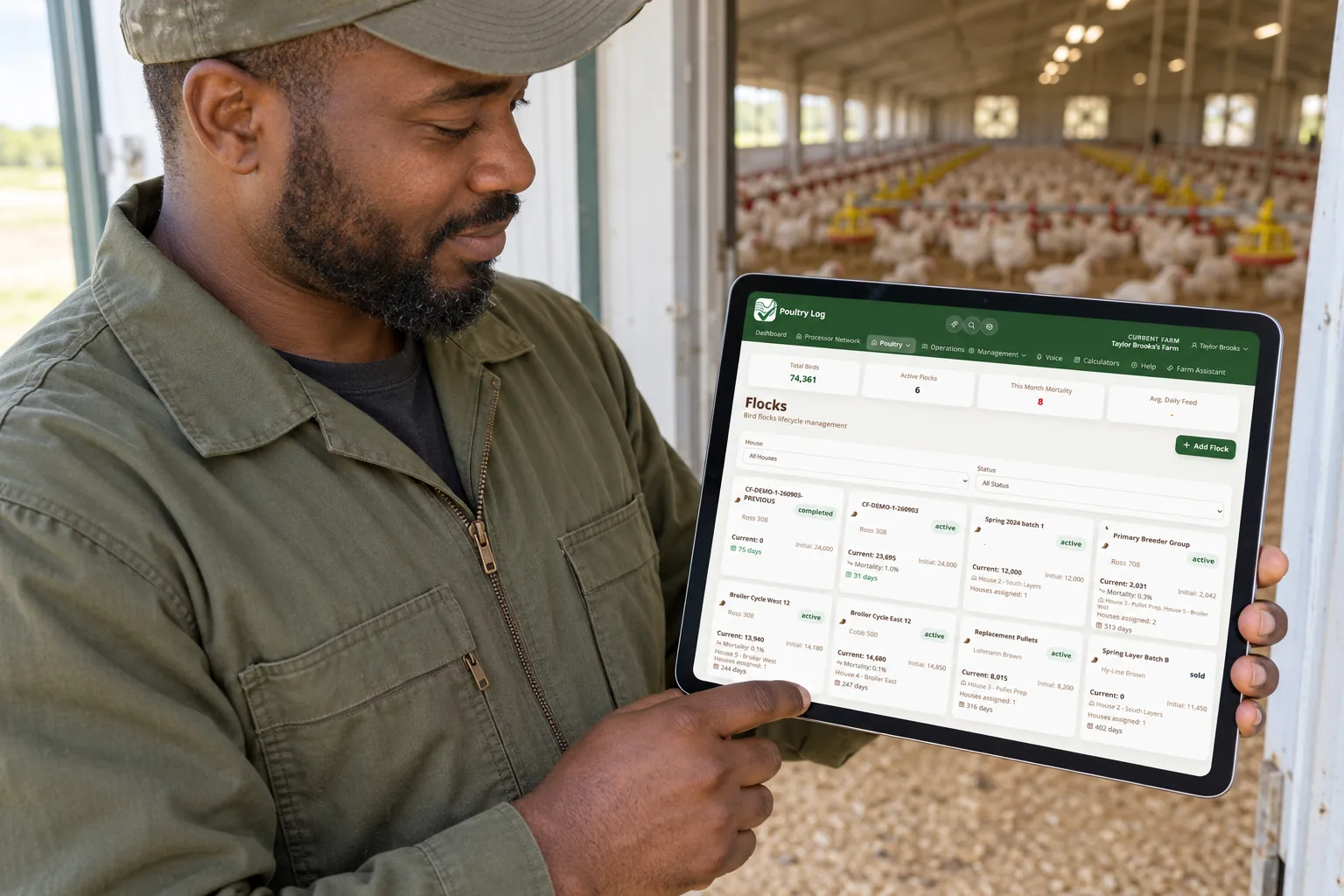
Tracking Electrolyte Programs In Poultry Log™
Water logs with time-of-day let electrolyte-period intake be read against the chart on one timeline — the record that shows whether the response worked (intake recovering, symptoms resolving) or whether the program needs escalation. The water quality guide covers the delivery side; the profitability dashboard carries what stress-response decisions did to the bottom line across flocks.
- 2026-10-06: Comprehensive rewrite — electrolyte-role table, four supplementation triggers, and water-record-as-trigger-system framing — replacing the earlier boilerplate version.
- Earlier version: short first-person note on electrolytes for poultry.