
Dabbling is the behavior ducks perform in shallow water — tipping forward with their tails up to reach food beneath the surface, filtering and sifting through mud and vegetation. It is the foraging behavior the water habitat enables: where chickens scratch the ground, ducks dabble the shallows, and the impulse is the same species-default activity pattern expressed through a different medium. The behavior's management significance: ducks that can dabble are ducks whose foraging impulse is being served (the engagement logic the foraging guide describes at chicken scale), and the water habitat that serves it is the same habitat the swimming guide covers — which makes dabbling one more reason the water-change cadence is the price of the duck advantage.
What Dabbling Does
| Function | What It Does For The Flock |
|---|---|
| Foraging through water | Tipping and sifting reaches insects, larvae, vegetation, and small aquatic life — the duck expression of the foraging impulse the foraging guide describes at chicken scale (real, partial, never a ration substitute) |
| Behavioral engagement | Dabbling is the species' default activity pattern expressed through water — a duck without shallow-water access redirects the impulse into the confinement behaviors that produce feather damage and stress (the pecking guide covers the redirection logic) |
| Water-quality connection | Dabbling exposes the flock to the water habitat directly — which makes the habitat's quality the dabbling flock's health question (the water quality guide covers what warm, fouled water grows; the summer guide covers the change cadence) |
| Forage displacement (partial) | Effective dabbling displaces supplemental feed — the feed budget guide's framing applies: genuine, partial, never a ration substitute |
Designing For Dabbling
- Shallow water with a firm bottom. Dabbling needs depth the duck can tip in — a few inches with somewhere to sift, not deep water for swimming (the swimming guide covers the deep-water half of the habitat).
- The change cadence is the cost. Shallow water fouls fastest of any habitat form — the summer guide's multiple-times-weekly cadence applies most strictly to the dabbling pan.
- Managed dabbling as enrichment. A shallow pan with forage material in it converts the behavior into scheduled engagement — the mealworm guide's scattering logic applied to the water medium.
The Money Connection
Dabbling's economics are the foraging economics through water: partial feed displacement (the feed budget guide's framing), behavioral engagement that reduces the stress-driven production losses the pecking guide describes, and the water-quality cost the habitat imposes — the change cadence is the price of the whole suite. The egg profit guide's per-dozen math absorbs both sides; the margin framing scales the same question from a backyard pan to a commercial pond system.
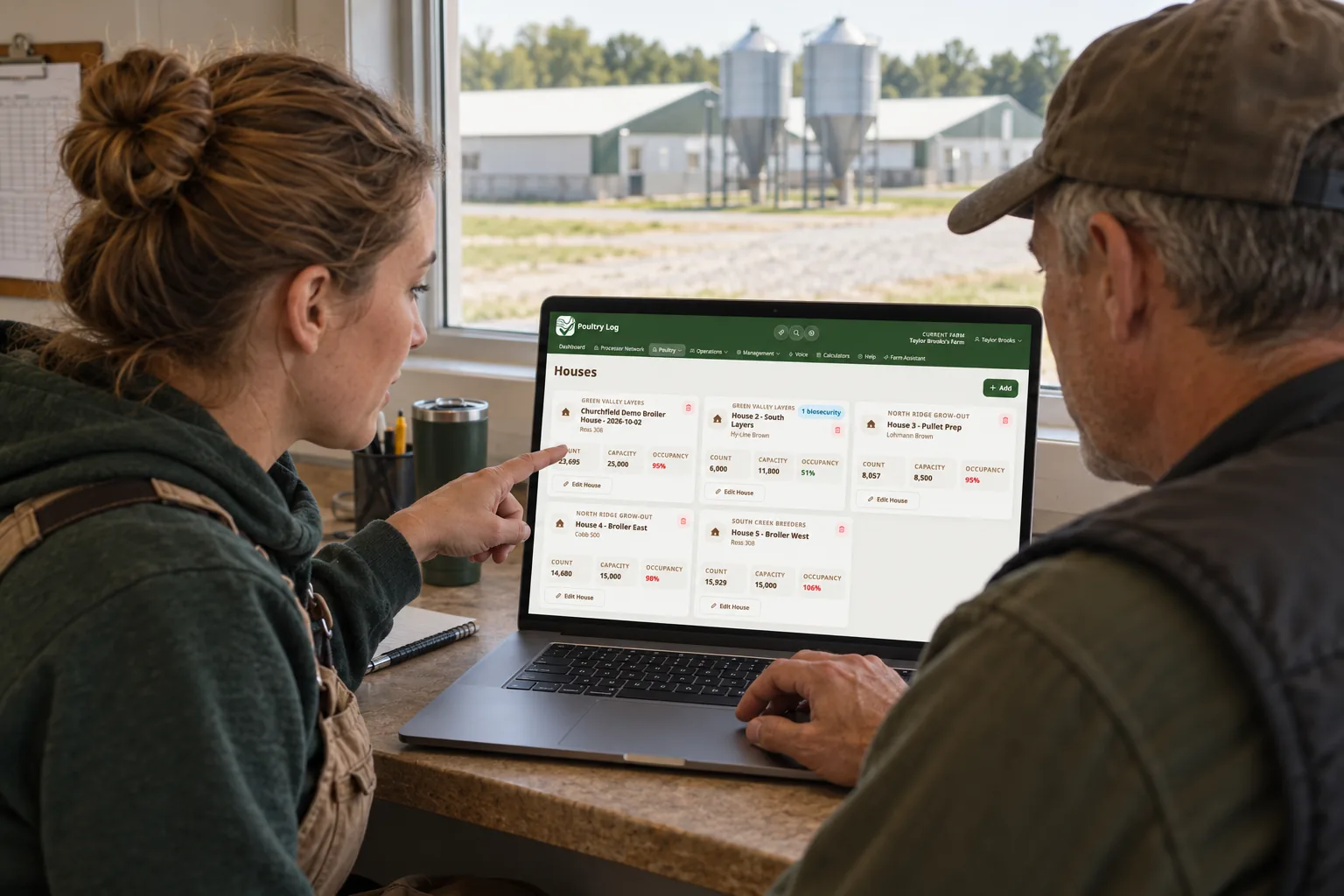
Tracking Duck Behavior In Poultry Log™
Water, feed, and egg records on one timeline let the dabbling habitat's effect be measured — whether the engagement moved the production numbers, and what the change cadence cost. The swimming guide covers the deep-water half; the preening guide covers the maintenance half; the profitability dashboard carries the trend across flocks.
- 2026-10-06: Comprehensive rewrite — function table (foraging through water, engagement, water-quality connection) and shallow-water design section — replacing the earlier boilerplate version.
- Earlier version: short first-person note on why ducks dabble.