
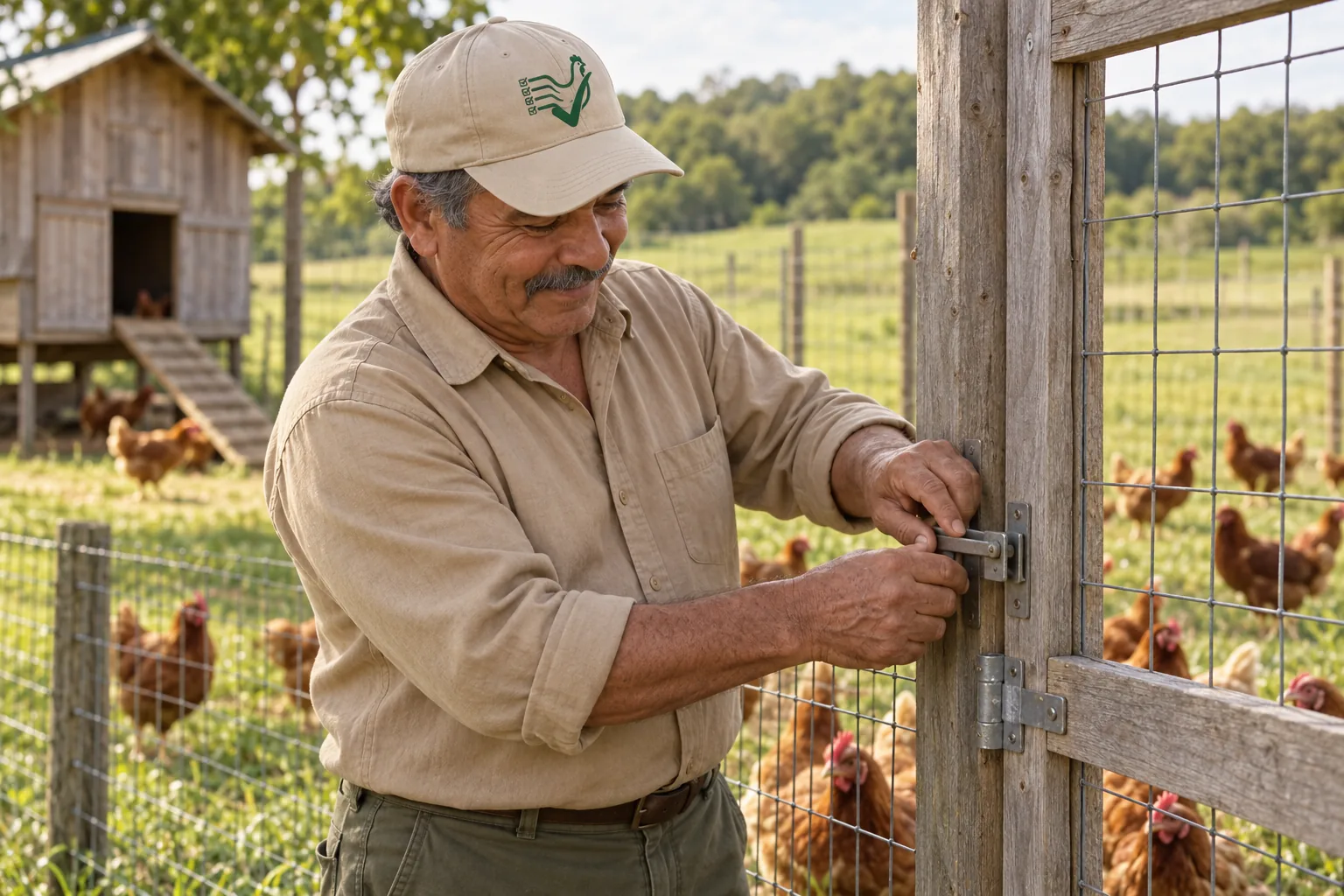
Foraging is the behavior chickens are built for — scratching through litter and soil for insects, seeds, and greens is the species' default activity, and a flock that forages effectively is a flock whose supplemental feed bill drops, whose pest pressure drops with it, and whose welfare is measurably better than a flock confined to a feeder. The honest framing: foraging is enrichment with real dietary contribution, not a complete ration substitute — and the management question is how much of the foraging impulse the run design can satisfy safely. This page covers what foraging provides, how to design for it, and where the boundary sits between enrichment and feed.
What Foraging Provides
| Contribution | What It Does For The Flock |
|---|---|
| Dietary supplement | Insects, larvae, seeds, and greens add protein, fat, and micronutrients — real but partial; the protein guide covers why the formulated base stays non-negotiable (the treats guide covers the boundary the same way) |
| Pest reduction | A foraging flock works through larvae, beetles, and grubs — the pest-control connection that makes foraging an economic practice, not just a welfare one |
| Behavioral engagement | Foraging is the species' default activity pattern — a flock that cannot forage redirects the impulse into pecking (the pecking order guide covers the feedback loop; the dust bathing guide covers the companion behavior) |
| Cost displacement | Effective foraging displaces supplemental feed — the feed budget guide frames what the displacement is worth per flock; it is real, and it is partial |
Designing For Foraging
- Protected runs over open range. A run with forage access — rotated, sheltered, and predator-protected — serves the behavior without the predator risk that free-ranging carries. The apron guide covers exclusion; the run guide covers the space the behavior needs.
- Rotation keeps the forage alive. A static run gets scratched to bare dirt in weeks; rotation (the chicken tractor pattern, or rotational paddocks) regrows the forage the flock works through — the clippings guide covers why the regrowth, not clippings, is the right green source.
- Scattering as managed foraging. Feed scattered in litter or bedding converts eating time into foraging time — the engagement the mealworm guide describes at treat scale, applied to the base ration at feeding time.
- Seasonal forage varies. Summer forage is rich (the summer guide covers the garden-glut pattern); winter forage disappears (the winter guide covers why the ration has to carry the full load when foraging cannot).
The Boundary
Foraging enriches and supplements; it does not replace the formulated base. The flock that forages all day on a poor ration is a flock whose per-egg economics the egg profit guide shows honestly: the forage contributed real value, and the base ration decided the production. The management goal is the maximum safe foraging the run design allows, on top of the ration that carries the nutrition — the margin framing scales the same question from coop to commercial house.
Tracking Foraging And Production In Poultry Log™
Feed records and egg counts on one timeline let the foraging displacement be measured honestly — whether the run design moved the feed bill and the production together. The pecking order guide covers the behavior foraging disperses; the profitability dashboard carries the trend across flocks.
- 2026-10-06: Comprehensive rewrite — contribution table, protected-run/rotation design section, and enrichment-not-substitution boundary — replacing the earlier boilerplate version.
- Earlier version: short first-person note on foraging behavior.