
Mealworms for poultry are the treat closest to genuinely nutritious — live or dried Tenebrio larvae deliver protein (roughly 50% crude protein on a dry-weight basis, though poultry digest dried mealworms less completely than live) and fat, which is why they occupy a different position in the treat hierarchy than scratch grains or bread. The honest framing: mealworms are the best treat you can offer a backyard flock — and they are still a treat, not a ration component, because the amino acid profile is incomplete (lysine remains short relative to requirement) and the displacement economics of the 10% boundary apply unchanged. This page covers what mealworms provide, live-versus-dried, and the breeding question that turns the treat into a hobby-scale supply chain.
What Mealworms Provide
| Attribute | Live Mealworms | Dried Mealworms |
|---|---|---|
| Protein | ~50% crude protein (dry-weight basis) — the treat closest to a genuine protein source | Same composition, but poultry digest dried mealworms less completely — the accessible protein is lower than the analysis suggests |
| Fat | Meaningful energy contribution — higher fat than scratch per unit | Same, with oxidation risk in storage (the storage guide's freshness discipline applies to protein treats too) |
| Amino acid profile | Good, still incomplete — lysine remains short of the laying/growing requirement (the lysine guide covers why this gap matters) | Same profile; the digestibility question compounds it |
| Foraging value | High — scatter live mealworms and the flock works for them, extending engagement per calorie | Lower — static pile, faster consumption, less behavioral value per unit displaced |
The Treat-Hierarchy Position
- Best-in-class, still a treat. Against the 10% boundary: mealworms displace less nutritionally than scratch or bread (the protein is real), but the displacement is gram-for-gram and the boundary applies unchanged. The scraps guide covers the same displacement economics for kitchen waste.
- Live versus dried is mostly behavioral. Live mealworms extend foraging engagement (scatter them in litter); dried is convenience with lower digestibility and a shelf-life question. For welfare enrichment, live wins; for occasional convenience, dried is fine within the boundary.
- Breeding your own is a hobby-scale supply chain. Mealworm colonies are cheap to start and self-sustaining with basic bin-and-bedding management — which makes home breeding the sensible path for backyard flocks that get mealworms regularly. The colony's own economics (substrate, space, labor) belong to the hobby, not the flock's feed bill.
The Money Connection
At the 10% boundary, treat cost per flock is a rounding error against the feed budget — the treat economics only matter when treats stop being treats. What is worth measuring: the egg profit picture — whether the flock producing on a proper base ration with mealworm enrichment is outlaying more than the eggs return, and whether the enrichment value (the foraging behavior, the trust) is what the owner is actually buying. The margin framing scales the same question from coop to commercial house.
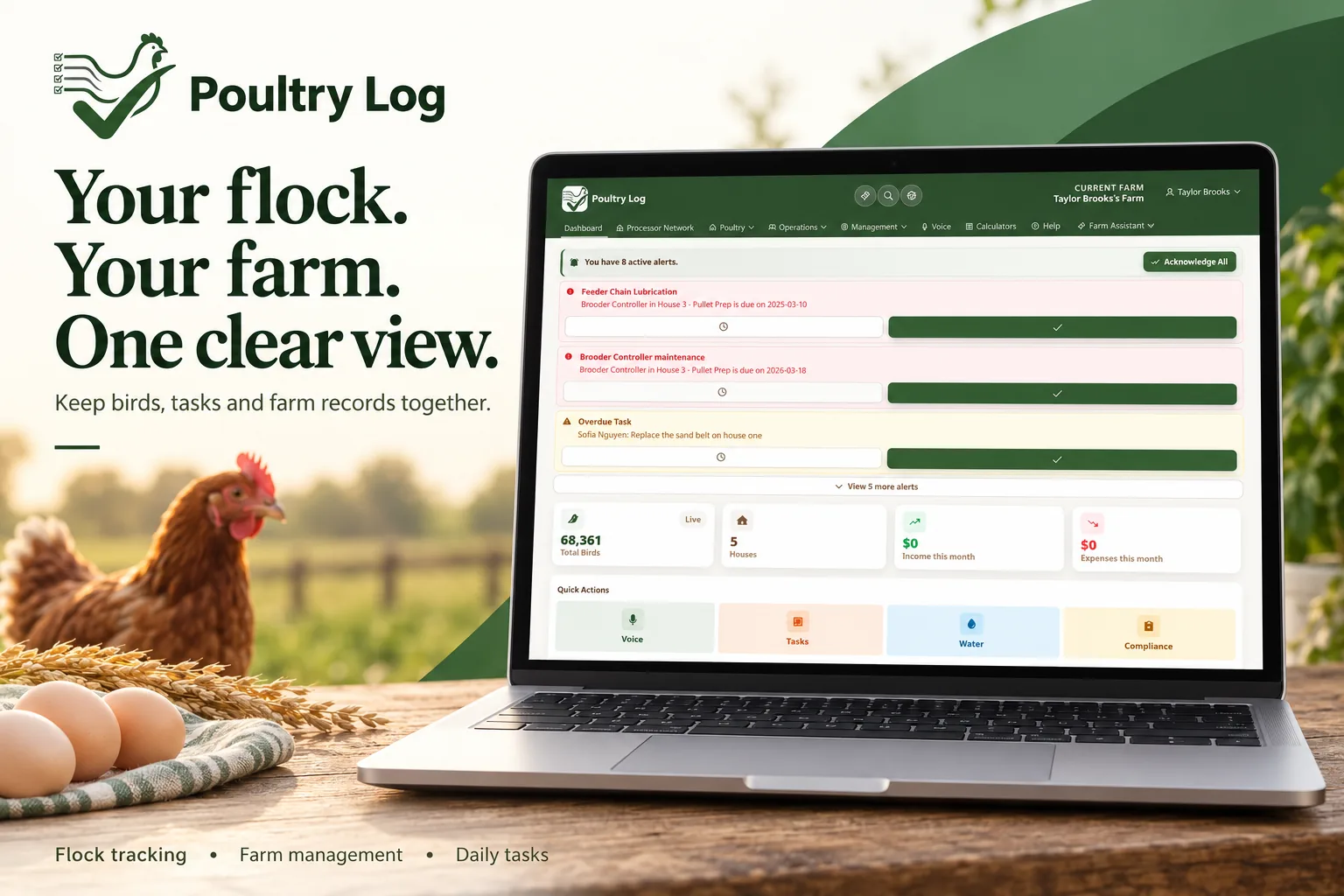
Tracking Flock Performance In Poultry Log™
Backyard and small-flock operations can log treats and egg counts on one timeline — the record that shows whether the mealworm habit is costing production or just enrichment. The kitchen waste guide covers the related displacement pattern; the profitability dashboard carries what diet quality does at any scale.
- 2026-10-06: Comprehensive rewrite — live-vs-dried comparison table, treat-hierarchy positioning, and the breeding-as-supply-chain framing — replacing the earlier boilerplate version.
- Earlier version: short first-person note on mealworms for poultry.