
Treats for chickens are the relationship part of flock keeping — mealworms, scratch grains, vegetable scraps, and the rest of the repertoire that makes a backyard flock a pleasure rather than a chore. The nutritionally honest framing is simple: treats are enrichment within a boundary, not nutrition, and the boundary is the percentage of daily intake they displace. At under roughly 10% of intake, treats are welfare-positive and nutritionally negligible; at 20% and above, they begin opening the protein and micronutrient gaps that formulated feed closes invisibly. This page covers the boundary, what common treats actually provide, and how to keep the fun inside the line.
The 10% Boundary
| Treat Level (share of daily intake) | What Happens |
|---|---|
| Under ~10% | Enrichment — birds compensate by eating their balanced feed; welfare benefits (foraging behavior, variety) without meaningful nutrition gaps |
| ~10-20% | Gray zone — intake of the balanced feed drops measurably; protein and amino acid gaps start to appear in laying and growing birds (the protein guide covers the displacement effect) |
| 20%+ | Nutrition problem — the diet is no longer the formulated feed; amino acid, vitamin, and mineral gaps open, and performance (lay rate, growth, feathering, immunity) declines on the schedule the vitamin guides describe |
What Common Treats Actually Provide
- Mealworms: protein and fat — the treat closest to genuinely nutritious, and still not a complete amino acid profile (the lysine guide covers what "complete" means).
- Scratch grains: energy — corn and small grains, low in protein; scratch in the evening displaces the most nutrient-dense feed of the day if given freely.
- Fruit and vegetable scraps: water, fiber, micronutrients in small amounts — mostly bulk; the scraps guide covers the displacement economics.
- Bread and processed foods: refined carbohydrates with minimal poultry-relevant nutrition — the least useful category, and the one most likely to be over-offered.
Keeping The Fun Inside The Line
- Time treats strategically. Evening treats displace the least — birds fill up on treats then eat their feed overnight; morning treats displace the most, exactly when intake matters for the day's laying and growth.
- Scatter, don't pile. Foraging treats (mealworms in litter, vegetables hung) extend the engagement time per calorie — more enrichment per gram displaced.
- Watch the lagging signals. Laying rate, feather condition, and energy level are what diet gaps look like weeks after they open — the calcium guide covers one classic case (shell quality declining while the owner blames the weather).
- Keep the base feed non-negotiable. The formulated feed in the feeder is the nutrition; everything else is a garnish. The feed budget guide frames the base-feed discipline that scales from coop to commercial house.
Tracking Flock Performance In Poultry Log™
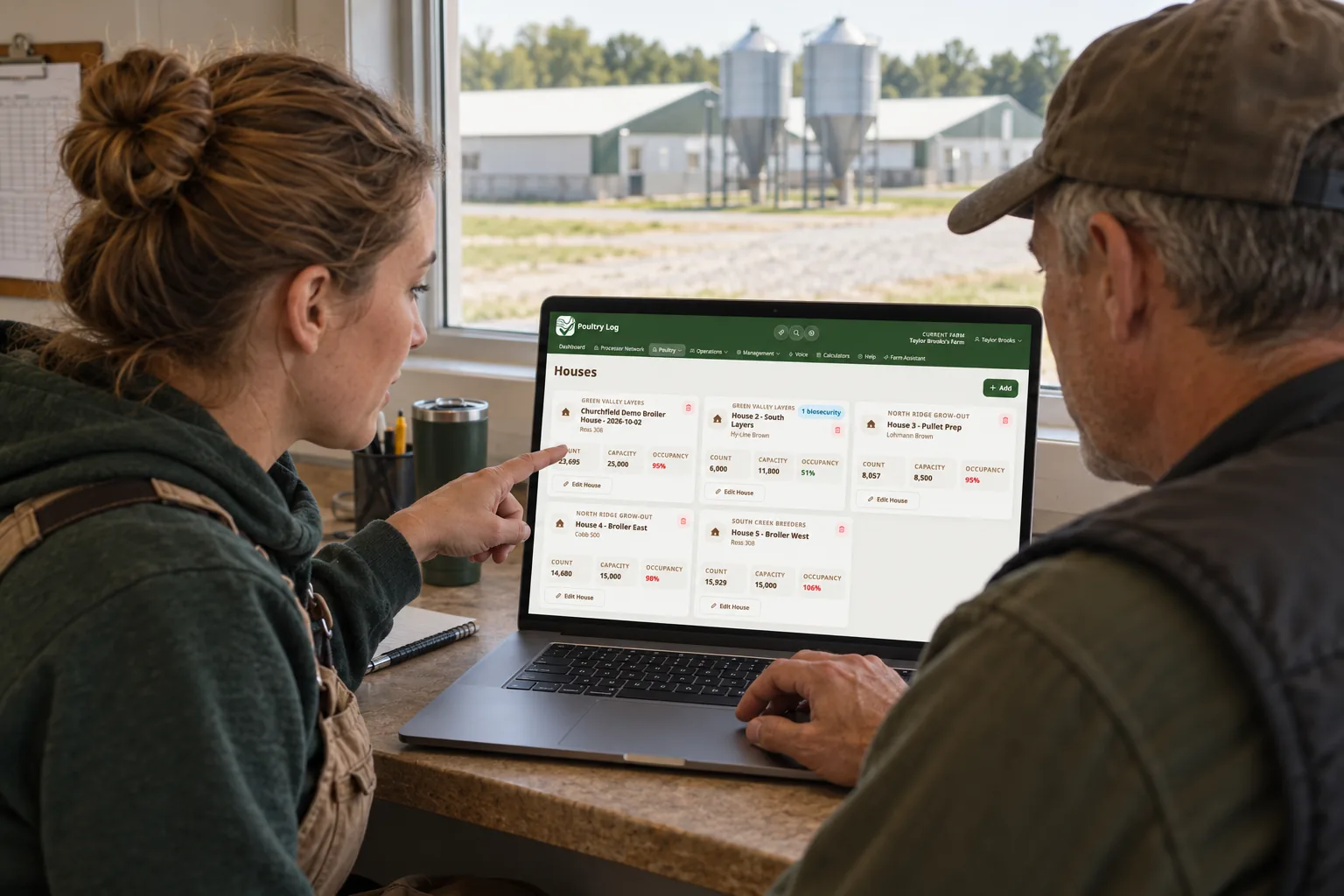
Backyard and small-flock operations can log feed intake, egg counts, and treats on one timeline — the record that shows whether the treat habit is costing production. The egg profit guide covers the revenue side; the margin picture shows what diet quality does to per-unit economics at any scale.
- 2026-10-06: Comprehensive rewrite — 10% boundary table, common-treat analysis, and strategic-timing guidance — replacing the earlier boilerplate version.
- Earlier version: short first-person note on treats for chickens.