
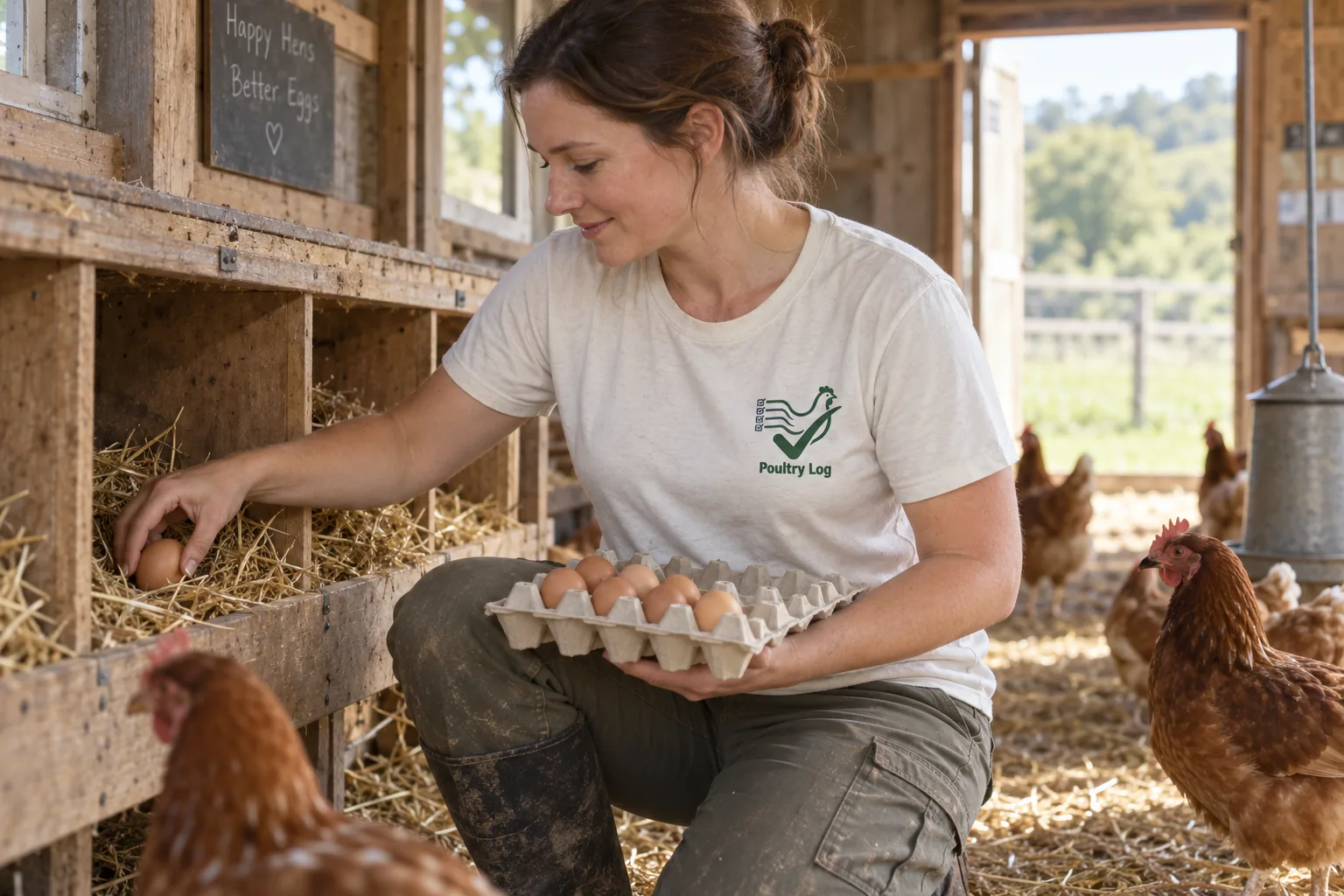
Grass clippings for poultry sit in the same category as the other supplemental-feeding temptations — the scraps guide, the treats boundary, and the kitchen waste pattern all describe the same displacement economics from different angles — with one complication specific to clippings: freshly cut grass ferments in the crop, and wet-clipping ingestion has caused crop injuries and deaths in small flocks. The honest framing: fresh clippings are a genuine hazard in quantity, a marginal enrichment in small amounts, and never a nutrition story — the bird gets little from grass it cannot get from formulated feed, and what it does get comes with the fermentation risk attached. This page covers the risk, the boundary, and what pasture access (a different thing entirely) actually provides.
Why Fresh Clippings Are Risky
| Factor | What Happens |
|---|---|
| Fermentation in the crop | Freshly cut grass continues respiring and ferments in the warm, moist crop — producing gas and heat; wet-clipping ingestion has caused sour crop, gas build-up, and deaths in small flocks (the crop pathology is what the crop guide describes from the other direction) |
| Pesticide and herbicide residue | Clippings from treated lawns carry chemical residue — the spray date matters more than most owners realize, and there is no reliable way to wash it off |
| Marginal nutrition | Fresh grass offers little the formulated ration does not — vitamins in small amounts, water bulk, and fiber; the protein and amino acid story is absent (the protein guide covers what the diet actually needs) |
| Displacement, gram for gram | Wet bulk fills the crop without delivering nutrition — the same displacement economics the treats guide describes, made worse because wet fill suppresses dry-feed intake disproportionately |
The Boundary
- Fresh clippings: avoid in quantity. The fermentation risk is documented and the nutritional return is negligible — the risk-to-benefit ratio is the worst of any common "treat." Wilted-for-a-day clippings reduce the fermentation risk but do not change the marginal-nutrition picture.
- Pasture access is a different practice. Ranging birds pick at grass, insects, and forage throughout the day — behavioral enrichment with real welfare value, spread across a diet that still carries the formulated base. The feed budget guide frames what pasture contributes (behavioral value, some micronutrients, insect protein) versus what it does not (a complete ration).
- The 10% boundary applies to everything green. Clippings, vegetable tops, garden greens — supplemental is supplemental, and the displacement economics do not care which plant it came from.
The Honest Framing
The impulse behind feeding clippings is real — waste reduction and flock enrichment — and both goals have better-served expressions: a compost pile for the waste, and pasture or a protected run for the enrichment. What clippings offer the bird specifically is not worth the fermentation risk; the treats guide covers the boundary, and the egg profit guide covers what diet quality does to the per-egg economics that make the flock worth keeping.
Tracking Diet Quality In Poultry Log™
Backyard and small-flock operations can log feed types and health events on one timeline — the record that shows whether the supplemental-feeding habit correlates with the health events it sometimes causes. The cause-signature table covers the pattern-reading method at any scale.
- 2026-10-06: Comprehensive rewrite — fermentation-hazard table, boundary framing, and the pasture-access distinction — replacing the earlier boilerplate version.
- Earlier version: short first-person note on grass clippings for poultry.