
Kitchen scraps for chickens are the most common supplemental feeding practice in backyard flocks — and the most misunderstood nutritionally. The core issue is displacement: every handful of scraps a bird eats is feed it did not eat, and formulated poultry feed is the only thing in the diet guaranteed to deliver the amino acids, vitamins, and minerals the bird needs at every stage. Scraps are not poisonous; they are incomplete — and the practical question is never "are scraps bad?" but "what fraction of the daily intake are they replacing?" This page covers the displacement economics, what scraps can and cannot provide, and the boundary between enrichment and nutrition.
The Displacement Problem
| Scraps Situation | What It Displaces | The Practical Effect |
|---|---|---|
| Occasional treats (under ~10% of intake) | Almost nothing — birds compensate by eating their balanced feed | Enrichment, not a nutrition problem — the treats guide covers the boundary |
| Daily heavy scraps (20%+ of intake) | Substantial feed displacement — the bird fills up on nutritionally incomplete food | Protein and amino acid gaps open first (the protein guide covers why crude protein is the first casualty); vitamin and mineral gaps follow |
| Scraps replacing feed in heat | The ration itself — hot birds eat less overall, and scraps are often what they choose | Worst combination: reduced total intake plus reduced diet quality; the heat guide covers the intake side |
| Moldy, salty, or spoiled scraps | Nothing — birds refuse or sicken | Food safety issue: mycotoxins from moldy scraps are the same hazard the storage guide covers in feed |
What Scraps Can And Cannot Provide
- Energy and bulk: vegetables, grains, and fruit provide calories and fiber — useful enrichment, but energy without the amino acid profile the bird needs for growth, laying, or feathering.
- Not complete protein: most kitchen scraps are low in lysine and methionine — the amino acids that limit performance first and second (the lysine guide covers why). A flock filling up on low-protein scraps underperforms its feed's analysis.
- Not the premix: vitamins and minerals in a diet come from the formulated feed's premix — scraps contribute negligible amounts of the ones that matter (the vitamin guides cover what the premix actually delivers).
- Seasonal displacement pattern: summer garden abundance and holiday kitchen waste create predictable scrap-glut periods — the same weeks heat stress may already be suppressing intake.
The Honest Boundary
Scraps as enrichment — small amounts, varied, fresh — are fine and arguably good for flock welfare. Scraps as a feed substitute are an economic and nutritional mistake: the bird eats the same volume, performs worse, and the household's food waste did not actually reduce the feed bill at a meaningful rate. The treats guide covers the same boundary from the treats side; the margin picture — even scaled to a backyard operation's egg revenue — shows what diet quality does to the per-unit economics. The practical rule: formulate the diet first, treat second, and never let the scraps bowl become the feed bowl.
Tracking Diet Quality In Poultry Log™
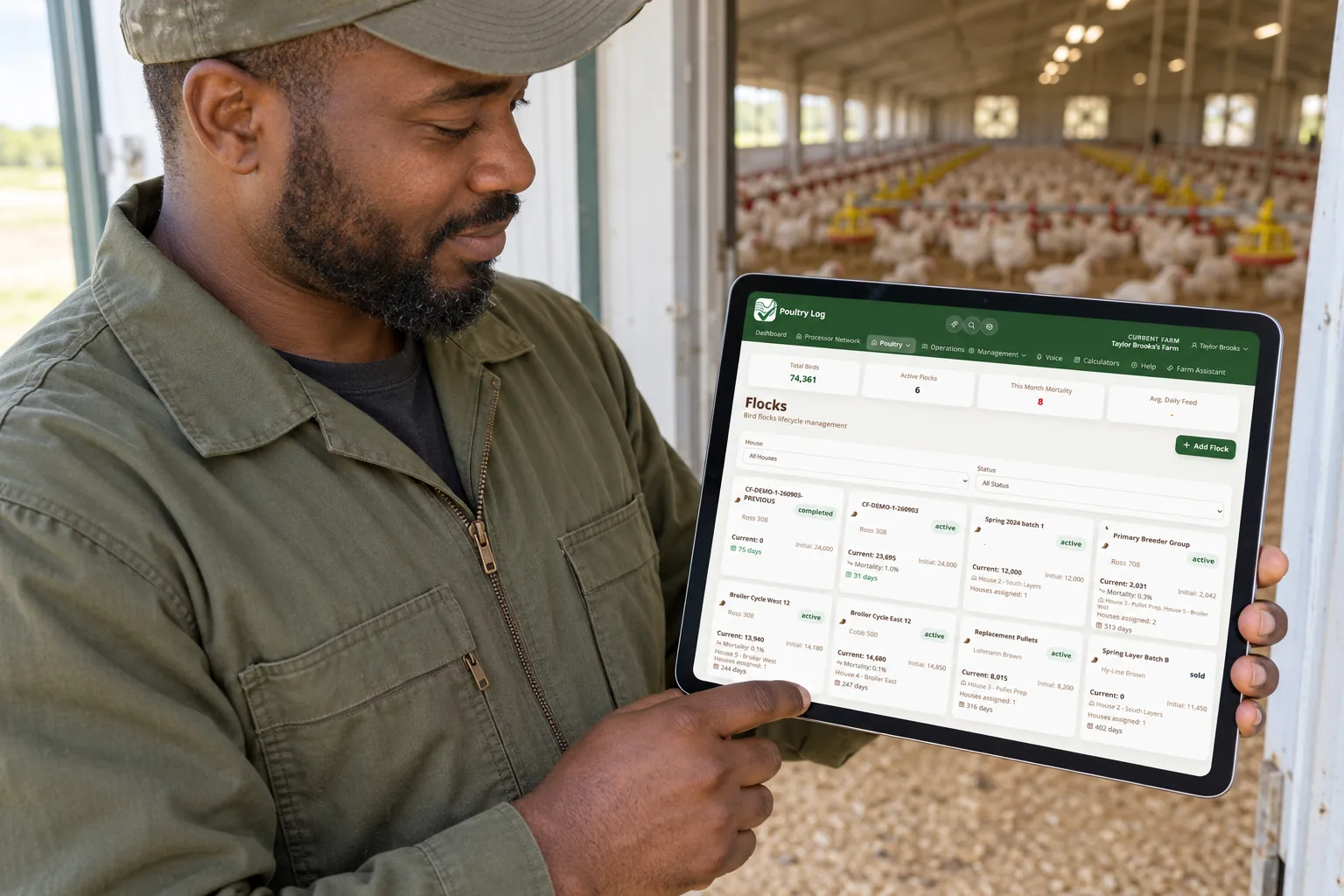
Even backyard operations benefit from logging feed intake against egg production — the record that shows whether the scraps period actually reduced the feed bill or just reduced the eggs. The egg profit guide covers the revenue side; the feed budget guide frames the feed-cost discipline that scales from one coop to thirty thousand birds.
- 2026-10-06: Comprehensive rewrite — displacement table, can/cannot framing, and enrichment-vs-nutrition boundary — replacing the earlier boilerplate version.
- Earlier version: short first-person note on kitchen waste for chickens.