
A full, hard crop in a chicken usually means one of two things: sour crop — fermentation and infection inside a crop that stopped emptying — or a physical blockage preventing passage. Both are emergencies that get worse with time, and neither should be treated at home with force-feeding or doses. This page covers what a full crop usually looks like, what to check first, and when to call the veterinarian — educational guidance for observation and record-keeping, not a diagnosis. Only a veterinarian can confirm cause or prescribe treatment.
A Full Crop: What It Usually Means
| Cause | What You'd See Alongside It | First Check |
|---|---|---|
| Sour crop (fungal/bacterial overgrowth) | Crop distended, hard or doughy, foul-smelling contents; bird quiet, reduced intake; often follows antibiotics, contaminated water, or stress | Palpate gently — sour content and smell; note whether the bird has had recent medication or water-system issues |
| Physical blockage | Crop full and firm with feed; bird unable to pass contents; may have pecked at litter, bedding, or foreign material | Access history — litter pecking, bedding ingestion, any foreign material in the house |
| Crop stasis from illness | Full crop alongside other signs — lethargy, respiratory signs, diarrhea; the crop is a symptom, not the disease | Whole-bird assessment; if multiple birds show crop problems, this is a flock-level question for the veterinarian |
What to Check First
- Isolate the bird with easy access to water (not feed) and shade. Note the time you found it — crop conditions move on a clock, and the veterinarian will ask when signs started.
- Palpate and describe, don't manipulate. Soft and emptying suggests normal variation; hard, distended, or foul-smelling suggests sour crop or blockage. Force-feeding or squeezing a suspected sour crop risks rupture and peritonitis — leave intervention to the veterinarian.
- Check the water system. Contaminated or stagnant water is a common sour-crop contributor — biofilm in lines, warm stagnant nipples, or a failed pump. The water chart and line checks cover this; see also the water line cleaning guide.
- Check the flock, not just the bird. One bird with a full crop is an individual event; multiple birds with crop issues point to water quality, feed quality, or an infectious cause — the off-feed guide covers the house-wide picture.
When to Call the Veterinarian
What to Log
Crop observations earn log entries with house, date, time, and what you palpated — firmness, smell, the bird's overall state. Isolated cases that resolve are still worth logging: a pattern of crop problems across a house or a season usually traces to water or feed quality, and the record is what reveals it. The water quality test guide covers the water side; the same daily-log discipline that catches intake dips catches crop-problem clusters, per the water early-warning guide.
Tracking Observations in Poultry Log™
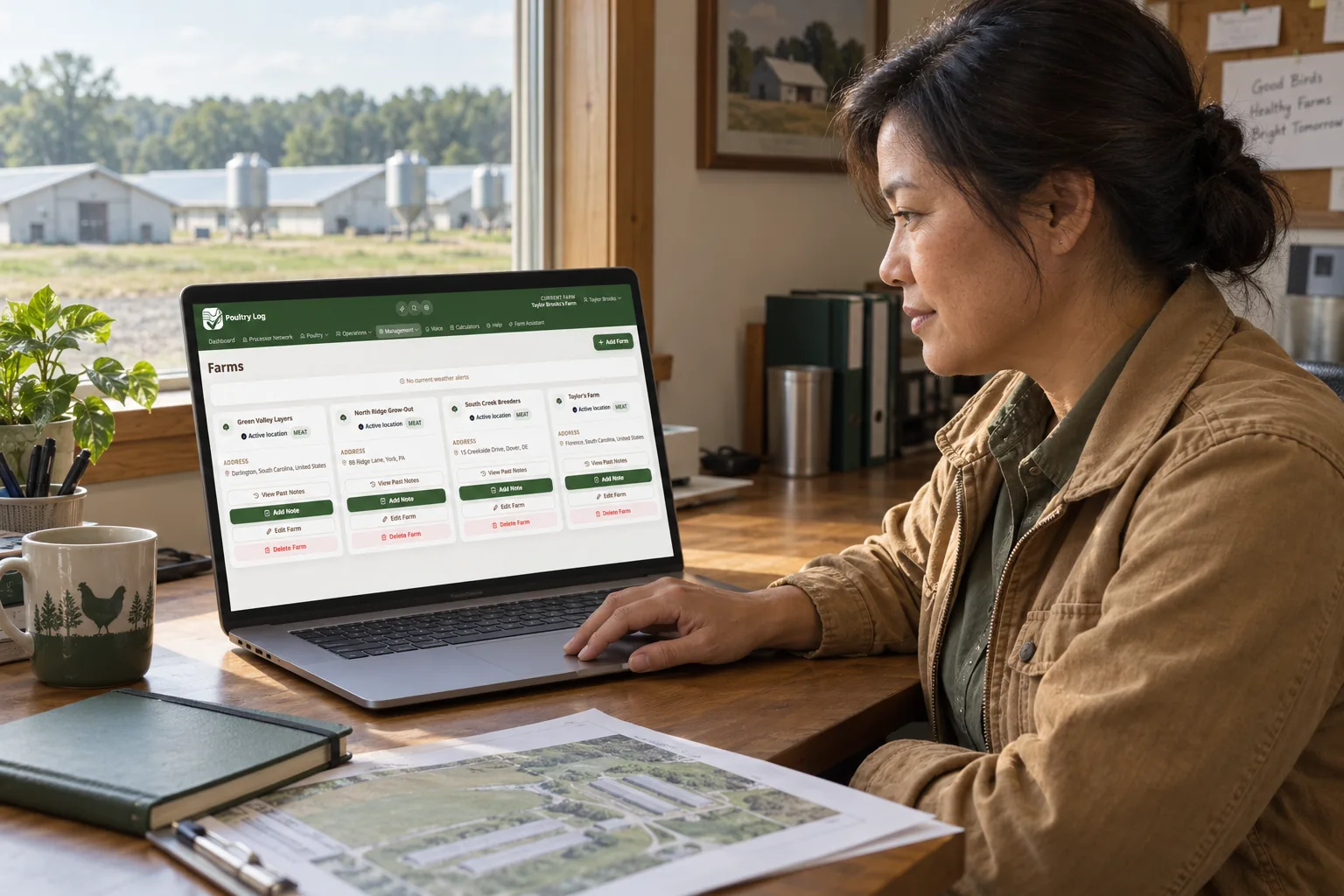
Daily observations logged in Poultry Log™ carry house and time automatically — so a crop observation sits on the same timeline as water quality notes, feed changes, and mortality, and the pattern review that follows is minutes instead of a memory exercise. Treatment records with batch numbers and withdrawal dates live in the same place, which is what makes the food-safety side auditable at any audit — see the audit-ready guide. Each flock's health history feeds the profitability dashboard as part of what health events cost per pound.
- 2026-10-06: Comprehensive rewrite as educational, non-diagnostic guidance — cause table, isolate-and-observe checks, vet-referral decision tree, and explicit no-force-feeding warning — replacing the earlier version with fabricated first-person claims and home-treatment instructions.
- Earlier version: short first-person note with home-treatment-directive framing.