
Finisher feed is the final broiler ration — the lowest-protein, highest-volume phase of the grow-out, formulated for efficient weight gain in the weeks before catch. In commercial programs it typically runs about 18-20% crude protein (varies by strain, phase length, and the integrator's specifications) with amino acid levels set for gain rather than the starter phase's rapid development. Because finisher is the largest feed-volume phase of the cycle, its cost per ton moves the total feed bill more than any other phase — and its conversion ratio decides what the flock actually costs per pound at catch.
What Finisher Feed Does
| Finisher Characteristic | Why It Matters In The Final Weeks |
|---|---|
| Protein ~18-20% (typical commercial range) | Lower than starter — the requirement falls as the bird ages; the protein percent guide covers the curve, and the lysine guide explains the amino acid side |
| Largest feed volume of the cycle | Weeks 5-6 carry roughly a third of total feed spend on the example flock — finisher price per ton moves the total bill more than any other phase (the feed budget guide works the math) |
| Conversion decides cost per pound | FCR in the final weeks is where feed efficiency differences become real money — the FCR guide covers the age benchmarks |
| Pelleted form standard | Older birds eat pellets efficiently — form choice affects intake and waste (the form guide covers the trade-offs) |
What Decides Finisher Performance
- Weight against the curve before catch. A flock running light in week 5 faces a decision: extend the grow-out (paying peak-week finisher feed for diminishing gain — the market weight and catch chart covers the crossover) or catch light and accept the cost-per-pound penalty (the growth bands guide covers what the shortfall is worth).
- Feed intake against the curve. The feed consumption chart's final weeks are the reference; intake dropping below curve in the finisher often signals heat, water, or health stress — the off-feed guide covers the diagnostic path.
- Feed price timing. Because finisher carries the largest volume, a $0.05/lb delivered-price move in the finisher weeks lands harder than the same move in week 1 — the feed cost guide covers negotiation and timing.
- Waste control at the pan. Older birds are efficient eaters and wasteful ones — feed spilled in the finisher is the most expensive spilled feed of the cycle. The storage and handling guide covers pan and bin management.
The Catch-Week Economics
The finisher phase ends at the catch — and the catch decision is where finisher economics become settlement economics. Every extra week beyond the optimal catch window buys less gain per pound of finisher feed than the week before (the catch chart shows the curve); every pound short at catch raises cost per pound on unchanged spend (the break-even price covers the math). The finisher record — intake, weight samples, conversion — is what makes that decision evidence-based instead of calendar-based.
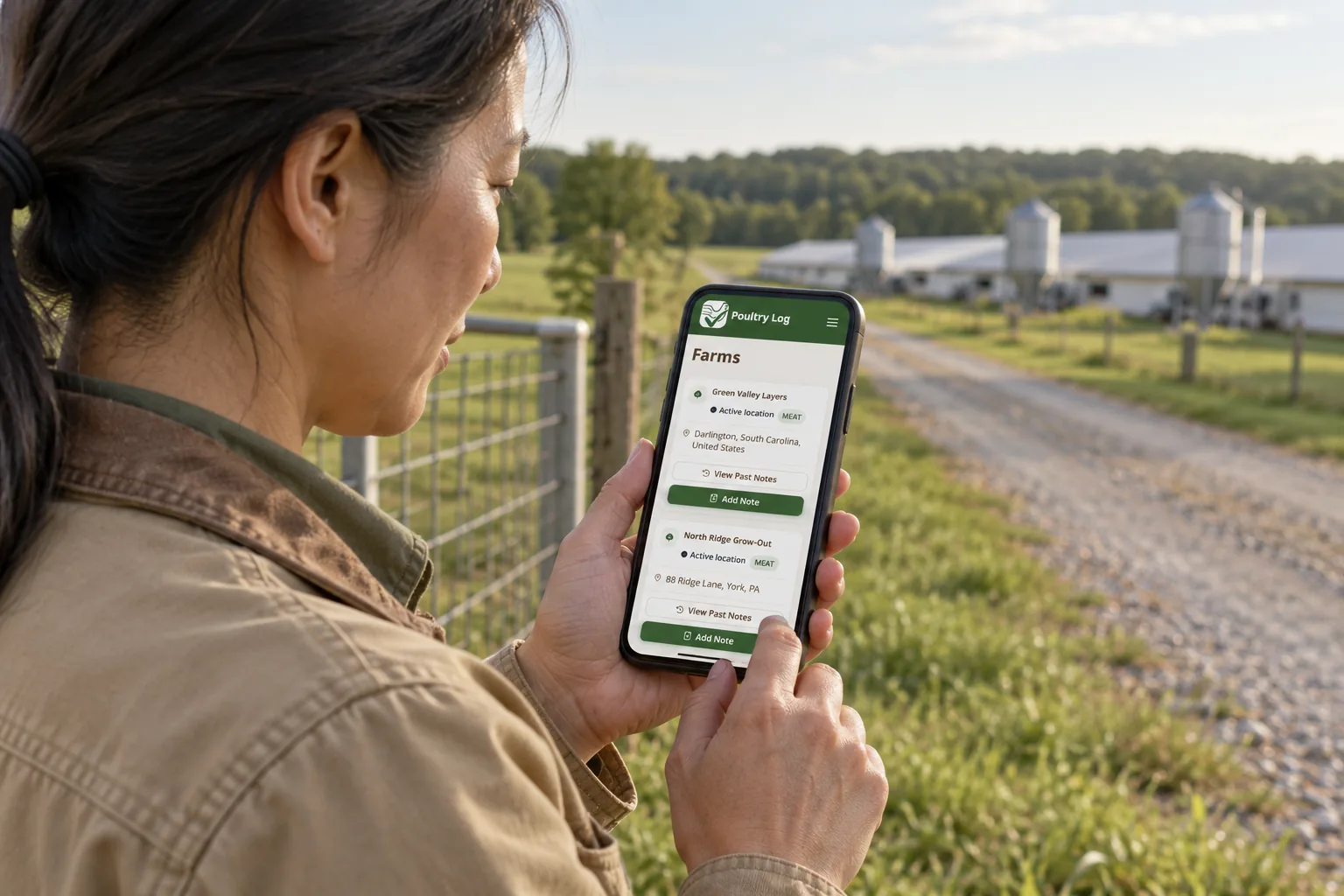
Tracking Finisher Feed In Poultry Log™
Feed deliveries logged by phase let the finisher period be measured on the outputs that decide the flock's cost: intake against curve, conversion against age, and cost per pound projected to catch. The profitability dashboard carries the trend across flocks; the settlement calculator brings the same numbers to the payout conversation.
- 2026-10-06: Comprehensive rewrite — phase-characteristic table, final-weeks performance checks, and catch-week economics — replacing the earlier boilerplate version.
- Earlier version: short first-person note on finisher feed for broilers.