
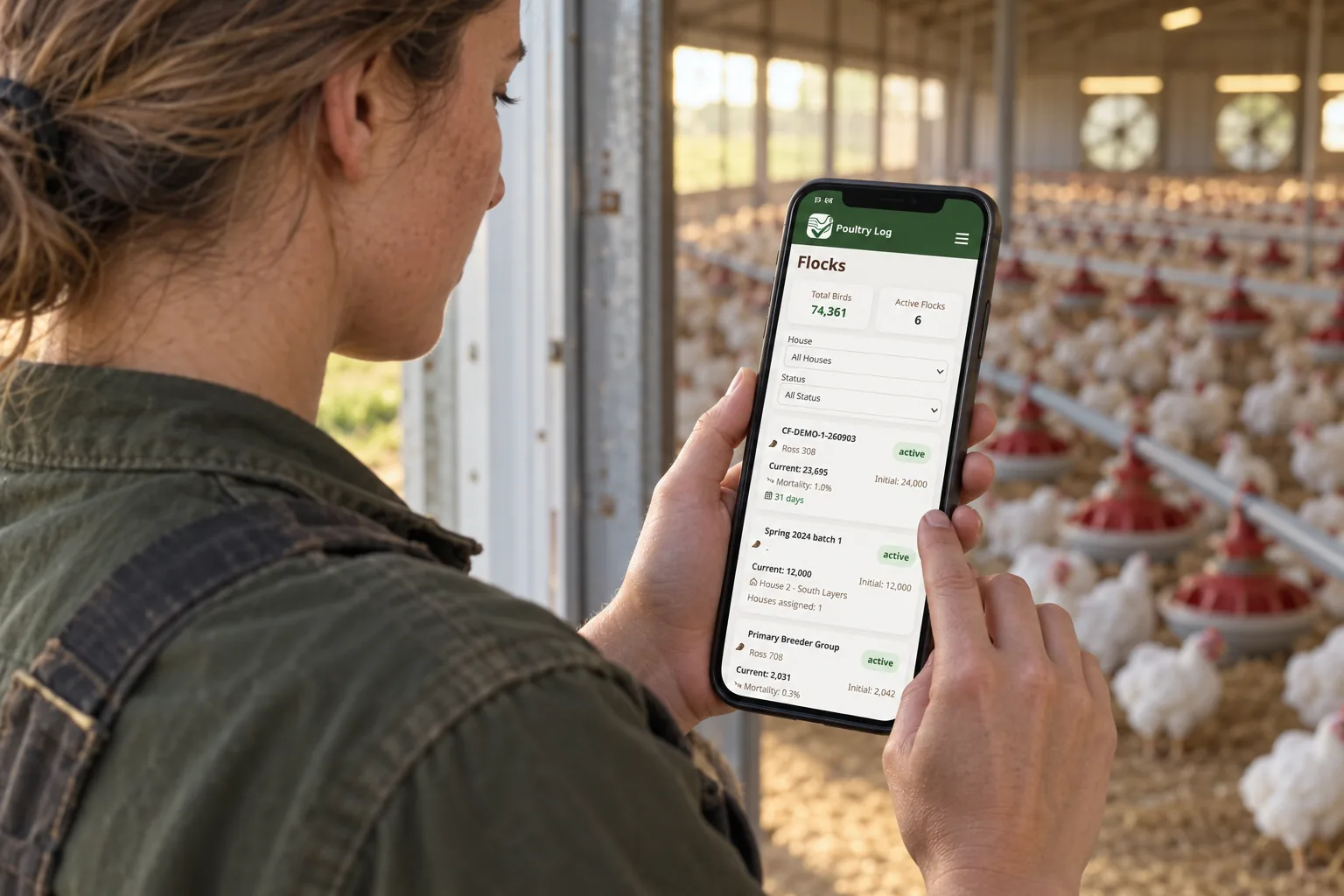
A chicken that stops eating is telling you something is wrong — and the causes run from a full or blocked crop and heat stress to infectious disease and parasites. Feed intake is the flock's most honest vital sign: it drops before weight does, and weight drops before mortality does. This page covers what usually causes a bird (or a whole house) to go off feed, what to check first, and when to call the veterinarian — educational guidance for observation and record-keeping, not a diagnosis. Only a veterinarian can confirm cause.
A Bird Off Feed: What It Usually Means
| Cause | What You'd See Alongside It | First Check |
|---|---|---|
| Heat stress | Whole-house intake drop on hot afternoons; panting, spread from feeders; water intake often spikes before feed falls | House temperature at bird level; compare water against the water chart for the heat signature |
| Full or blocked crop | One bird with a visibly full, hard, or pendulous crop while the rest eat normally | Palpate the crop — soft and emptying is normal; hard, smelly, or distended needs the veterinarian |
| Water failure | Multiple birds off feed with droopy combs; drinker lines dry, pressure wrong, or pump failed | Nipple pressure and height, line level, pump — birds will not eat without water. See the water chart |
| Feed problem | House-wide drop starting at the bin: wrong phase delivered, moldy or caked feed, feed bridging | Bin contents, delivery tickets, phase marking — the feed delivery errors guide covers the checks |
| Infectious disease or parasites | Spread across birds over days; often with respiratory signs, diarrhea, or lethargy; intake decline precedes visible illness | Veterinary diagnosis — note onset, spread rate, and affected houses for the call |
What to Check First
- One bird or the whole house? An isolated off-feed bird is an individual problem (crop, injury, dominance); a house-wide drop is an environmental or systemic one — heat, water, feed, or disease. This single question decides where you walk first.
- Water before feed. Birds will not eat without water — always verify drinker function before assuming a feed or health problem. Pull the last 48 hours of water per bird against the water chart.
- Feed access and quality. Pan height and fill for bird age, freshness, phase correctness, bin condition. Intake against the feed chart for the age — how far below curve, and since when?
- Temperature and air. Heat is the most common house-wide intake suppressant after week 3; ammonia and stale air suppress it too. Check bird-level temperature and the litter ammonia picture.
When to Call the Veterinarian
What to Log
Off-feed observations earn log entries with house, date, time, and scope — one bird or the house, what you saw, what you checked. Daily feed intake per bird against the target curve is the number that catches the decline early: a flock eating 10% light for three days in week 4 loses roughly 50 g per bird of gain — about 3,300 lb across 30,000 birds. Paired with water, temperature, and mortality on the same timeline, the record turns "the birds stopped eating" into a named cause — see the growth bands guide for what the shortfall costs.
Tracking Intake and Observations in Poultry Log™
Feed consumption, water, and daily observations logged in Poultry Log™ share one house-level timeline — so an intake decline shows up against the curves that define it, with the water or temperature event that caused it visible in the same view. When the veterinarian asks what moved before birds went off feed, the timeline is the answer. Each flock's intake history feeds the profitability dashboard as part of what conversion and mortality actually cost per pound.
- 2026-10-06: Comprehensive rewrite as educational, non-diagnostic guidance — cause table, water-first checks, vet-referral decision tree, and intake-shortfall math — replacing the earlier version with fabricated first-person claims and treatment instructions.
- Earlier version: short first-person note with treatment-directive framing.