
Sneezing and coughing in chickens usually points to air quality first — dust, ammonia, or dry litter irritating the respiratory tract — and to infectious respiratory disease second. The distinction matters because the responses differ: air-quality problems improve within days of fixing ventilation or litter, while infectious disease progresses and needs a veterinarian. This page covers what each usually looks like, what to check first, and when to call the vet — educational guidance for observation and record-keeping, not a diagnosis. Only a veterinarian can confirm cause.
Sneezing and Coughing: What It Usually Means
| Cause | What You'd See Alongside It | First Check |
|---|---|---|
| Dust | Dry litter, feed dust in the air, symptoms worse when birds move or fans cycle; improves with ventilation and litter management | Litter dryness, feeder spillage, ventilation runtime and static pressure |
| Ammonia | Eye and airway irritation; wet caking litter; symptoms track with humidity and ventilation failures, not one bird | Ammonia at bird level with a meter or kit — the nose misses the subclinical range. See the litter ammonia guide |
| Infectious respiratory disease | Rales (clicking or wheezing sounds), nasal discharge, reduced intake, spread across the house over days; often follows a stress event or visitor | Veterinary diagnosis — note onset date, spread pattern, and affected houses for the call |
What to Check First
- Air quality before assumptions. Walk the house and listen at bird level — rales are the sign that moves this from "environment" to "call the vet." Check ammonia, ventilation settings, and litter condition; the house management guide covers the ventilation side.
- Pattern across houses and days. All houses showing symptoms after a litter change points environmental; one house worsening over three days with rales points infectious — and the spread rate is what the veterinarian will ask first.
- Water and feed history. Respiratory disease suppresses intake before it kills. Compare the last several days against the water chart and feed chart — a paired decline with respiratory signs escalates urgency.
- What changed recently. New crew, new litter, new feed delivery, visitors, or equipment movement — infectious respiratory problems often arrive with a change, which is why biosecurity records matter: see the HPAI biosecurity records guide.
When to Call the Veterinarian
What to Log
Respiratory observations earn log entries with house, date, time, and what you heard and saw — rales, discharge, spread across the house. Paired with ventilation settings, ammonia readings, water, and mortality on the same timeline, the record shows whether symptoms track air quality or march independently of it — the distinction that decides the response. On 30,000 birds, a respiratory event identified in week 3 instead of week 5 is the difference between an environmental fix and a flock-level loss; the pattern habit is what makes that catch, per the cause-signature table.
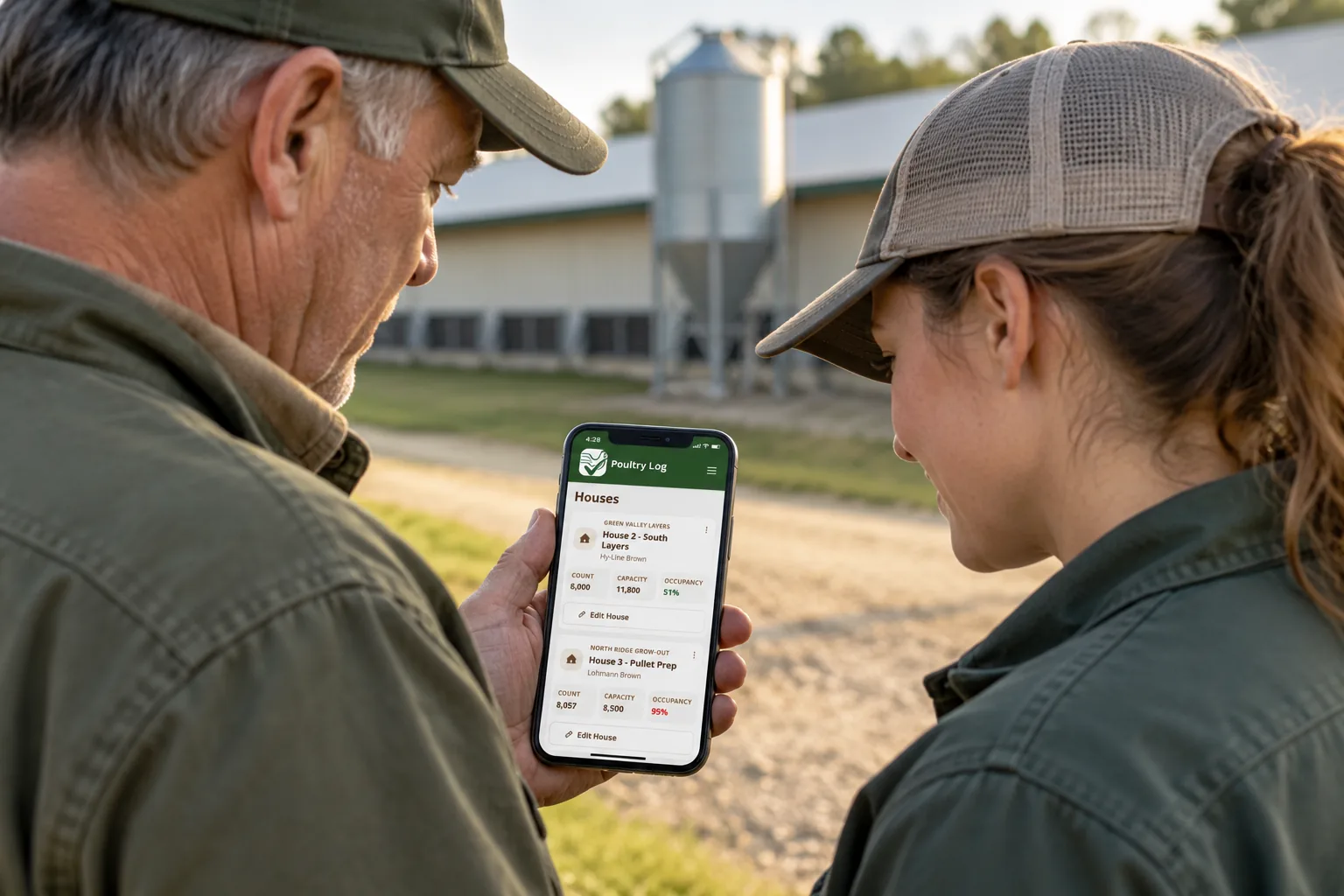
Tracking Respiratory Observations in Poultry Log™
Daily observations logged in Poultry Log™ carry house and time automatically — so a respiratory note sits on the same timeline as ventilation settings, ammonia readings, water intake, and mortality, and the cause review that follows is a five-minute read instead of a notebook reconstruction. When the veterinarian asks what moved before symptoms appeared, the timeline is the answer. Each flock's health history feeds the profitability dashboard as part of what respiratory events cost per pound.
- 2026-10-06: Comprehensive rewrite as educational, non-diagnostic guidance — cause table, air-quality-first checks, vet-referral decision tree, and record-keeping linkage — replacing the earlier version with fabricated first-person claims and treatment instructions.
- Earlier version: short first-person note with treatment-directive framing.