
Winter care for turkeys applies the chickens' winter failure-point framework at a larger scale — the same four failure points (frozen water, condensation, production decline, cold-energy demand), each arriving amplified by the bird's size and the housing it needs. The turkey-specific winter consideration is thermoregulation at mass: larger-bodied birds with full plumage handle cold better than chickens in some respects, but the housing that accommodates them concentrates more moisture, and the water demand that mass drives makes freeze prevention proportionally more critical. This page covers the turkey winter: the failure points at scale, and the housing-and-water disciplines that carry the flock through.
The Turkey Winter Failure Points
| Failure Point | Turkey-Specific Amplification |
|---|---|
| Water freezing | Turkeys drink substantial volumes — the mass-driven demand means a frozen system fails a turkey flock faster than a chicken flock (the water guide's ratios scale up with body size); the check-at-the-coldest-hour discipline from the winter guide applies, with supply capacity matched to the bird |
| Condensation | Winter housing concentrates more birds per structure at turkey scale — the moisture load per cubic foot runs higher, and the ventilation balance (MORE ventilation, not less; dry cold beats warm damp) is proportionally more critical, not less |
| Production decline | Breeder flocks entering winter carry the photoperiod response the layer feed guide describes; meat-bird flocks overwintering carry the growth-rate question — either way, the light and nutrition decisions are made in fall, not during the freeze |
| Cold-energy demand | Turkeys' plumage and mass give real cold tolerance — but the tolerance is conditional on feed intake holding, and cold suppresses intake in every poultry species (the feed budget guide's winter premium framing applies with the turkey's own feed-per-pound numbers) |
The Winter Discipline, Turkey Edition
- Water capacity first. The turkey winter's critical infrastructure question is whether the water system delivers the volume the flock drinks — a heated system sized for chickens will under-deliver for turkeys (the equipment guide covers sizing logic).
- Ventilate more than feels right — at scale. The turkeys-amplified version: more birds, more moisture, and the instinct to seal against cold produces the respiratory problems owners then blame on the cold (the insulation guide covers condensation).
- Roost and floor conditions. Turkeys roost lower and wetter than chickens at housing scale — the roost guide covers the height and dryness questions; wet litter at turkey mass is a faster failure than at chicken mass.
The Money Connection
Winter turkey economics depend on what the flock is overwintering for — breeder replacement, early-spring market birds, or hobby continuity — and each has its own per-pound math the feed budget guide frames honestly: winter feed costs more and produces less across every poultry species, and the turkey's larger per-bird intake makes the premium proportionally larger. What winter management buys is the flock entering spring in condition — the spring guide covers what that looks like, and the blackhead record from the fall informs the spring placement plan.
Tracking Turkey Records In Poultry Log™
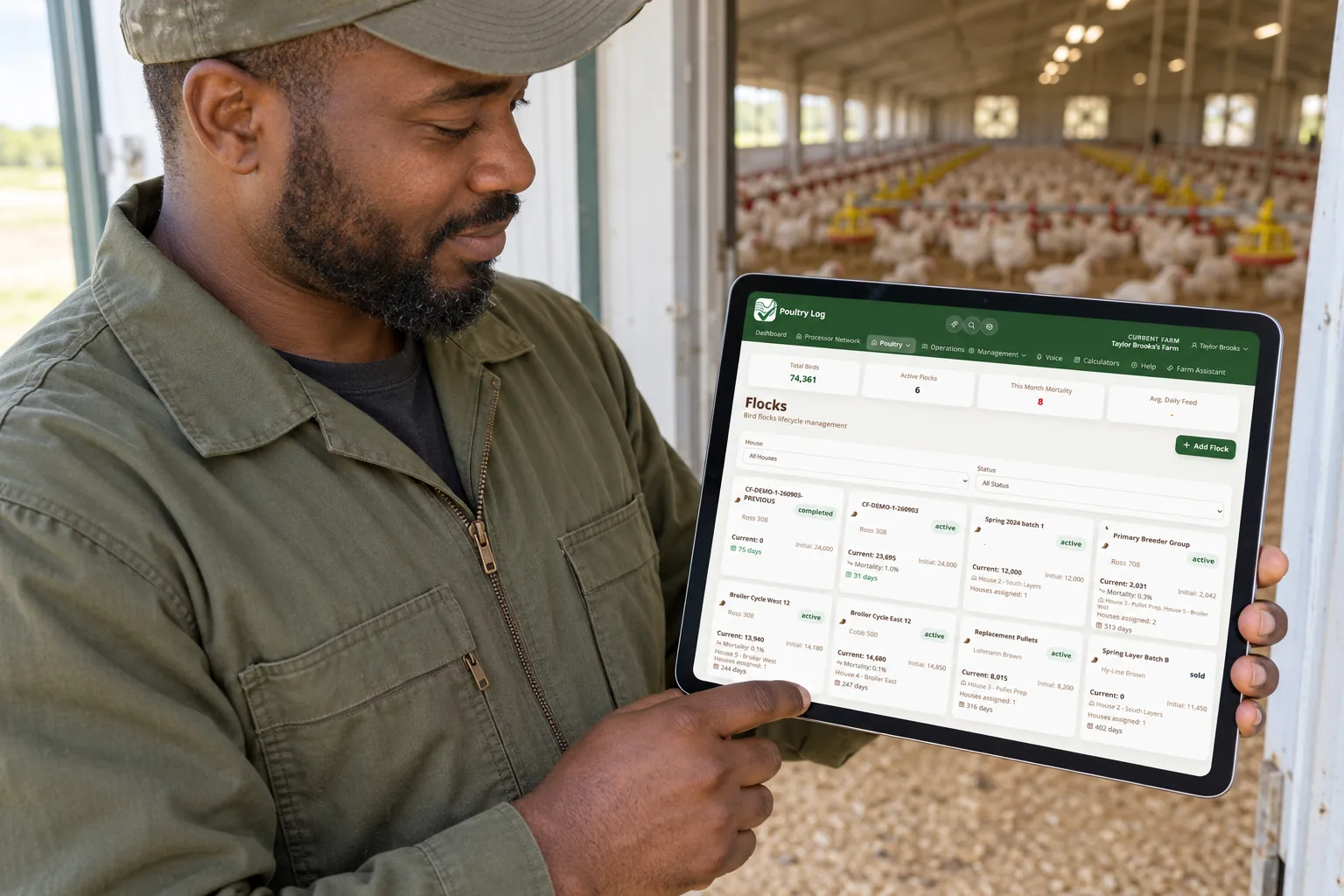
Feed, water, and health records on one timeline let each winter's costs be compared against the last — whether the water capacity prevented the failure it was sized for, and what the season cost per bird. The chickens' winter guide covers the shared framework; the profitability dashboard carries the trend across flocks.
- 2026-10-06: Comprehensive rewrite — failure-point table at turkey scale and turkey-edition discipline section — replacing the earlier boilerplate version.
- Earlier version: short first-person note on turkeys care in winter.