
Summer care for turkeys concentrates on heat management with a species-specific edge: turkeys are larger-bodied and carry more feather mass than chickens, which makes their heat-dissipation challenge different — they rely heavily on panting, and the same water-and-shade hierarchy the chickens' summer guide describes applies amplified. The second summer thread for turkeys is blackhead exposure: warm, damp ground in the free-range rotation keeps the cecal-worm cycle active (the spring guide covers the parasite corridor; summer heat does not close it). This page covers the turkey summer: the cooling hierarchy at turkey scale, and the exposure discipline that runs through the warm months.
Heat At Turkey Scale
| Factor | Turkey-Specific Consideration |
|---|---|
| Body mass and feathering | Larger body, heavier feather mass — heat dissipation runs through panting and the unfeathered surfaces; a turkey in heat stress is further along the curve than a chicken showing the same signs at the same temperature (the water guide covers the intake ratios that scale up with body size) |
| Shade and airflow | The cooling hierarchy from the chickens' guide applies, at scale: shade coverage has to reach the whole flock, and airflow across the birds (fans, cross-ventilation) does more for turkeys than for smaller birds because of the mass involved (the ventilation guide covers the airflow principles) |
| Cold water, continuous | Water intake demand peaks in heat — the electrolytes guide covers the stress-time supplement that pairs with the water supply; turkeys drink substantial volumes, and the supply chain (line capacity, refill cadence) has to match the bird |
| Evening feeding | Same pattern as chickens: cool, fresh feed in the evening recovers the intake afternoon heat suppressed — the feed budget guide frames the summer dip honestly against the meat-bird economics |
The Blackhead Thread Through Summer
- Warm ground keeps the cycle active. Blackhead exposure runs through cecal worms and earthworms in damp ground — summer does not close the corridor the spring opened, and free-ranging turkeys on wet ground stay exposed (the worms guide covers the parasite connection; the disease prevention guide covers the exposure discipline).
- Ground management is the summer response. Rotation timing, drainage attention, and flock-separation decisions (chickens as carriers — the spring guide covers why mixed flocks complicate the turkey's exposure) are the levers; the DE guide covers why folk remedies substitute for the fecal check that informs the real program.
- Heat-stressed birds are exposed birds. The disease prevention guide's logic applies at turkey scale: suppressed intake and immune load under heat stress compound whatever exposure the ground carries.
The Money Connection
Turkey summer economics are the meat-bird economics in the middle of the grow-out: feed cost accumulating against a market window decided months out (the pricing guide covers the cost-first method for direct-market birds). What summer management buys is the growth trajectory held through the heat — the feed budget guide's framing, with the turkey's own feed-per-pound numbers — and the blackhead risk held down while the ground stays warm.
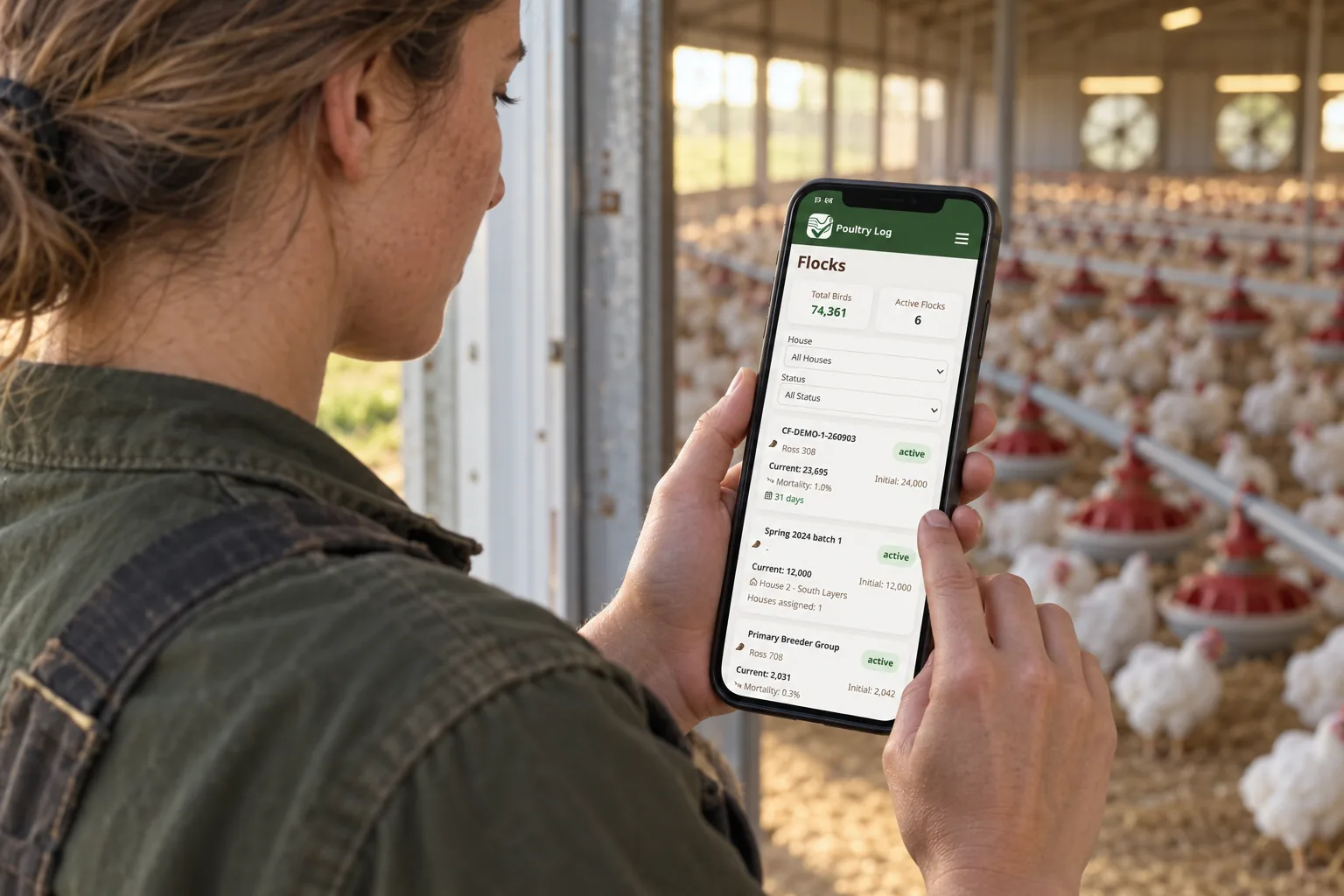
Tracking Turkey Records In Poultry Log™
Feed, water, and health records on one timeline let the turkey summer be measured against the last — whether the cooling measures held the growth trajectory, and what the exposure discipline prevented. The chickens' summer guide covers the shared hierarchy; the profitability dashboard carries the trend across flocks.
- 2026-10-06: Comprehensive rewrite — heat-at-turkey-scale table and the summer blackhead thread — replacing the earlier boilerplate version.
- Earlier version: short first-person note on turkeys care in summer.