

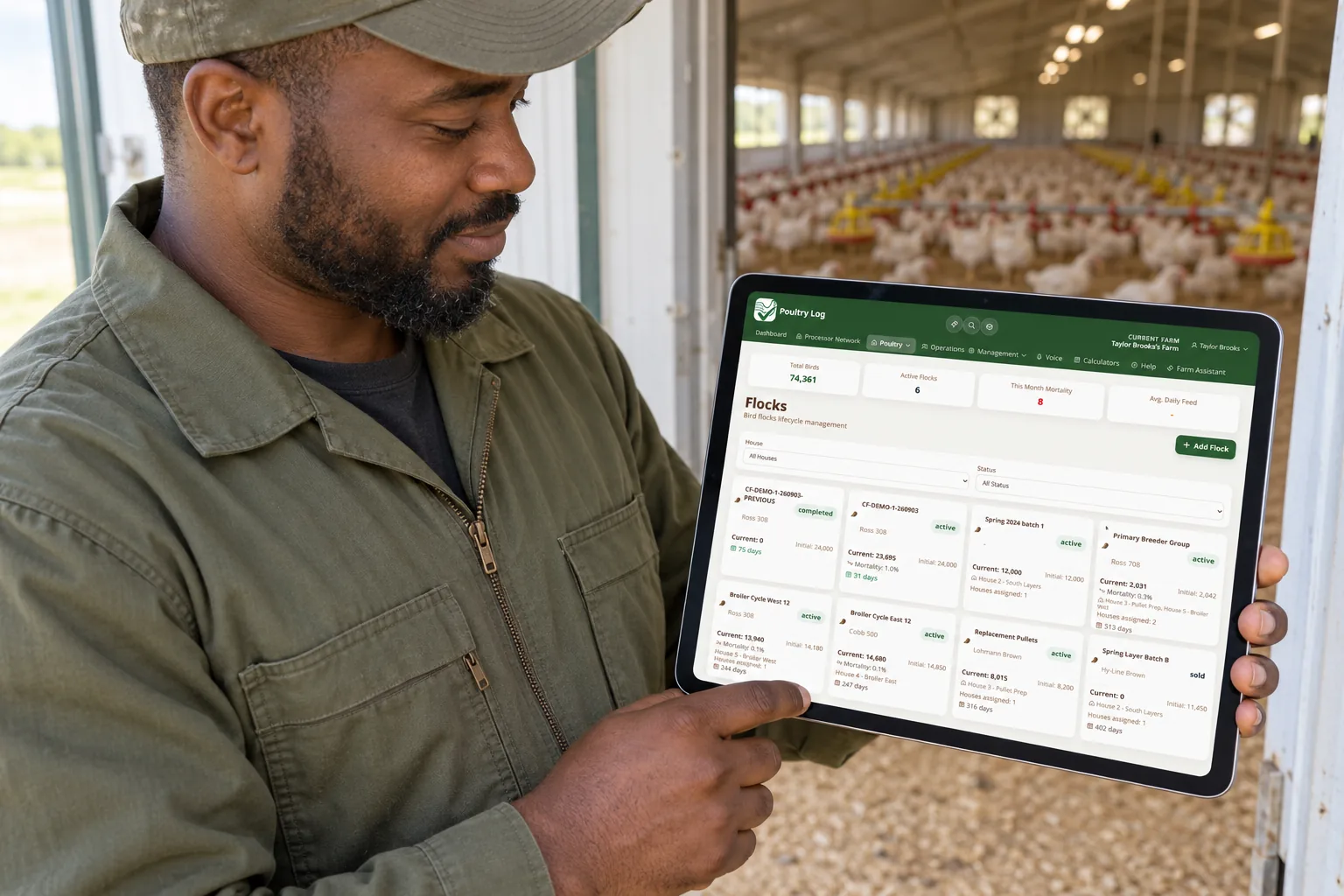
Broilers are not one flock stage; they are a pipeline. Chicks that need a brooder working at full capacity in week one are a different operational problem from heavy birds finishing in week six, and a processor watching a grower network sees both at once. The fleet overview in the Poultry Log processor console is built around that reality, bucketing the network's active flocks by age so operations teams know which stage of the pipeline needs attention.
How the Console Buckets Flock Age
The processor console groups active flocks into five age bands: brooding (0 to 7 days), early growth (8 to 14 days), main growth (15 to 28 days), finishing (29 to 42 days), and heavy (43 plus days). Alongside the buckets, the fleet view reports farm count, house count, active flocks, total birds placed, current birds on feed, and compliance submissions, so the age distribution always sits next to the volume it describes.
Why Age Buckets Change the Compliance Conversation
Each stage of the pipeline carries different risks and different records. Brooding weeks are where heating, ventilation, and water access failures cost the most, and where the daily crop record's mortality and weight-versus-target entries matter most. Finishing weeks are where water per bird, feed conversion conversations, and cull rates become the numbers that move the payout. A processor who sees compliance submissions concentrated in main growth while brooding and finishing records lag knows exactly which farms to call, instead of sending a generic reminder to the whole network.
How Age Connects to Benchmarking
House Benchmarking in the console reports each house's flock name, age in days, and current counts alongside mortality rate, cull rate, water per bird, and last log date, and can be sorted by flock age. That matters because a fair comparison respects the stage: two houses at day 38 should be read differently from a house at day 9, and the threshold policy the processor sets can differ by period, per day, per week, and per full flock.
What the Age View Does Not Claim
The console reports the age bands and the records submitted against them. It does not generate breed-specific growth curves or score a flock's compliance by age. The targets that appear in the daily crop record are the ones the farm and program already set, and the console keeps them rather than inventing new ones.
Where Poultry Log Fits
The age pipeline reads from flocks and placements growers already maintain in Poultry Log, so the fleet picture is a view of the operation rather than a separate data entry exercise. The week-level detail is covered in the processor week-over-week performance guide, house comparison in the grower house benchmarking guide, and the records behind the numbers in the grower checklist templates guide. Start free at poultrylog.com.
Frequently Asked Questions
How do poultry processors track flock age across a grower network?
By grouping active flocks into age bands drawn from placement and flock records. The Poultry Log processor console buckets flocks as brooding (0 to 7 days), early growth (8 to 14), main growth (15 to 28), finishing (29 to 42), and heavy (43 plus), alongside farm, house, and bird counts.
Why does flock age matter for poultry compliance records?
Each stage carries different risks and different records. Brooding weeks put heating, water access, and mortality records at the center; finishing weeks put water per bird, feed, and cull rates at the center. Age buckets show operations teams which stage of the pipeline is missing submissions.
Can threshold limits differ by flock age?
Yes. Threshold policy in the processor console is configured per metric and per period, including day, week, and full flock limits, so warning and critical levels can reflect what stage the flock is in.