

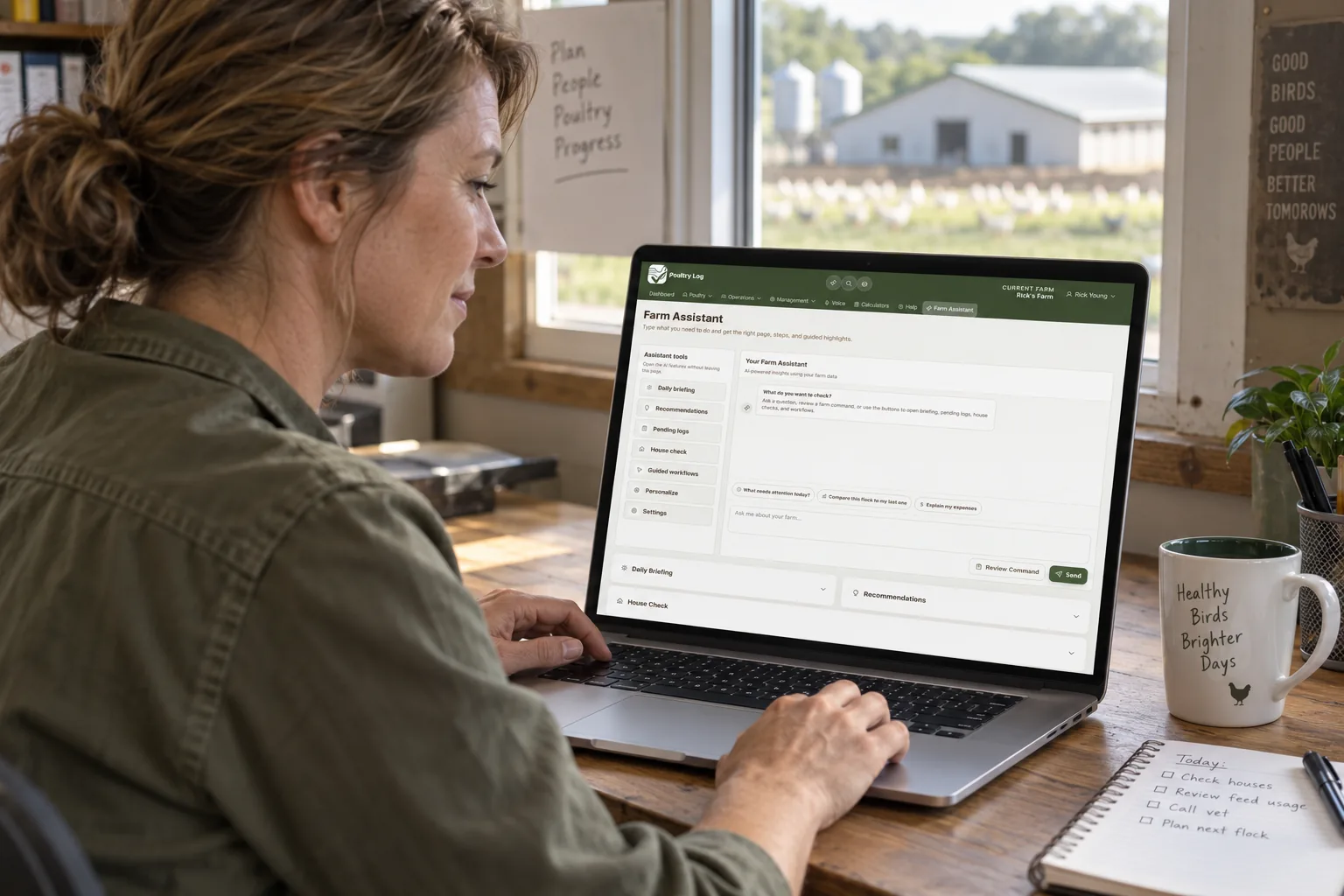
When a poultry processor or integrator joins growers to a compliance network, the first practical question is simple: what are we actually asking growers to submit? In Poultry Log's processor network, the answer is a defined set of seven grower checklist templates, each built around the work that already happens on the farm: equipment checks, rodent control, feed deliveries, chemical use, manure disposal, terminal hygiene, and daily crop records.
The Seven Templates That Feed the Processor Network
- Weekly equipment checks - per house, per flock week, recording generator, foot dips, fire extinguishers, and auxiliary fans as pass, fail, or not applicable, with corrective action on any failure.
- Weekly rodent inspections - up to twenty-five bait points per house, each marked replaced, untouched, or not applicable, plus corrective action notes.
- Feed delivery logs - per house, recording age in days, feed unit in kilograms, tonnes, pounds, or short tons, side A and side B product types, quantities, and slide or empty status.
- Chemical use records - dated row logs for chemical applications around the operation.
- Manure disposal records - dated row logs covering how and where litter leaves the farm.
- Terminal hygiene forms - one complete signed form per entry, capturing the cleanout and disinfection record between flocks.
- Daily crop records - per house per day: mortality rate, target weight in grams, actual weight in grams, and water consumed with its unit in liters, US gallons, or imperial gallons.
How the Templates Become Network Data
Growers complete these checklists in their own Poultry Log account. Failed checks require a corrective action note before submission, drafts are preserved for partial entry, and every completed record carries the farm, house, flock, placement reference, and completion time. When a processor registers a template in its network scope, submitted records from that template appear in the processor's compliance logs, searchable by grower, template, status, and date range, and exportable to PDF or Excel for audit packages.
What Processors Do With the Submissions
The weekly equipment and rodent checklists feed the biosecurity alert stream, flagging failed generator checks as critical and rodent bait activity across three or more points. The daily crop records feed house benchmarking and the week-over-week view, with mortality, weight against target, and water per bird computed per house and per flock week. The processor sets its own threshold policy on those metrics, per day, week, and flock period.
What These Checklists Are Not
These are grower operational records, not legal certifications. Completing a checklist documents that the work was done and what corrective action followed; it does not certify legal compliance on its own. The processor console deliberately does not compute a compliance percentage from them, because inventing a score would misrepresent what the records actually show.
Where Poultry Log Fits
The templates run on the same Poultry Log app growers use for daily operations, so the compliance record is a byproduct of the work rather than a second job. The daily side is covered in the water use monitoring guide, the equipment and rodent side in the biosecurity alerts guide, and the audit side in the audit trail exports guide. Start free at poultrylog.com.
Frequently Asked Questions
What checklists do poultry integrators require from growers?
Typically weekly equipment checks, weekly rodent inspections, feed delivery logs, chemical use and manure disposal records, terminal hygiene forms, and daily crop records with mortality, weight against target, and water use. The Poultry Log processor network uses these seven templates as its grower submission set.
Can poultry growers complete compliance checklists on a phone?
Yes. In Poultry Log, the grower checklists are mobile-first forms completed in the farm app, with drafts preserved for partial entry and corrective action required before a failed check can be submitted.
Do completed poultry checklists certify legal compliance?
No. Grower-supplied checklists document the operational work and corrective actions; they support audit readiness but do not certify legal compliance. Applicable legal requirements stay with the relevant authority and the grower's contract.