

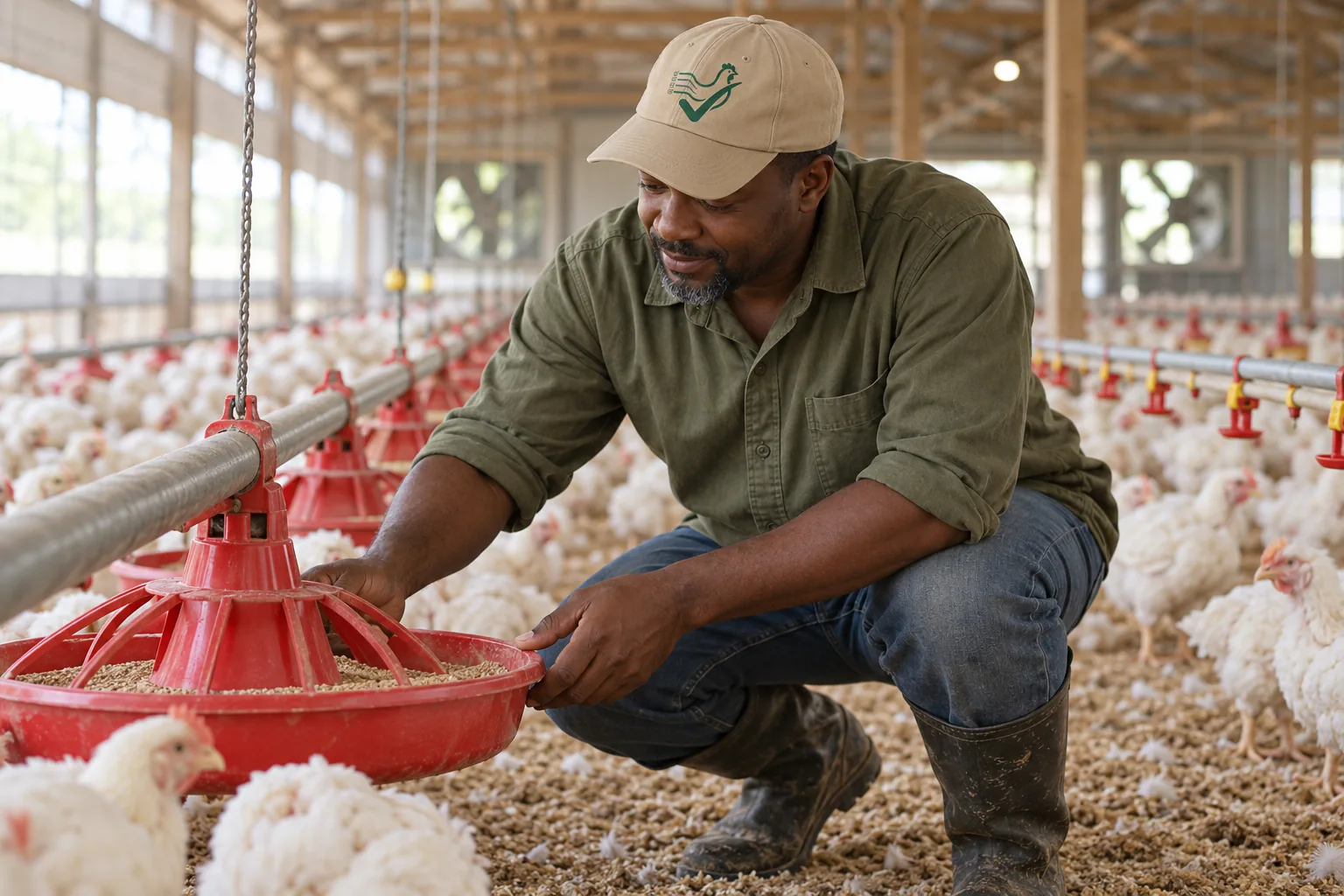
Feed is the largest line item in a broiler operation, and for a poultry processor overseeing a grower network, feed delivery records are the fastest way to see whether the program actually reached the house. The Poultry Log processor network captures feed deliveries as a daily per-house record, so an integrator can review what was delivered, in what quantity, in what unit, and how it compared across the whole grower base.
What the Feed Delivery Record Captures
Each daily feed delivery entry records the house, the flock, the bird age in days, the feed unit (kilograms, tonnes, pounds, or short tons), the product delivered on side A and side B (starter, grower, finisher, or withdrawal), the quantity, and the slide and empty status for side A. That combination is what makes the record useful beyond a delivery ticket: age in days ties the delivery to the flock stage, side-by-side product names show whether the right feed went to the right side, and quantity in a declared unit converts cleanly across networks that mix measurement systems.
What the Processor Console Shows
The processor console reads feed consumption alongside the other grower-submitted records, so feed delivery data sits in the same fleet view as mortality, water use, and compliance submissions. House Benchmarking reports performance per house, and the week-over-week view tracks flock weeks one through ten, giving the processor context for a feed delivery question: was this flock's weight against target holding while feed deliveries were steady, or did a delivery gap show up in the weight numbers two weeks later?
Why Processors Ask for Feed Records
- Program adherence: whether the starter to grower to finisher sequence the integrator specified is the sequence that arrived.
- Timing: whether deliveries matched the flock's age curve rather than arriving late in the cycle.
- Cross-farm comparison: whether one farm's feed use per bird diverges from the network while its mortality and water numbers look normal.
- Audit preparation: dated delivery records that support a customer review or an integrator audit without a paper search.
What the Record Does Not Claim
A feed delivery log documents what was delivered and recorded. It does not certify that feed met a specification, and the processor console does not compute a feed conversion ratio from it in Phase 1. Feed conversion conversations in the network start from the records the farm and integrator already keep, and the console keeps those records intact rather than inventing a derived score.
Where Poultry Log Fits
Feed delivery records live in the same daily workflow growers already use, so the processor's view is a byproduct of farm work rather than a second reporting pipeline. The seven templates feeding the network are described in the grower checklist templates guide, water use context in the water use monitoring guide, and the console itself in the processor dashboard guide. Start free at poultrylog.com.
Frequently Asked Questions
How do poultry integrators track feed deliveries across growers?
Through daily per-house feed delivery records that capture bird age, feed unit, product type per side, quantity, and slide status. The Poultry Log processor console aggregates those records into the fleet view, so feed delivery data sits next to mortality, water use, and compliance submissions.
What should a poultry feed delivery log record?
The house and flock, bird age in days, the feed unit used, the product delivered on each side with its type, the quantity, and any slide or empty status. Recording the unit explicitly matters when a grower network mixes kilograms, tonnes, pounds, and short tons.
Does a feed delivery record calculate feed conversion ratio?
Not in the Poultry Log processor network Phase 1. The record documents what was delivered and when; feed conversion conversations start from the performance records the farm and integrator already keep, and the console preserves those rather than inventing a derived metric.