

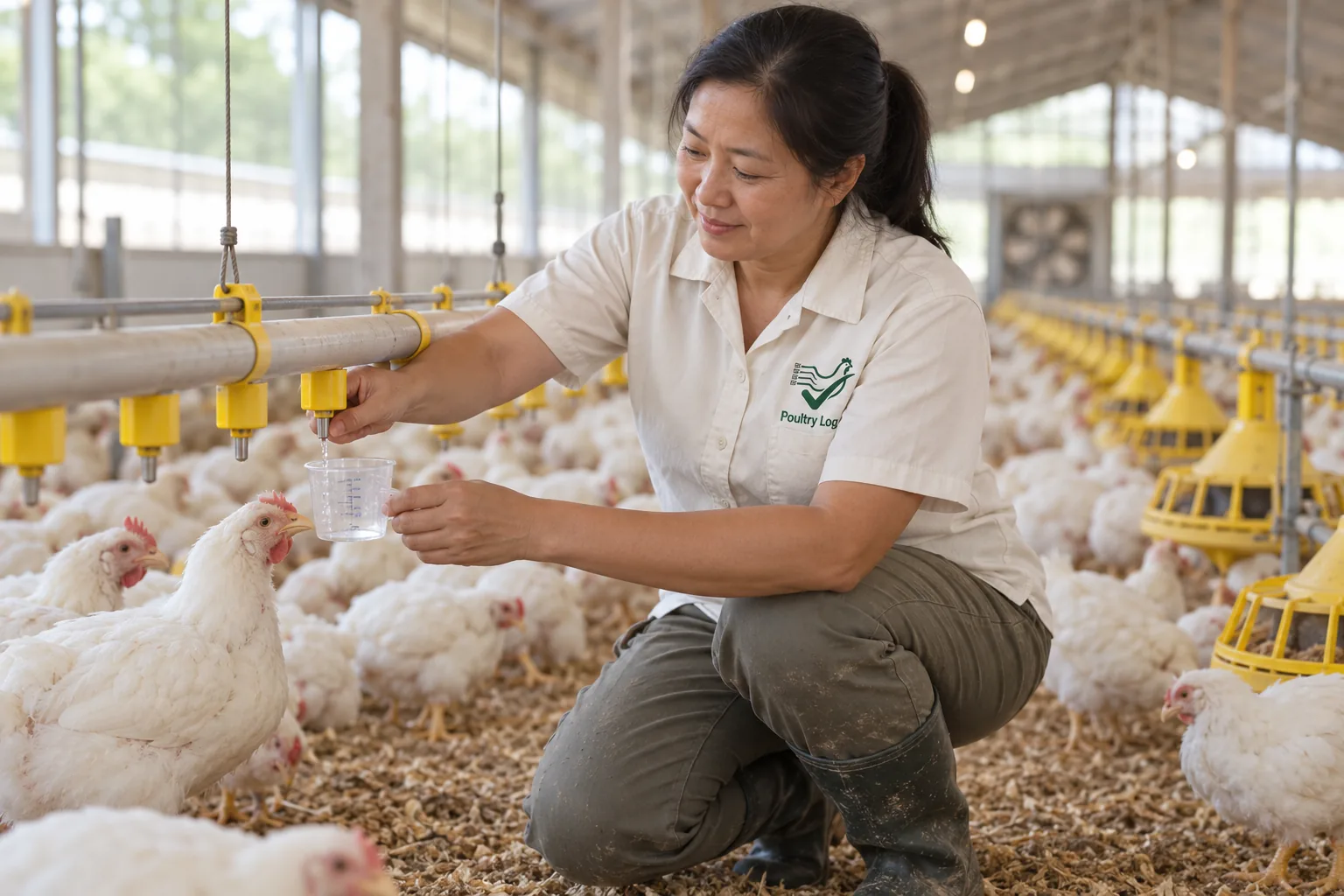
Water is the cheapest thing in a broiler house and the loudest signal in it. A flock drinking more than it should, or drinking less than it should, is telling you something about health, heat, feeders, or water lines before any other metric moves. For a poultry processor overseeing grower farms, water use per bird across the network is one of the most useful comparison numbers there is, which is why the Poultry Log processor console treats it as a first-class metric rather than a footnote.
What the Console Tracks
House Benchmarking reports average daily water in liters and water per bird in milliliters for every house in the network, alongside mortality rate, cull rate, compliance record count, and last log date. The Week-over-Week view adds average water use per flock week, converted automatically from whatever unit the grower logged: liters, US gallons, or imperial gallons. Because the conversion happens in the console, a network spanning growers who log in different units still produces one comparable series.
Why Water per Bird Beats Total Water
Total water use mostly measures farm size. Water per bird measures the flock. Two houses with the same bird count and the same weather should drink roughly the same; when one runs consistently higher, the usual suspects are leaking nipples, line contamination, heat stress, or a health problem reducing feed intake. In the processor console, water per bird feeds the threshold policy directly: the processor sets minimum and maximum milliliters per bird per period, with warning and critical levels, and breaches raise alerts with current versus previous rates attached.
How Growers Log It
Water use is captured in the daily crop record, one of the seven grower checklists feeding the processor network. Each entry records the day, the house, the flock, mortality rate, target weight, actual weight, and water consumed with its unit. Because the record is part of the daily routine rather than a monthly estimate, the network's water series has daily resolution instead of month-end gaps.
What the Alerts Catch
- A house trending above the processor's maximum milliliters per bird for its period
- A sudden rise inside an otherwise acceptable range, caught by the rise percentage limit
- A drop in water per bird that often precedes a mortality or weight problem
- Cross-network patterns, such as a hot week lifting water use across an entire region
Where Poultry Log Fits
Water per bird is only as good as the daily record behind it, and that record lives in Poultry Log, where growers already log it as part of the daily crop checklist. The week-over-week context is covered in the processor week-over-week performance guide, and the alert mechanics in the processor biosecurity alerts guide. Start free at poultrylog.com.
Frequently Asked Questions
How do poultry processors monitor water use across grower farms?
Through the daily crop records growers submit. The Poultry Log processor console aggregates water consumed per house and flock, converts between liters, US gallons, and imperial gallons, and reports average daily water and water per bird in milliliters for every linked farm.
What is normal water consumption per broiler bird?
It varies with age, weather, and house conditions, so the useful comparison is against the processor's own policy and the flock's own history. The processor console sets minimum and maximum milliliters per bird per period, with warning and critical levels, and alerts on breaches with previous rates attached for context.
Why does water per bird matter more than total water use?
Total water mostly reflects how many birds are in the house. Water per bird compares flocks on equal footing, so a leaky line, heat stress, or a health problem shows up as a rate change rather than being hidden inside a bigger number.