

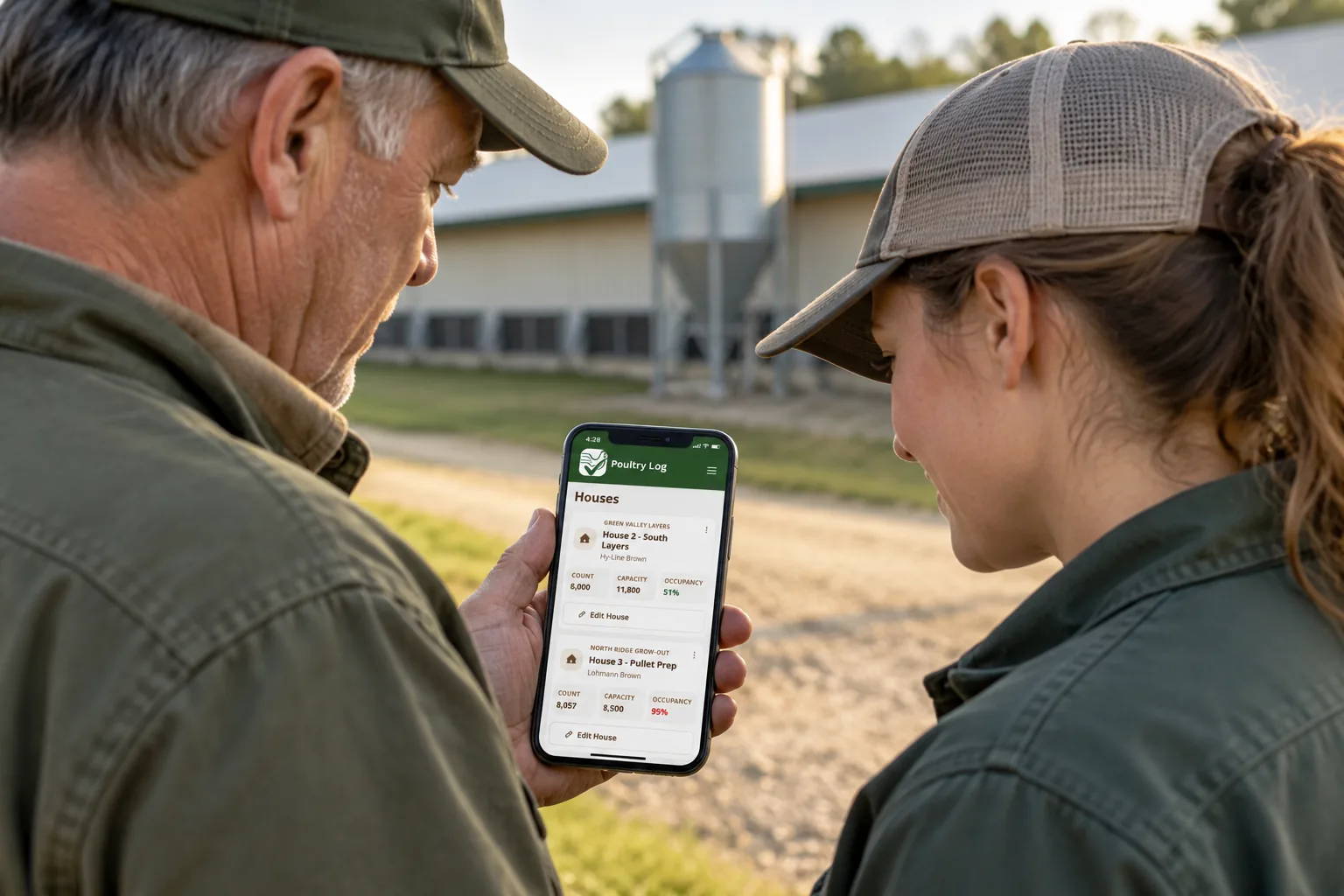
Georgia is one of the largest broiler-producing states in the United States, and its poultry compliance stack is correspondingly deep: mortality disposal certification, reportable disease duties, import health documents, hatchery and breeder records, dealer and processing licenses, manure handling permits, and CAFO environmental permits. Poultry Log's Georgia compliance catalog records each requirement with its agency, legal authority, cadence, retention period, and official source link, so a Georgia grower or integrator works from the rule itself rather than from memory.
Animal Health and Mortality Duties
Two Georgia requirements sit closest to daily farm work:
- Commercial poultry mortality-disposal certificate - Georgia Department of Agriculture, Livestock and Poultry Program, under Ga. Comp. R. & Regs. rr. 40-13-10-.02 and 40-13-5-.02 through .03. A commercial grower must maintain an approved disposal method and location, hold a numbered GDA certificate, and show that certificate number on processing-plant purchase records. Disposal records and processor invoices stay with the flock records while the certificate is valid.
- Immediate reportable poultry disease notice - Georgia State Veterinarian, under Ga. Comp. R. & Regs. r. 40-13-4-.02. Avian influenza, exotic Newcastle disease, or a suspicious highly infectious condition must be reported immediately by telephone, with the discovery and report dates, clinical signs, agency contact, samples, testing, and response directions kept with flock health records.
Imports, Hatcheries, and Movement
Poultry, hatching eggs, chicks, poults, and breeding stock entering Georgia must travel with an official Certificate of Veterinary Inspection or NPIP Form 9-3 and Form 9-2 when applicable, and non-NPIP poultry generally needs negative Pullorum-Typhoid and avian-influenza testing within 21 days, under Ga. Comp. R. & Regs. r. 40-13-2-.15. Georgia hatcheries and hatchery supply flocks must qualify as U.S. Pullorum-Typhoid Clean or equivalent under rr. 40-13-10-.03 and 507-3-.01 through .05, with official flock test reports, source approval numbers, and purchase and sale records available for inspection. Birds shown at public exhibitions need clean-flock origin or a negative Pullorum-Typhoid test within 90 days before movement.
Licensing and Egg Programs
Georgia licenses live-poultry dealers annually (rr. 40-13-10-.04 through .06), with seller, buyer, bird, and transport-vehicle facts recorded before receipt or sale and transaction records kept two years. Egg operations face a layered program: a wholesale egg Food Sales License under O.C.G.A. Title 26, Chapter 2 (the former Georgia Egg Law in Article 8 was repealed effective July 1, 2026 by 2026 Ga. Act 433), plus a 7-cents-per-case-of-30-dozen egg marketing assessment under rr. 179-1-.08 through .14, with production and transaction records kept for Commission audit. Producers processing their own poultry need the applicable GDA processing license, with at least 48 hours notice before slaughter and the slaughter-count, temperature, calibration, and water records the producer-grower program requires.
Manure and Environmental Permits
Georgia's environmental layer runs from manure handler permits (GDA, ch. 40-13-8, triggered at 5 tons or 5,000 gallons per year, with annual spreader calibration and two-year transfer records) through AFO land-application coverage (Georgia EPD, r. 391-3-6-.21, GAG920000 and GAG940000 above 300 animal units) to CAFO NPDES coverage (GAG930000, EPA Form 2B, with nutrient management plan). NPDES and Large LAS permittees submit an annual report by February 15, and a noncompliant discharge requires oral notice within 24 hours and a written report within five working days.
Where Poultry Log Fits
Poultry Log's Georgia catalog carries every requirement above with its official source link, applicability rules, and form templates, inside the same workspace growers use for daily records. The daily evidence side is covered in the grower checklist templates guide, mortality records in the mortality and cull tracking guide, and the federal layer in the US integrator compliance records guide. Confirm current requirements with the Georgia Department of Agriculture and Georgia EPD; completing a checklist does not certify legal compliance. Start free at poultrylog.com.
Frequently Asked Questions
What permits does a commercial poultry farm in Georgia need?
It depends on the operation. Common Georgia requirements include a commercial poultry mortality-disposal certificate from the GDA Livestock and Poultry Program, reportable disease notice duties to the State Veterinarian, import health documents for incoming birds, and environmental coverage such as manure handler permits or AFO/CAFO NPDES permits with nutrient management plans, each recorded in the Poultry Log Georgia catalog with agency, authority, and official source.
How often does Georgia require poultry mortality disposal records?
The Poultry Log Georgia catalog records the disposal duty as approval before commercial production, with each mortality disposal and each processor sale recorded using the GDA certificate number, and disposal records and processor invoices kept while the certificate is valid and with the related flock records.
Who do Georgia poultry farms report disease to?
The Georgia State Veterinarian through the Department of Agriculture disease-reporting channel, immediately upon diagnosis, confirmation, or suspicion of avian influenza, exotic Newcastle disease, or a suspicious highly infectious condition, under Ga. Comp. R. & Regs. r. 40-13-4-.02.