

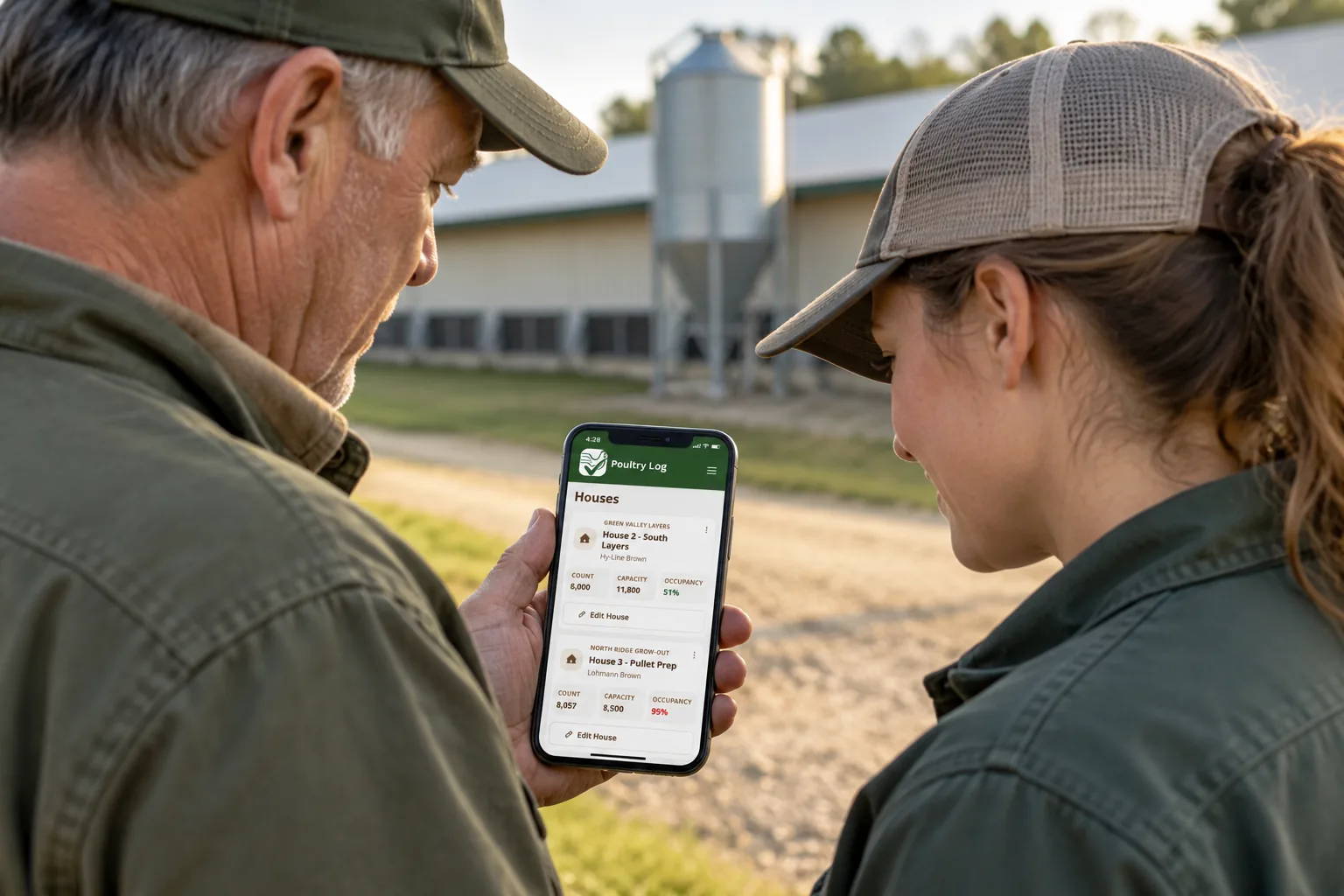
Manure is where a poultry operation's environmental compliance either holds together or falls apart. Litter leaves the farm somehow: it goes to a field, a composting site, a transfer station, or a permitted destination, and every one of those movements is a record someone will eventually ask to see. For poultry integrators and processors overseeing grower networks, manure disposal records are part of the compliance evidence that has to hold up in an audit, a customer review, or a state inspection.
What the Manure Disposal Record Captures
Manure disposal in Poultry Log is a dated row-log record, the same pattern as chemical use: each disposal event is a dated entry in a yearly sheet, searchable in the completed history and exportable with every saved field intact. Because the entries are dated rows rather than a monthly summary, the record answers the audit question directly: when did litter leave this house, and what was recorded about where it went?
Where Manure Records Meet State Requirements
Manure management is one of the most state-specific areas of US poultry compliance. State catalogs in Poultry Log carry requirement entries and form templates for manure storage, land application, nutrient discharge, and related programs, each with its agency, legal authority, cadence, retention period, and official source link. The compliance workspace's report groups include manure transfer, land application, nutrient discharge, and manure storage, so a farm working a state program pulls the right report without rebuilding the query each time. The federal layer sits underneath: CAFO discharge permit and nutrient management documentation under 40 CFR 122.23 and 40 CFR 122.42(e) applies to operations meeting the applicable species and confinement thresholds.
How Processors Review Manure Records
When manure disposal is within a processor's registered template scope, submitted records appear in the console's compliance logs, searchable by grower, template, status, and date range, and exportable to PDF or Excel. That matters during an integrator audit because manure records are usually reviewed next to biosecurity and chemical use for the same period, and the reviewer wants the same searchable trail for all three rather than three different collection methods.
What the Record Does Not Claim
A manure disposal log documents the movements as recorded. It does not certify that a land application complied with nutrient management plans or that a transfer met every state rule. Where a state program imposes specific formats or thresholds, the farm's adviser defines what applies; the record's job is to make the dated history complete and findable.
Where Poultry Log Fits
Manure records live in the compliance workspace next to the farm's other checklists, attachments, and exports, so the environmental record is part of the daily system rather than a parallel project. The federal requirement context is covered in the US integrator compliance records guide and the CAFO permit and nutrient management guide, with the export workflow in the audit trail exports guide. Start free at poultrylog.com.
Frequently Asked Questions
How do poultry farms document manure disposal for compliance?
With dated records of each disposal event, kept continuously rather than reconstructed at audit time. Poultry Log logs manure disposal as dated row entries in yearly sheets, searchable by date and free text and exportable to Excel with all saved fields.
What manure records do poultry integrators review during audits?
Typically manure disposal and transfer entries for the audit period, reviewed alongside chemical use and biosecurity records. In the Poultry Log processor console, submitted manure records within the processor's template scope appear in the compliance logs with search, print, and PDF or Excel export.
Does a manure disposal log certify compliance with nutrient rules?
No. The log documents the movements as recorded and supports audit readiness; it does not certify that land application complied with nutrient management plans or that every state requirement was met. Applicable rules come from the relevant authority and the farm's program.