
Sunbathing is the behavior chickens perform when they spread a wing and flank toward the sun, often lying down with feathers fluffed — a posture that looks like illness to first-time owners and is actually thermoregulation and parasite management in one. The sun's warmth reaches the skin through the fluffed feathers, and the exposure makes external parasites more mobile and easier for the preening bird to remove — which is why sunbathing clusters with the dust-bathing and preening behaviors as the feather-maintenance suite. This page covers what sunbathing does for the flock, where the behavior should be accommodated in run design, and what it does not mean (the illness-misreading is common enough to address directly).
What Sunbathing Does
| Function | What It Does For The Flock |
|---|---|
| Thermoregulation | Solar heat absorbed through fluffed feathers warms the bird without metabolic cost — the behavior supplements the shade-seeking the summer guide describes; birds choose sun and shade across the day as their own temperature regulation demands |
| Parasite management (the UV connection) | Sun exposure makes external parasites more active and easier for the preening bird to remove — the same defensive suite the dust bathing guide covers from the particle side (the lice guide covers what the behavior manages and what still needs intervention) |
| Vitamin D synthesis | UV exposure synthesizes vitamin D3 in the skin — the natural pathway that indoor production replaces with premix (the D3 guide covers why confinement flocks depend on the premix pathway entirely) |
| Feather maintenance | The posture pairs with preening — oil distribution, feather alignment, and the condition work the molt guide's rebuild depends on; a sunbathing bird is often mid-maintenance, not resting |
Accommodating The Behavior
- Sunny spots in the run design. The flock chooses its microclimates — sun spots and shade spots both need to exist, and the balance shifts across the day and season (the run guide's space numbers give every bird a choice; the summer guide covers the shade hierarchy that sun-seeking never overrides).
- The illness-misreading, addressed. A sunbathing bird with feathers fluffed and one wing extended is doing thermoregulation and parasite management — not dying. What sick birds do differently: lethargy without the posture, isolation from the flock, respiratory signs, and production drops (the off-feed guide covers the sick-bird picture; the crop guide covers one condition that gets misread this way).
- Seasonal patterns. Sunbathing intensifies in cooler sunny weather (the solar heat earns its thermoregulation value) and continues through summer in shaded-sun spots — the fall guide covers the transition; the behavior's year-round presence is normal.
The Money Connection
Sunbathing has no line in the egg profit math — and the honest framing is that its value shows up in what it prevents: parasite loads that would need intervention (the lice guide's costs), and the D3 synthesis that confinement flocks must buy through the premix instead (the D3 guide's feed-quality economics). The margin framing scales the same observation from coop to commercial house, where UV access is a welfare-audit consideration as well as a behavior one.
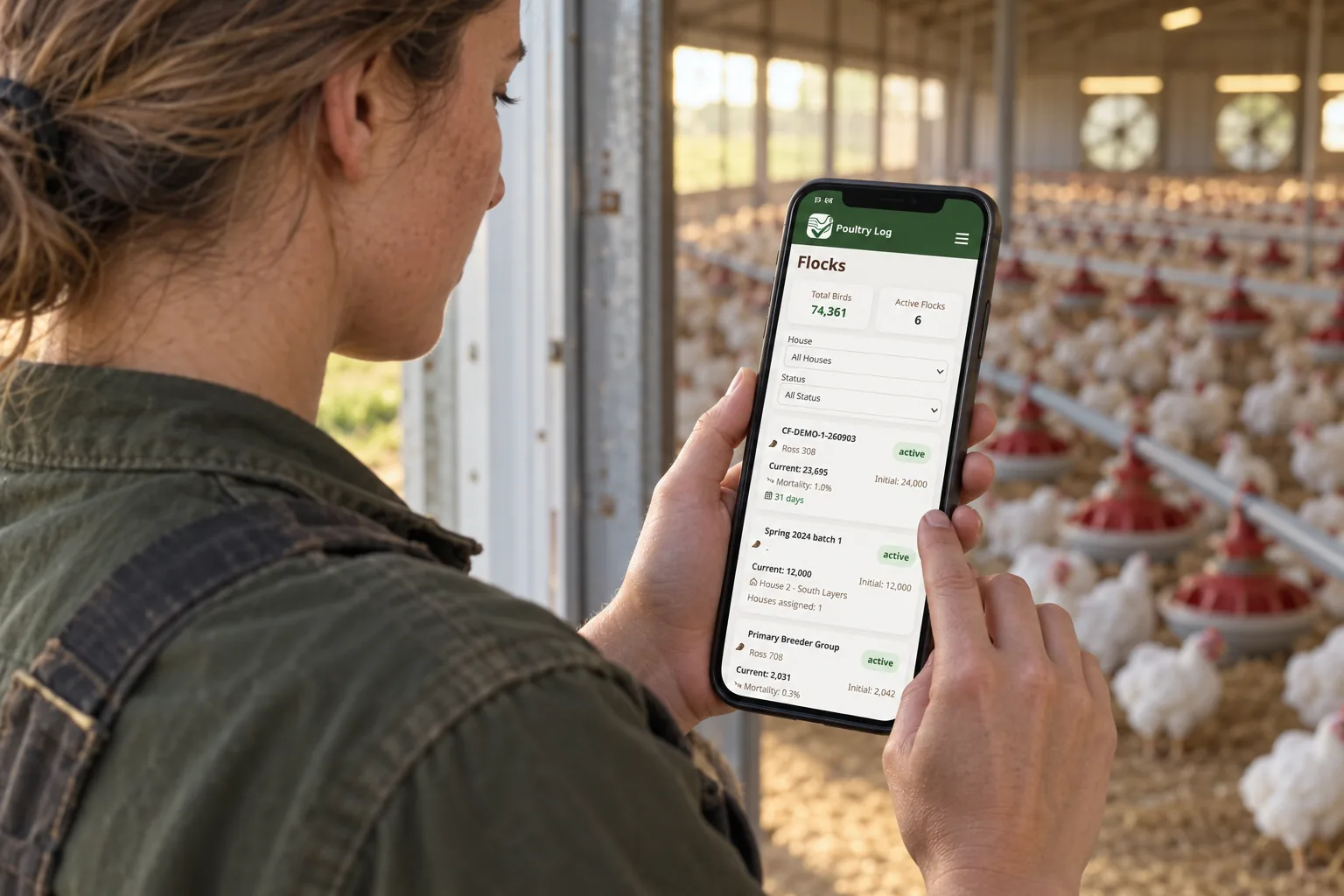
Tracking Behavior In Poultry Log™
Behavior observations on one timeline let sunbathing patterns be read against their context — parasite interventions, molt periods, and seasonal shifts — without mistaking the posture for illness. The dust bathing guide covers the companion behavior; the lice guide covers what the behavior manages versus what still needs intervention.
- 2026-10-06: Comprehensive rewrite — function table (thermoregulation, parasite management, D3 synthesis, feather maintenance) and the illness-misreading section — replacing the earlier boilerplate version.
- Earlier version: short first-person note on sunbathing.