
The annual molt is the hen's programmed feather replacement — a hormonal cycle triggered by day length that drops her feathers, rebuilds them, and pauses egg production through the process. The biology is non-negotiable: feather rebuild is protein-intensive, and the bird diverts dietary protein from laying to plumage for the duration. That is why molt shows up in the feed bill as well as the nest box — a molting hen eats at an elevated protein demand while producing nothing, and the ration has to carry the rebuild or the feathers come in poor and the next laying cycle starts from a deficit. This page covers what the molt does, how to read it, and the ration and management decisions that shape its cost.
What The Molt Does
| Phase | What Happens | The Management Read |
|---|---|---|
| Trigger | Shortening day length shifts the hen's hormonal state — laying declines first, then feather drop begins (the layer feed guide covers the photoperiod connection) | The fall timing is programmatic — the fall guide covers when to expect it and how the light decision interacts |
| Feather drop | Feathers shed in sequence — often starting at the head and neck — leaving the bird visibly bare; production typically stops entirely during the heavy phase | The vulnerable period: bare skin attracts pecking (the pecking order guide covers the feedback loop), and thermoregulation needs rise as insulation drops |
| Rebuild | New feathers grow in — protein-intensive, drawing dietary amino acids away from any residual laying (the protein guide covers the elevated demand; the vitamin A guide covers feather-quality nutrition) | The ration decision window: a higher-protein feed through rebuild produces better feathers and a faster return to lay — the feed budget guide frames the premium honestly against the production gap it shortens |
| Return to lay | Production resumes as feathers complete and the hormonal cycle resets — timing varies by breed, age, and how well the rebuild was supported | The record payoff: the egg profit guide's per-dozen math shows what the molt period cost, and whether the protein premium moved the return |
What To Do During The Molt
- Support the rebuild with protein. The single management decision that shapes the molt's outcome — a higher-protein ration (or a balanced supplement where the base ration is fixed) through the rebuild window. The protein guide covers the demand; the mealworm guide covers a treat that actually contributes protein within the treat boundary.
- Manage the vulnerable period. Bare birds peck and are pecked — the pecking order guide covers the feedback loop; space, resource duplication, and the dust bathing opportunities that disperse social energy (the space guide covers the numbers).
- Watch the water. Molt-stressed birds drink differently — the water guide's record discipline catches the intake shifts that accompany the cycle; the water early-warning guide covers the pattern-reading.
- Do not force production through it. Supplemental light that overrides the molt's natural pause works against the biology — the hen rebuilds either way, and the production forced during a heavy molt is poor. The layer feed guide covers the light-program discipline.
The Money Connection
The molt is the year's planned production gap — and its cost is a management variable, not a fixed one. A hen that rebuilds on a proper protein ration returns to lay faster and in better condition than one that rebuilds on standard feed; the egg profit guide's per-dozen math shows the difference as the length of the gap, and the margin framing scales the same seasonal economics from coop to commercial house. What the molt rewards is the fall-planning discipline the fall guide describes: the ration decision made before the feathers start dropping, not after.
Tracking Molt In Poultry Log™
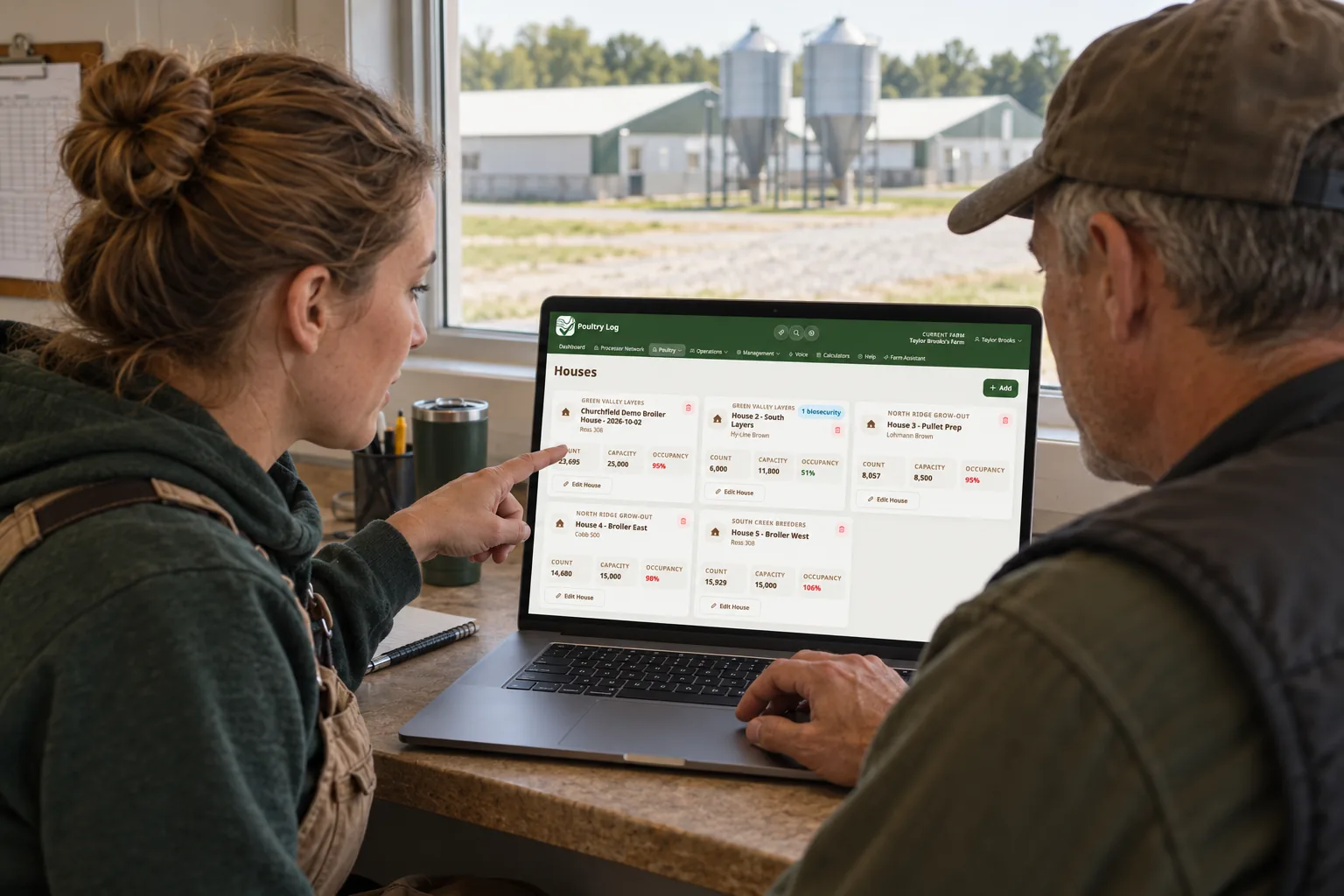
Egg counts and feed records on one timeline let each molt be measured against the last — the length of the gap, the protein premium's effect on the return, and which hens molt on schedule. The fall guide covers the seasonal preparation; the profitability dashboard carries the trend across flocks.
- 2026-10-06: Comprehensive rewrite — phase table (trigger, drop, rebuild, return), management section, and gap-cost-as-variable framing — replacing the earlier boilerplate version.
- Earlier version: short first-person note on the annual molt.