blood in the droppings in chickens Health

Blood in the Droppings in Chickens: What It Usually Means

Last updated: October 6, 2026

Blood in a chicken's droppings most commonly points to coccidiosis — an intestinal parasite that damages the gut lining — but a cut or prolapsed vent can look similar. The difference matters: coccidiosis is a flock-level problem that spreads through litter, while a vent injury is an individual event. Educational guidance for observation, not a diagnosis.

Blood in the Droppings in Chickens: What It Usually Means

Blood in a chicken's droppings most commonly points to coccidiosis — an intestinal parasite that damages the gut lining — but a cut or prolapsed vent from trauma or egg binding can look similar at a glance. The difference matters: coccidiosis is a flock-level problem that spreads through litter, while a vent injury is an individual event. This page covers what each usually looks like, what to check first, and when to call the veterinarian — educational guidance for observation and record-keeping, not a diagnosis. Only a veterinarian can confirm cause, and coccidiosis treatment decisions (including any medicated feed or water program) belong with your vet or integrator's technical service.

Not a diagnosis: Blood in droppings can indicate conditions that need prompt professional attention, and some treatments carry withdrawal periods that affect slaughter eligibility. Separate affected birds if possible, note what you see, and contact your veterinarian or integrator. What this page gives you is structured observation and the records that make that call productive.

Blood in the Droppings: What It Usually Means

Cause What You'd See Alongside It First Check
Coccidiosis Bloody or mucoid droppings spreading across a house; ruffled birds; uneven growth preceding the signs; often peaks weeks 2–4 Litter caking and moisture, water quality, recent ration changes, and whether the flock is on a coccidiosis program per your vet
Vent injury or prolapse One or a few birds with visible vent damage or blood on the vent feathers; flock otherwise normal Inspect the individual bird; check for trauma sources (equipment gaps, penning) and, in laying birds, egg-binding history
Blackhead or other disease Droppings may be greenish or foamy alongside blood; often in birds with outdoor or mixed-species access Veterinary diagnosis — this class of disease needs professional confirmation

What to Check First

  1. How many birds, and how fast is it spreading? Isolated cases point to individual injury; rising numbers across a house point to something circulating in the litter. Pull mortality and any morbidity notes from your logs for the last several days.
  2. Litter condition. Caked, wet litter is the coccidiosis amplifier — it both harbors oocysts and signals the humidity that lets them thrive. The litter guide covers moisture management; droppings consistency and color should be noted on every daily walk.
  3. Water and feed history. Intake often drops before visible illness. Compare against the water chart and feed chart for the age — a paired drop with bloody droppings escalates urgency.
  4. Recent changes. New litter source, ration change, water medication, or a crew or equipment movement into the house — coccidiosis outbreaks often trace to a change, not the weather.

When to Call the Veterinarian

Bloody droppings spreading across a house: call today. Coccidiosis confirmed by your vet is treated with a professional program — self-medicating without diagnosis risks withdrawal-period violations and resistance.
Visible vent injury on individual birds: isolate the bird, provide shade and easy water access, and call if you cannot resolve it or if numbers rise — a prolapse or injury that recurs across birds points to an environmental cause worth finding.
Bloody droppings plus sudden mortality or gasping: call immediately — overlapping conditions change the response, and reportable-disease questions are for your veterinarian and integrator to handle.
Withdrawal periods: whatever treatment is prescribed, record product, batch, dose, dates, and the withdrawal end date — birds treated near catch with no recorded withdrawal cannot ship. See the integrator records standard.

What to Log

Bloody-droppings observations earn log entries with house, date, time, and what you saw — color, consistency, how many birds, spread across the house. Paired with water, feed, and mortality on the same timeline, the record shows when signs started and what moved before them. That record is what turns a guess into a diagnosis direction when the veterinarian arrives — and what protects the flock at settlement, where a health event caught in week 2 instead of week 4 is worth real pounds per bird. The cause-signature table covers the pattern-reading method.

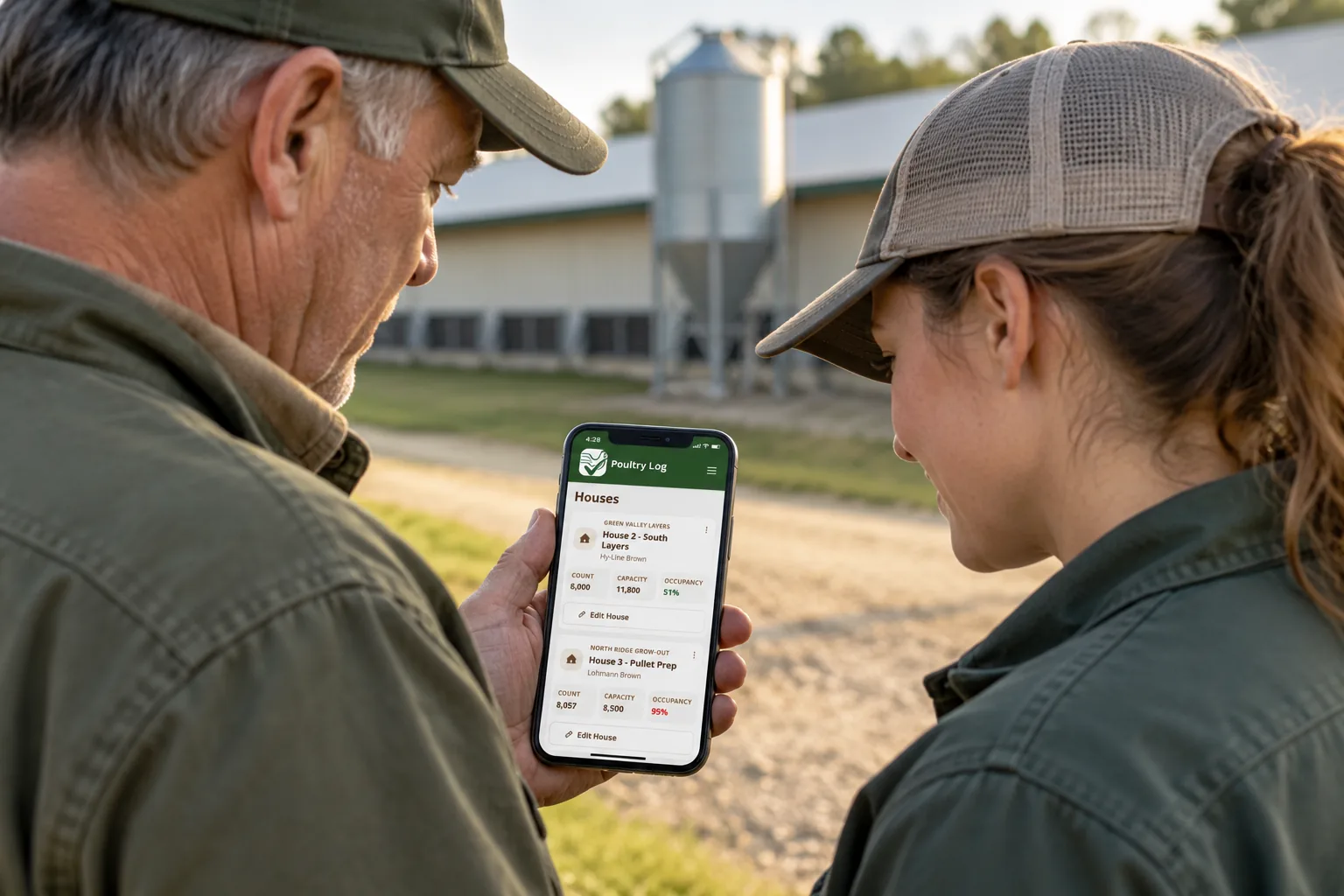
Tracking Health Observations in Poultry Log™

Daily observations logged in Poultry Log™ carry house and time automatically — so a droppings observation sits on the same timeline as litter notes, water intake, and mortality, and the review that follows is minutes instead of a notebook hunt. Treatment records with batch numbers and withdrawal dates live in the same place, which is what makes the food-safety side auditable: see the audit-ready guide for the preparation method. Each flock's health history feeds the profitability dashboard as part of what the event actually cost per pound.

Revision log:
  • 2026-10-06: Comprehensive rewrite as educational, non-diagnostic guidance — cause table, first checks, vet-referral decision tree, and withdrawal-period record note — replacing the earlier version with fabricated first-person claims and treatment instructions.
  • Earlier version: short first-person note with treatment-directive framing.
Direct answer

What causes blood in the droppings in chickens?

Blood in the droppings in chickens most commonly indicates coccidiosis — an intestinal parasite spread through contaminated litter — or an individual vent injury. Check how many birds are affected and how fast it spreads, litter moisture, and water quality; contact your veterinarian promptly if droppings turn bloody across a house, since coccidiosis treatment decisions belong with a professional and carry withdrawal-period implications.

Common causes: coccidiosis (spreads through litter, often peaks weeks 2-4) or vent injury (individual event).

First checks: spread rate across the house, litter caking and moisture, water quality, recent ration or litter changes.

Call the vet for spreading bloody droppings, overlapping respiratory signs, or rising mortality — self-medicating risks withdrawal violations.

Record treatment product, batch, dose, dates, and withdrawal end date — unrecorded withdrawals put slaughter eligibility at risk.

Comparison

Paper records vs Poultry Log™ for blood in the droppings in chickens

Paper and spreadsheets can store blood in the droppings in chickens data, but they rarely show which house, flock, or expense is actually costing money.

Farm need Paper or spreadsheet Poultry Log™
Common causes: coccidiosis (spreads through litter, often peaks weeks 2-4) or vent injury (individual event).
Scattered across notebooks and hard to find when needed.
Logs and trends stay connected to the house and flock where they happened.
First checks: spread rate across the house, litter caking and moisture, water quality, recent ration or litter changes.
Requires manual calculation and cross-referencing.
Automatic calculations and cross-referencing between data types.
Call the vet for spreading bloody droppings, overlapping respiratory signs, or rising mortality — self-medicating risks withdrawal violations.
Easy to start but difficult to analyze across multiple flocks.
Structured data that can be analyzed across flocks and houses.
Record treatment product, batch, dose, dates, and withdrawal end date — unrecorded withdrawals put slaughter eligibility at risk.
No connection between this data and financial outcomes.
Ties directly to expense and settlement records for profitability view.
Poultry Log™

Start building farm records that explain performance.