
The Daily Checklist That Top Broiler Growers Never Skip
Top broiler growers share a common habit: they follow a structured daily walkthrough that covers every critical area in every house. The walkthrough is not a random tour. It is a systematic check that can be completed in 15 to 20 minutes per house and covers bird health, equipment function, environmental conditions, and record keeping. The difference between following a structured checklist and walking through without one is the difference between catching problems early and finding them too late.
Why a Written Checklist Matters
Experienced growers often feel they can spot problems without a checklist, and many can — for the obvious issues. But a written checklist ensures that less obvious items are not forgotten, that all houses are checked to the same standard, that records are completed during the walkthrough rather than reconstructed from memory later, that new or temporary workers can perform the walkthrough to the same standard, and that nothing is missed during stressful periods when attention is divided.
A checklist also serves as a training tool for new workers. It documents the standard and provides a framework for learning the farm.
Morning Walkthrough Checklist
The morning walkthrough is the most important check of the day. It sets the baseline for all subsequent observations. Start by listening to bird activity before entering: healthy birds should be active and making feeding sounds. After entering, check bird distribution — birds should be evenly spread, not huddled. Mortality count should be collected and recorded, with any dead birds removed and noted. Check crop fill on a sample of birds to confirm overnight feeding and drinking. Look for birds showing signs of illness, injury, or distress and record any culls.
Check feed lines and pans to ensure feed is flowing and pan depth is correct. Check drinker lines for flow, height adjustment relative to bird back height, and presence of leaks causing wet litter. Check temperature at bird level — the target varies by age but should be within the comfort zone. Check relative humidity and observe bird behavior for panting or huddling. Check ammonia levels — anything above 25 ppm needs immediate ventilation adjustment.
Record all observations: mortality numbers, water meter readings, temperature extremes, and any treatments or adjustments made.
Afternoon Walkthrough Checklist
The afternoon check is shorter but still important, especially during hot weather when temperature management is critical. Check current temperature at bird level and compare to morning reading. Observe bird panting rate — during hot weather, action is needed if more than 50 percent of birds are panting. Check drinker function, water flow, and ensure water is available and cool. Check ventilation settings and verify that fans and inlets are operating correctly. Confirm that any morning adjustments are working and the birds are comfortable.
Pre-Settlement Walkthrough
Before birds are caught for processing, a thorough walkthrough ensures everything is ready for the catching crew. Check feed removal timing per integrator instructions. Check water availability up to the scheduled cutoff. Remove or secure any loose equipment. Ensure all lights are working for the catching crew. Check for wet litter conditions that could cause foot pad issues and confirm bird weight distribution if possible.
Building Your Farm Specific Checklist
Every farm is different, and a good checklist reflects the specific equipment, house design, and management practices of that farm. Start with the standard checklist above and add items specific to your houses. Older houses may need additional checks for equipment reliability. Houses with automatic weighing systems need scale verification checks. Farms with tunnel ventilation need inlet and curtain checks that cross-ventilated farms do not.
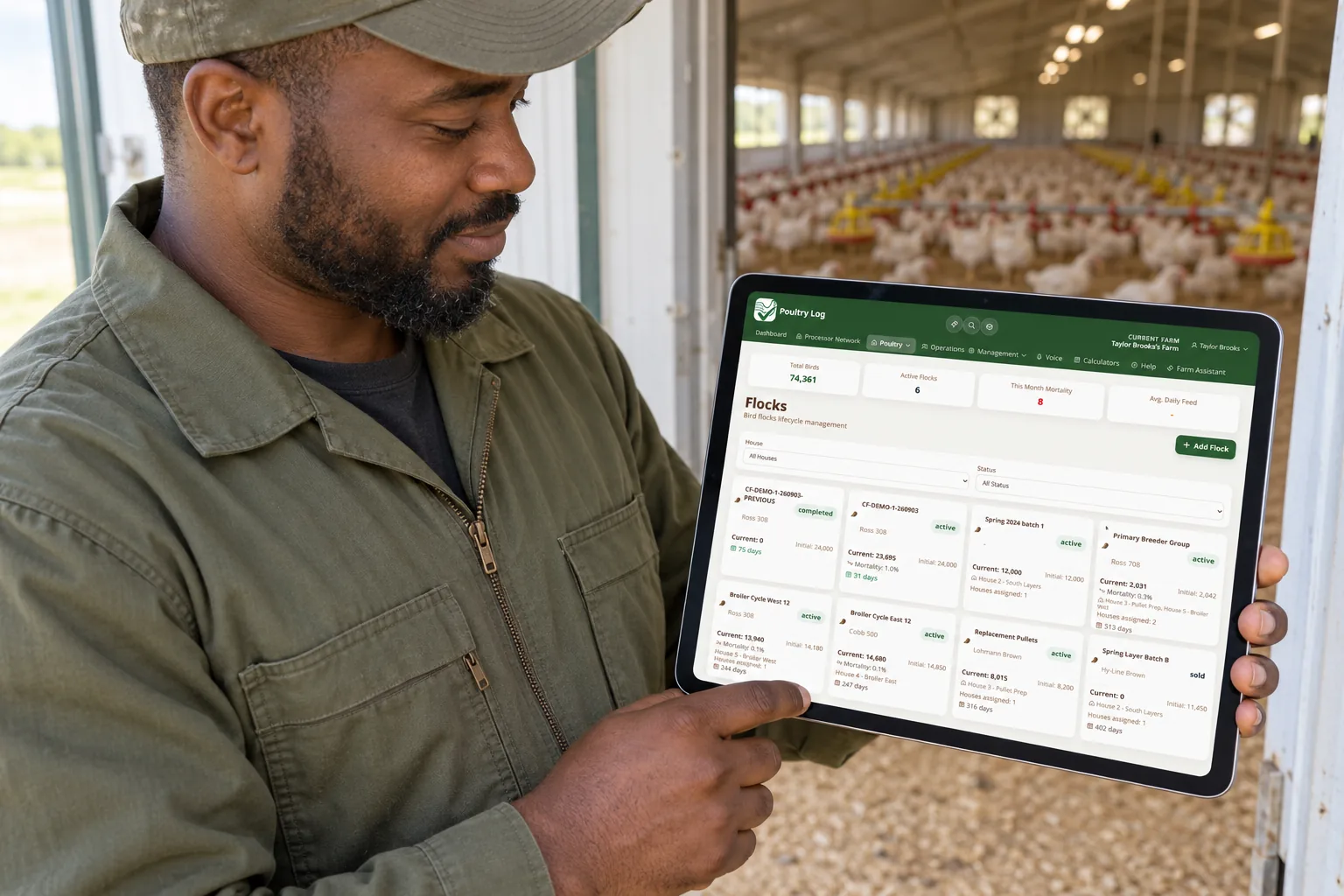
The most effective checklists are printed on weather-resistant paper or loaded into a mobile app so they are always available during walkthroughs. Post-flock review of checklist findings can identify recurring issues for systematic correction.
Give Every Checklist Exception a Cost
A completed checklist is not the finish line. Record exceptions with a house, time, owner, corrective action, and follow-up reading. At flock closeout, connect repeated exceptions to repair expense, labor, feed conversion, mortality, weight, energy use, and settlement deductions. This identifies the small daily failures that consume margin: a drinker leak that keeps returning, a fan that draws power without moving enough air, or a feed outage that reduces uniformity. Rank recurring findings by estimated dollars at risk and fix the highest-value cause first. A checklist makes money when it shortens the time between the first warning and a verified correction.