
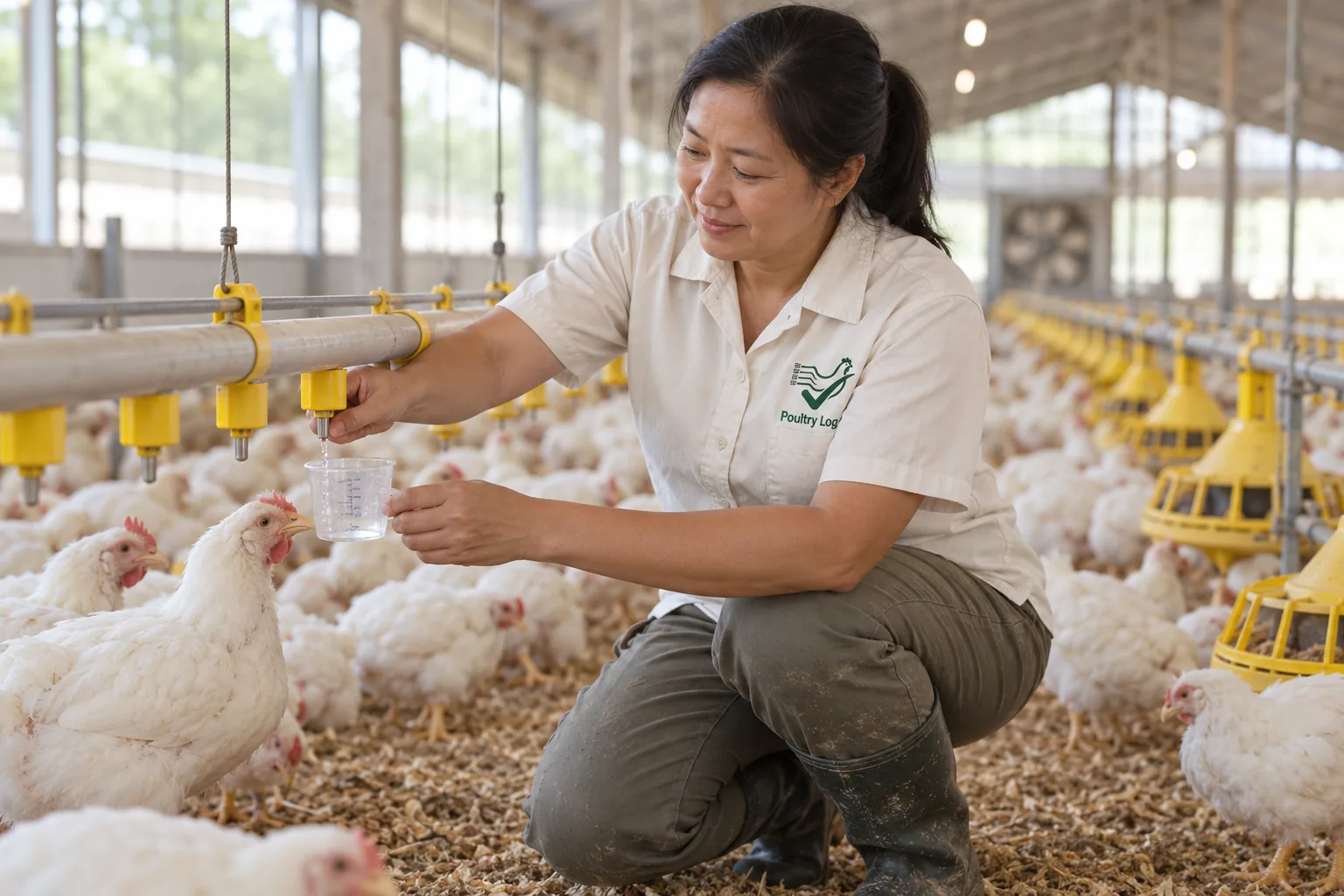
Record audits are where recordkeeping proves itself — or fails. Whether it is an integrator review, a third-party welfare audit, or your own season retrospective, the question is always the same: can you produce dated, house-specific records on demand? An app built for record audits answers that in minutes with an export; a count-and-note tool answers it with a reconstruction project. This page covers what audit-grade records demand, what to verify in any app before an audit decides for you, and where PoultryLog™'s record set stands against those demands.
What Do Auditors and Integrators Actually Ask For?
| They Ask For | What Makes a Record Audit-Grade | What to Verify in Any App |
|---|---|---|
| Daily mortality by house and date | Timestamped entries with cause notes — not a weekly total | Enter mortality with time and house; retrieve a full month for one house |
| Treatment and medication records | Product, batch number, dose, dates, withdrawal end date — the most audit-critical record on the farm | Log a treatment with batch and withdrawal date; confirm it appears in export |
| Vaccination records | Product, date, method, batch, birds treated | Same test as treatments — the fields must exist, not be free-text afterthoughts |
| Environmental and equipment records | Temperature, ventilation, service history with dates | Check where equipment service logs live and whether they export with the rest |
| Corrective actions | Finding, response, date closed — the loop auditors look for | Ask how a corrective-action note is stored and retrieved |
The common thread: dates and house attribution on every entry. A record without a date cannot support a withdrawal calculation, a disease investigation, or a settlement discussion — which is why "we think that was the south house" fails every audit it meets. See the integrator records requirements for the full spine and the audit-ready guide for preparation method.
What to Verify Before the Audit Decides for You
- Run the audit drill in the demo: ask for "every record for house 3 in March" and time the result. Minutes is the standard; hours is the answer you are trying to avoid.
- Check the export: one month of records, PDF or standard format, with dates and houses intact. If the export is a screenshot collage, keep shopping.
- Confirm treatment fields: batch numbers and withdrawal dates must be structured fields, not buried in notes — auditors read them as data.
- Ask what happens to your records if you cancel: retained, exported, or deleted — and on what schedule. Get it in writing before signing.
Where PoultryLog™ Fits
PoultryLog™ stores the audit spine as structured records: dated daily logs by house and flock, treatments and vaccinations with batch numbers and withdrawal dates, equipment service history, and compliance checklists that can be structured to a region profile rather than a US state catalog — so EU operations keep the shape their authority expects. Exports produce the dated, house-specific record set auditors read. It is strongest for contract broiler growers whose audits come from integrators and USDA-linked programs; for the honest limits and other segments, see the buyer's guide.
Where the Money Shows Up
Audit-grade records pay back three ways: the audit itself (an export instead of a midnight reconstruction — see the audit-ready guide), food-safety exposure (treatment records with withdrawal dates are what keep a flock eligible for slaughter), and settlement (records that support the comparison method when the integrator's sheet disagrees with your memory). The settlement calculator shows what the third one is worth.
- Poultry management software buyer's guide — parent evaluation framework.
- Audit-ready records — the preparation method.
- HPAI biosecurity records — the evidence layer that protects the whole complex.
- 2026-10-05: Comprehensive rewrite. Audit-demand table, verification drill, and honest positioning under the buyer's guide — replacing the earlier self-ranking version.
- Earlier version: "best app" ranking with unverified competitor claims.