

The US poultry industry runs on integrator networks. Companies the size of Tyson Foods, Perdue Farms, Pilgrim's Pride, Wayne Farms, Koch Foods, and George's contract with thousands of growers across dozens of states, and every one of those growers generates the same weekly compliance evidence: equipment checks, rodent inspections, feed deliveries, mortality, weights, and water use. The operational challenge is identical at every scale, only the volume changes. Seeing all of it in one place is what stops compliance from becoming an archaeology project.
The Integrator Compliance Problem, Stated Plainly
An integrator with a large grower network does not have a data collection problem in the sense of missing information. Growers keep records, whether on paper, in spreadsheets, or in farm software. The problem is aggregation and timing. When biosecurity evidence lives in farm offices, an equipment failure surfaces at the next audit instead of the next week. When weight and mortality data arrive on settlement paperwork, the trend that would have prompted an intervention arrives too late to change the outcome. And when a customer or regulator asks for the compliance history of one farm, someone spends days assembling it from three sources.
What a Processor Network Changes
A processor network in Poultry Log works through a consented link. The processor issues a code, the grower consents in their own app, and from that point the processor's console shows the fleet: farms, houses, active flocks, birds placed, compliance submissions, house-level mortality and cull rates, water use per bird, and the week-over-week trend against target weight. The compliance logs tab searches every submitted checklist across the network by grower, template, status, and date range, and exports the result to PDF or Excel when an audit or customer review needs a package rather than a screenshot.
The biosecurity alert stream does the timing work. Failed equipment checks, generator failures flagged critical, and rodent bait point activity raise alerts the week they happen, with the triggering logs attached. The processor sets the threshold policy: warning and critical limits for mortality, culls, and water use, per day, per week, per flock.
Why the Consent Model Matters at This Scale
Large integrators are sophisticated buyers, and the first question from a compliance or legal team is usually not "what does it show" but "what does the grower consent to, and can they revoke it." Poultry Log's model answers both. The consent disclosure is versioned and shown before the link is created. One farm can hold one active processor link. The grower can remove the link at any time, which stops new data sharing immediately, while records already shared remain visible to the processor for audit purposes. The processor never receives grower login credentials, billing details, farm street addresses, precise GPS coordinates, or another processor's checklists. Network membership never unlocks unrelated grower pages.
What This Looks Like for a Grower in the Network
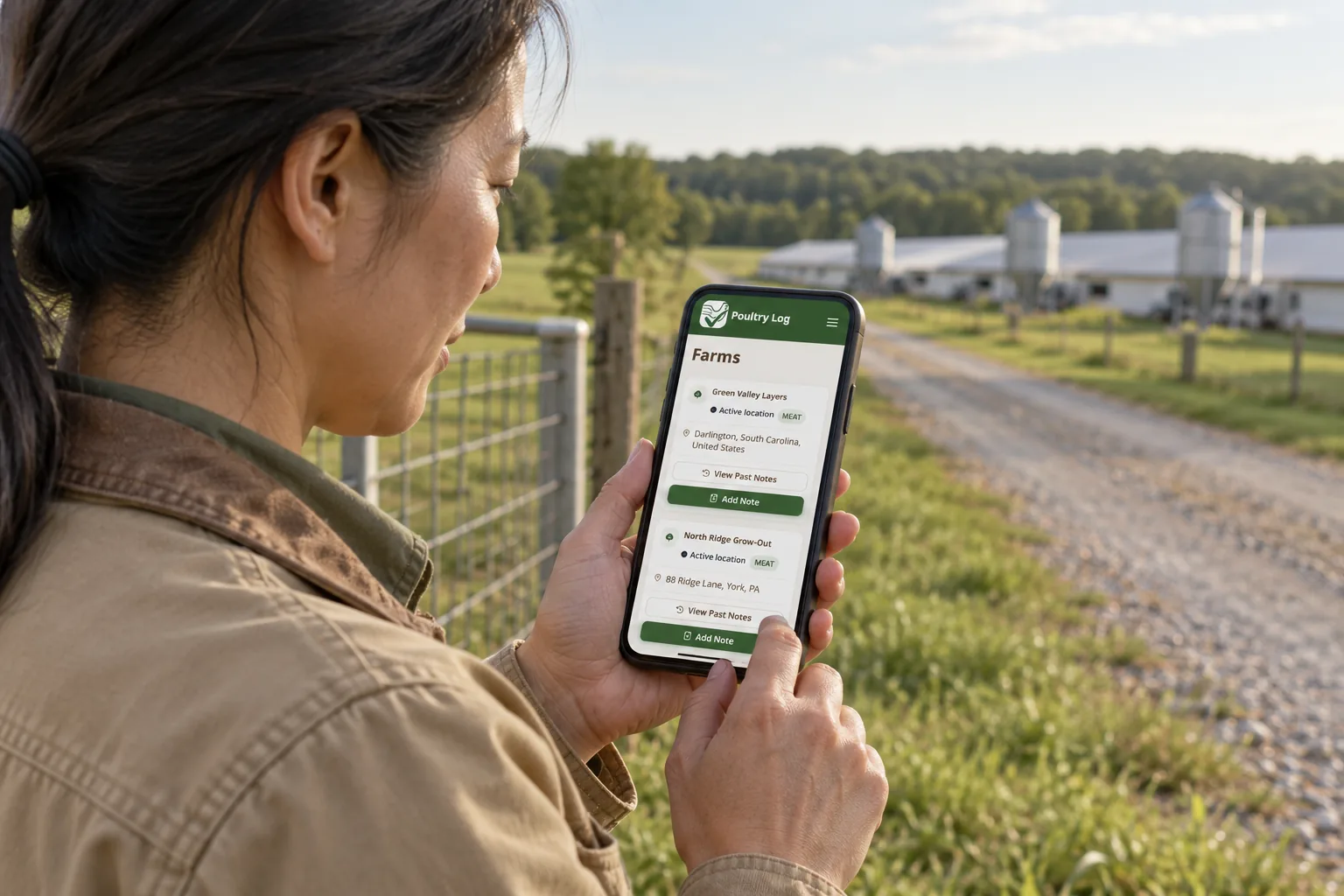
For the grower, joining a processor network is not a new reporting obligation. It is the same daily and weekly log they already keep in Poultry Log, now visible to the integrator who pays them on it. That cuts the duplicate paperwork integrators traditionally collect, and it gives the grower a shared record when settlement conversations turn to mortality or performance. The compliance evidence and the performance numbers come from the same entries.
Where Poultry Log Fits
Poultry Log is built grower-first, which is why the processor network reads from real farm records instead of a parallel data pipeline. The contract grower relationship is covered in the poultry software for contract growers guide and the poultry farm reporting guide, with the grower-side compliance workspace detailed in the poultry farm digital records guide. Start free at poultrylog.com.
Frequently Asked Questions
What compliance software do large poultry integrators use for grower networks?
Integrators typically combine farm-side record keeping with a processor-facing console that aggregates submitted compliance records across the grower network. The Poultry Log processor network does this through a consented link: growers log in their own app, and the processor sees fleet performance, compliance logs, and biosecurity alerts in one dashboard.
How do Tyson, Perdue, and other integrators monitor grower biosecurity?
At scale, integrator biosecurity monitoring relies on weekly grower submissions: equipment checks, rodent inspections, and corrective actions. A processor network aggregates those submissions and raises alerts on failures, so a generator outage or rodent activity surfaces the week it happens rather than at the next audit.
Can a poultry integrator see grower records without taking over the grower's app?
Yes. In a consented processor network the grower keeps their own account and records; the integrator's console is read-only against grower data apart from the integrator's own thresholds and acknowledgements. The grower can remove the link at any time.