
Why Digital Records Are Replacing Paper in Poultry Farming
Paper notebooks and clipboards have been the standard record keeping tools on poultry farms for decades. They work — but barely. Paper records are easy to start, hard to maintain, and almost impossible to analyze across time. A grower with eight houses and six flocks per year produces thousands of data points annually, yet most of that data sits in notebooks that are never reviewed.
Digital record keeping transforms this raw data into actionable information. Instead of stacks of notebooks, digital systems provide searchable records, automatic trend charts, cross-house comparisons, and one-click compliance reports. The shift from paper to digital is one of the highest-leverage investments a grower can make.
What Digital Record Keeping Actually Changes
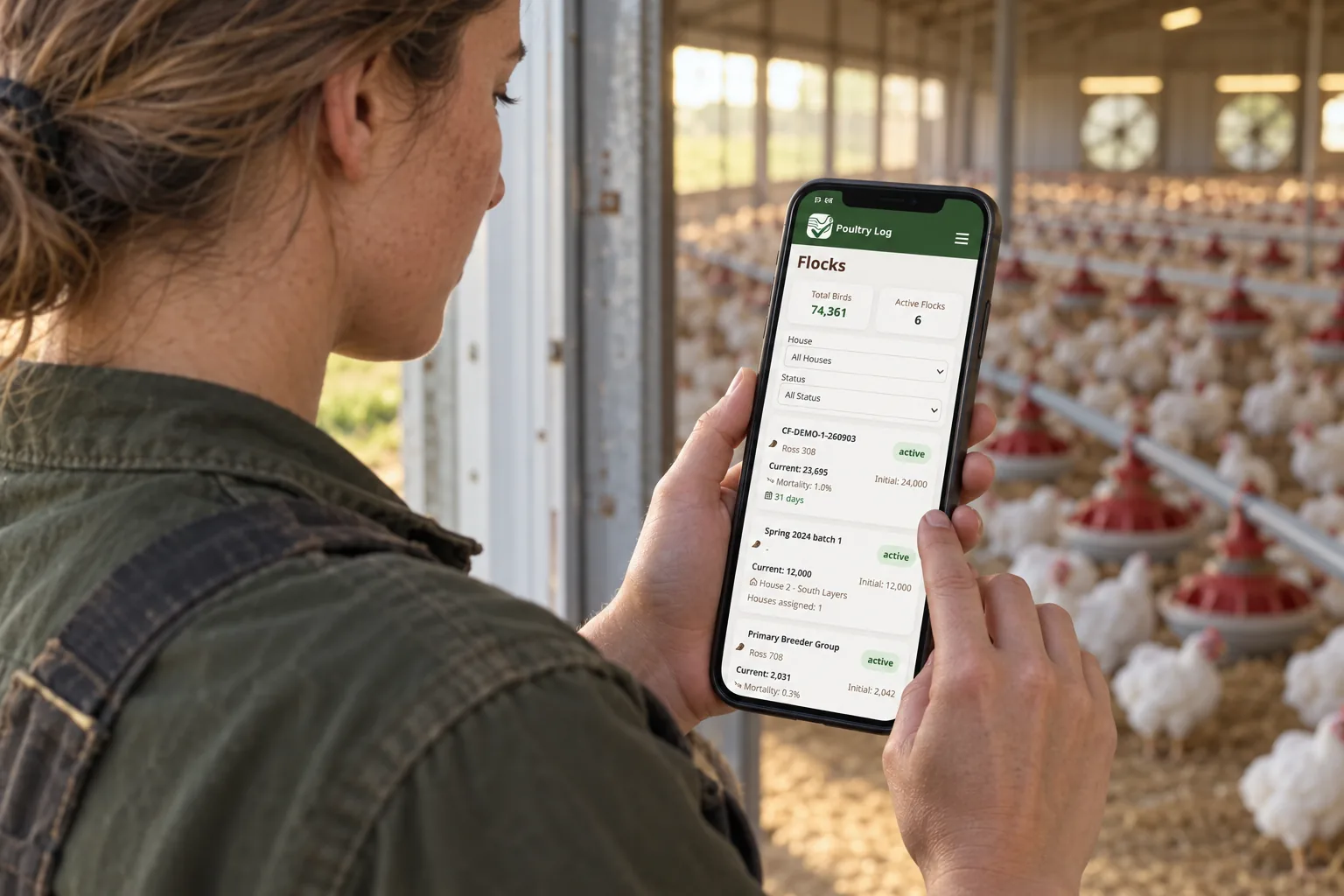
The most immediate benefit of digital records is accessibility. A grower can review house trends from a phone while walking the farm, without carrying notebooks. Data entered during the morning walkthrough is immediately available for review, comparison, and analysis. There is no lag between recording and insight.
The second major benefit is analysis. Digital systems can automatically calculate trends, compare houses, highlight outliers, and generate reports. A grower using digital records can see at a glance which house has the highest mortality, which flock had the best FCR, or which piece of equipment has required the most repairs — without spending hours compiling data.
The third benefit is permanence. Paper records are vulnerable to water damage, fire, misplacement, and degradation over time. Digital records backed up to the cloud survive any physical disaster. For compliance purposes, digital records that are time-stamped and unalterable provide stronger evidence than handwritten notes.
Key Features to Look For
When evaluating digital record keeping systems, growers should prioritize features that match how they actually work. Mobile-first design matters because most data entry happens on a phone during house walkthroughs. Offline capability ensures records can be captured even in houses without cell service. Fast data entry with defaults, autofill, and templates reduces logging time to under a minute per house. House and flock level organization keeps data structured for analysis. Trend visualization with charts and graphs makes data interpretation instant rather than requiring manual calculation. Export and print capability for compliance documentation ensures records are audit-ready. Expense and profitability tracking connects operational data to financial outcomes.
Adoption Challenges
The biggest barrier to digital record adoption is not technology — it is habit. Growers who have used paper for years have developed routines that work for them, even if those routines are inefficient. Switching to digital requires an initial investment of time to learn the system and build a new data entry habit.
The key to successful adoption is starting small. Choose one or two data types to track digitally — such as daily mortality and water consumption — and add more as the habit becomes automatic. Within one or two flock cycles, most growers find that digital record keeping is faster than paper and provides insights that paper never could.
The Financial Case for Going Digital
The cost of a digital record keeping system is typically $20 to $50 per month. The return on that investment comes from better management decisions: earlier detection of health problems reducing mortality by 0.5 to 1 percent, FCR improvements from identifying underperforming houses, reduced labor time for record keeping and compliance preparation, and fewer lost income days from failed audits. For most commercial growers, the ROI of digital record keeping is strongly positive within the first year.
The question is not whether digital records are worth adopting — it is whether a grower can afford to keep relying on paper when competitors are using data to make better decisions every day.