
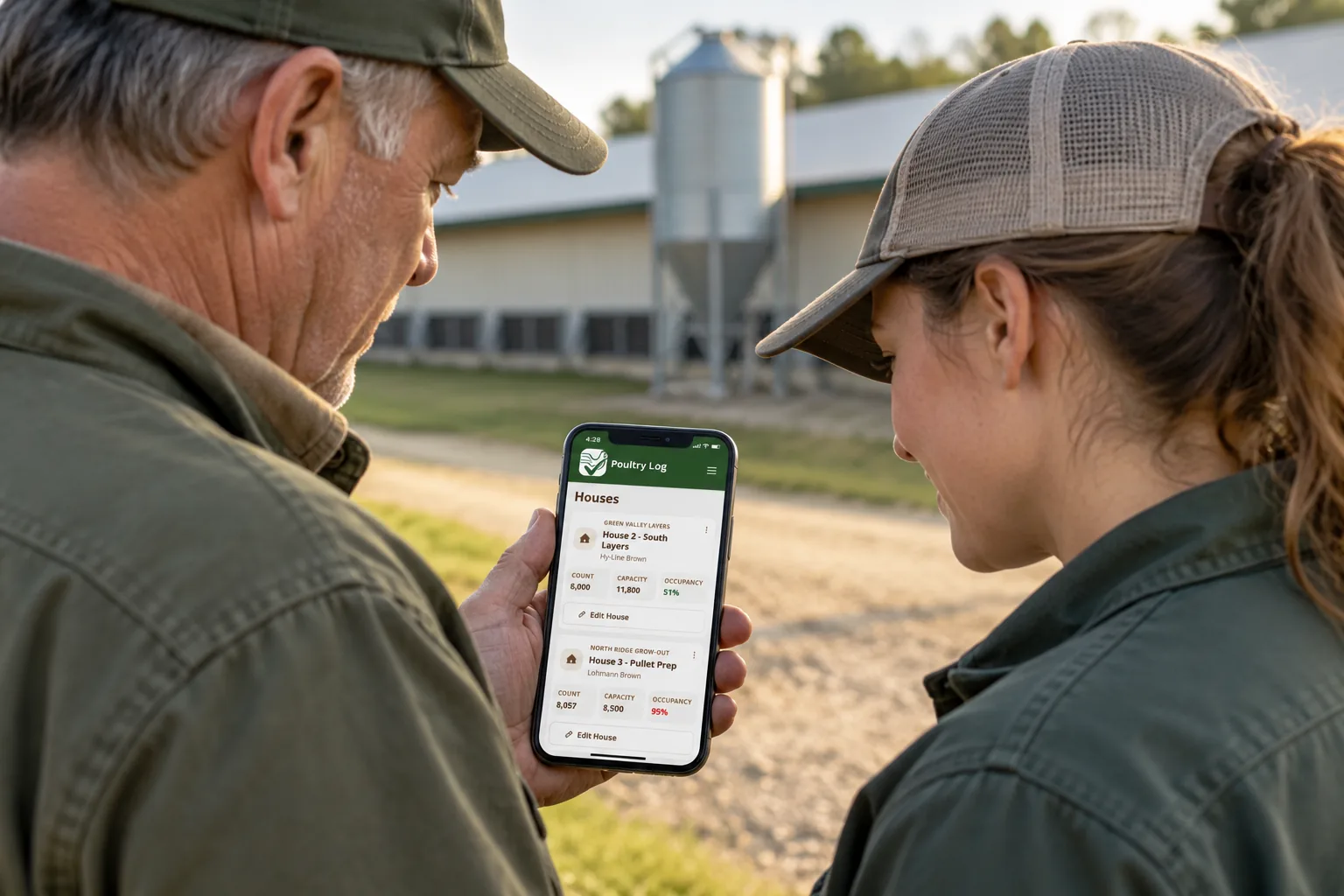
Switching from My Poultry Manager — or any poultry app you have outgrown — succeeds on verification before commitment: pull what your current system can export, confirm which reports your decisions actually run on, and only then stage the cutover. This page is the migration check for growers leaving a poultry-specific app: what to verify in the system you have, what the staged cutover looks like, and what changes day-to-day in the new record. It makes no claims about My Poultry Manager's features — the verification questions below are things only you can answer about your own setup, and the answers decide whether to switch at all.
Verify Before You Commit
| Question About Your Current System | Why It Decides the Switch |
|---|---|
| Can it export your records — and what does the export actually contain? | An export you cannot open is not a migration path. Pull one while you still have full access, and check that daily logs, flock lists, and any financial rows come with it. |
| Which reports do your decisions actually run on? | Most operations use two or three reports habitually; name them. The migration must reproduce those — everything else is archive, not migration. |
| Do the records produce poultry-specific numbers? | Weight against strain curve, FCR per flock, mortality per house — the numbers broiler decisions run on. If your current system computes them, weigh what switching actually buys. |
| What does a second person see when they log? | If anyone else enters records, their experience decides whether entries keep happening after the first month. |
The Staged Cutover
The method is the same one every migration in this cluster follows (the migration hub covers it in full): start at a clean boundary — a new flock placement or the first of a month; seed the active flock's current state so the new record starts from reality; move finance history through the finance CSV import where it exists in rows; keep the old system read-only for one full cycle; and verify at the first settlement compared line-by-line against the new record. The paper guide covers the same method for notebook-based operations.
What Changes Day-to-Day
For most growers leaving a poultry app, the daily change is smaller than expected: the same walk, the same observations, entered in structured fields with time-of-day instead of whatever structure the old app used. The larger change is what the record produces afterward — computed outputs like cost per bird and growth against the growth chart, without formulas or re-keying. The digital records guide covers what the record set contains; the audit-ready guide covers what the structured record makes possible at review time.
Frequently Asked Questions
Can I keep using my current app while I evaluate?
Yes — and you should, through the evaluation. The boundary decision (new flock or new month) is what stops dual maintenance; until then, run both read-only against the same question: which records does each system produce that your decisions need?
What if my current app exports everything fine?
Then the migration cost is lower than most people fear, and the decision narrows to whether the new record's reports and outputs are worth the cutover. The buyers checklist covers the comparison framework.
How long until the new record is fully trusted?
One grow-out cycle — the first settlement run entirely on the new record is the proof point. Before that, treat the old system as the reference; after it, the new record owns the operation's history going forward.
- 2026-10-06: Comprehensive rewrite as an honest verification-first migration guide — reader-answered check table, staged cutover reference, and no competitor feature claims — replacing the earlier version with fabricated first-person claims.
- Earlier version: first-person narrative about switching apps.