
Spring care for quail differs from every other poultry species in one structural way: their reproduction cycle is measured in weeks, not seasons. Coturnix quail hatch in about 17 days, reach laying age around 6-7 weeks, and broodiness is rare — which means spring decisions for quail are decisions about a fast-turning production system rather than a flock that carries through the year. The species-specific threads: flight capability (quail fly, and spring housing decisions must include overhead cover), the maturation-speed economics (feed cost per dozen arrives fast), and the ground-exposure question that connects to the chickens' spring parasite season. This page covers the quail spring in the order the decisions actually sequence.
The Quail Spring Sequence
| Decision | What Quail Add To The Chicken Spring |
|---|---|
| Housing with overhead cover | Quail fly — and spring housing decisions that ignore flight produce escape losses the moment the weather opens. Overhead cover is non-negotiable from day one, not a summer addition (the space guide covers the per-bird math that scales to quail housing) |
| Maturation-speed economics | Quail reach laying at 6-7 weeks and eggs hatch at ~17 days — the production cycle runs fast enough that spring placement decisions set the summer's egg math within weeks (the egg profit guide's per-dozen framing arrives sooner for quail than for any other species) |
| Broodiness: rare, not absent | Coturnix broodiness is uncommon — which means incubation decisions (if the operation hatches) run through equipment rather than hen behavior (the broody guide covers the hen-driven path that quail mostly skip) |
| Ground-exposure discipline | Quail on ground contact carry the same spring parasite corridor the chickens' spring guide describes — the worms guide covers the cecal-worm connection; caged or raised quail housing bypasses the ground-exposure question entirely, which is one reason confinement is the commercial standard |
What Quail Spring Reveals
- Feed conversion at quail scale. Quail convert efficiently for their size, but the per-dozen math still runs on the feed price (the feed budget guide's framing applies with quail's own numbers — gamebird or layer feed, whichever the program uses).
- The flight test. Spring is when housing gets tested by the flock's own capability — a cover gap discovered in April becomes an escape in May. The predator guide covers the ground side; the overhead side is quail-specific.
- Seasonal daylight response. Quail respond to day length faster than chickens — spring's lengthening days drive laying up quickly, and supplemental-light programs (if used) interact with the response earlier (the layer feed guide's photoperiod framing applies at quail speed).
The Money Connection
Quail production economics run on velocity: fast maturation means the per-dozen math turns over quickly, and spring placement decisions carry into summer revenue within weeks — the egg profit guide's framing arrives sooner for quail than for any other species. The pricing guide's cost-first method applies to quail eggs and meat at whatever channel the operation sells through; the margin framing scales the same velocity economics from a backyard cage system to a commercial barn.
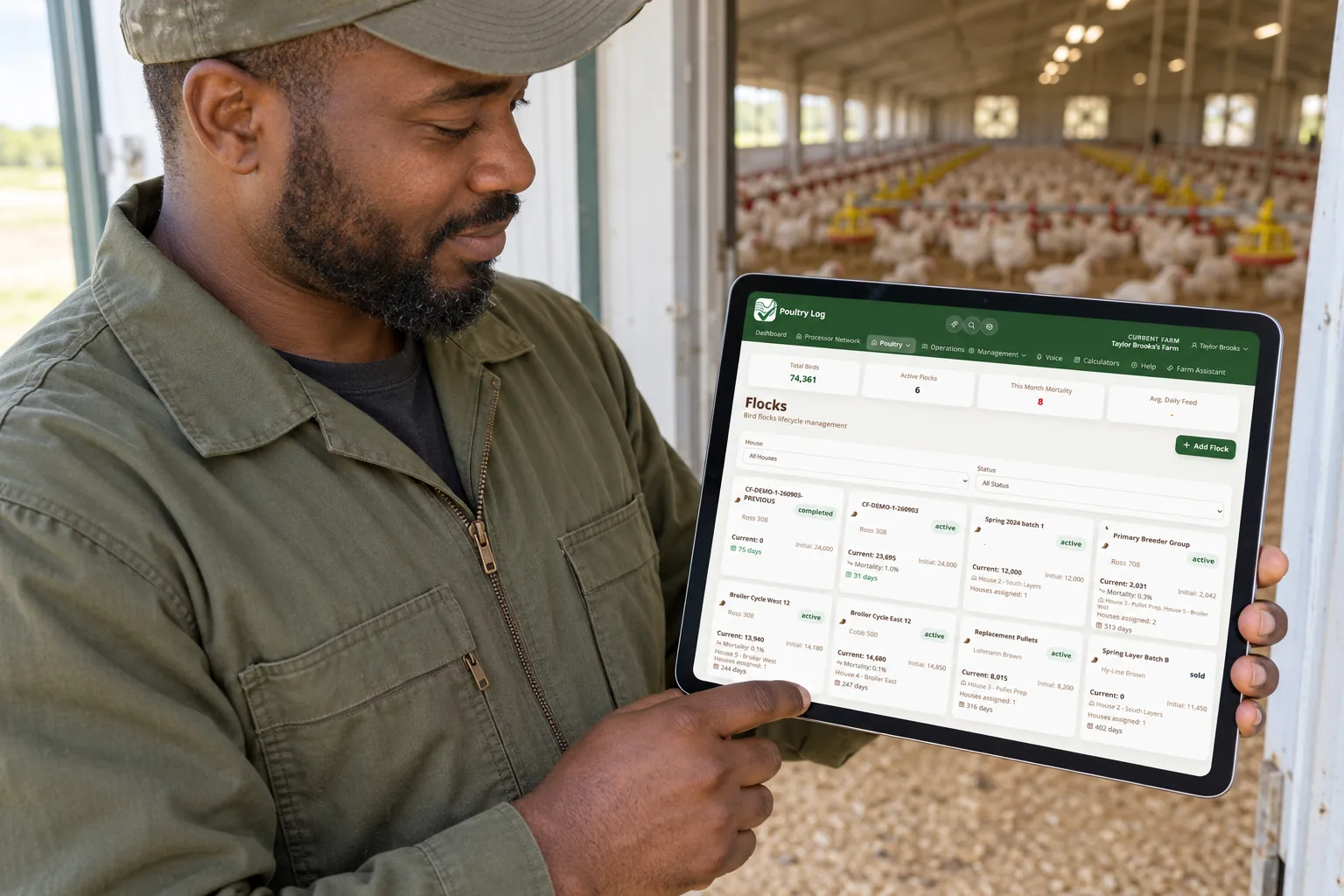
Tracking Quail Records In Poultry Log™
Feed, water, and egg records on one timeline let the quail season's velocity be measured honestly — feed consumed per dozen produced, per period, per flock, at quail speed. The chickens' spring guide covers the shared threads; the profitability dashboard carries the trend across flocks.
- 2026-10-06: Comprehensive rewrite — quail spring sequence (overhead cover, maturation economics, rare broodiness, ground-exposure) and velocity-economics framing — replacing the earlier boilerplate version.
- Earlier version: short first-person note on quail care in spring.