

Slaughtering or processing poultry for sale puts an operation inside one of the most structured compliance paths in the industry: federal inspection under the Poultry Products Inspection Act, a state plant license, or a documented exemption whose conditions must actually be met. The path differs by state, and the conditions differ by exemption, which is why "can I process my own birds" is a question with a state-specific answer. Poultry Log's state catalogs record the processing authorization requirements for each state with its agency, authority, cadence, and official source link.
The Three Paths, as the Catalogs Record Them
- Federal inspection - poultry processed for sale can operate under USDA FSIS inspection, the path the Poultry Products Inspection Act (21 U.S.C. 451 et seq.) establishes, with establishment requirements that the state catalogs reference rather than duplicate.
- State plant licensing - California records a CDFA poultry plant license path under California Food and Agricultural Code sections 24711-24712; Georgia records a GDA processing license with at least 48 hours notice before slaughter and the producer-grower program's slaughter-count, temperature, calibration, and water records.
- Documented exemptions - Alabama, Arkansas, California, and Georgia all record exemption paths with fact-specific conditions. The catalogs are explicit that registration does not excuse compliance with the exemption's conditions: annual bird limits, source, sales channels, labeling, and sanitation all carry.
What the Exemption Conditions Actually Ask For
Across the state catalogs, the exemption record set is consistent in shape even when the details differ: the exemption basis and registration, facility and operator identity, annual and batch bird counts, poultry source, sales channel, and labeling and sanitation records. Alabama records that custom-exempt product must be marked Not For Sale. California records that qualifying grower/producer direct-consumer exemptions do not require CDFA custom-establishment registration, while expanded sales can require a licensed plant, with changes to a registered exempt establishment reported within 10 days. Georgia records a Small Poultry Exempt License for 1,000 or fewer own-raised birds and a producer-grower guideline covering licensed own-premises processing up to 20,000 own-raised birds, with the license class to be confirmed with GDA.
Why the Batch Records Matter
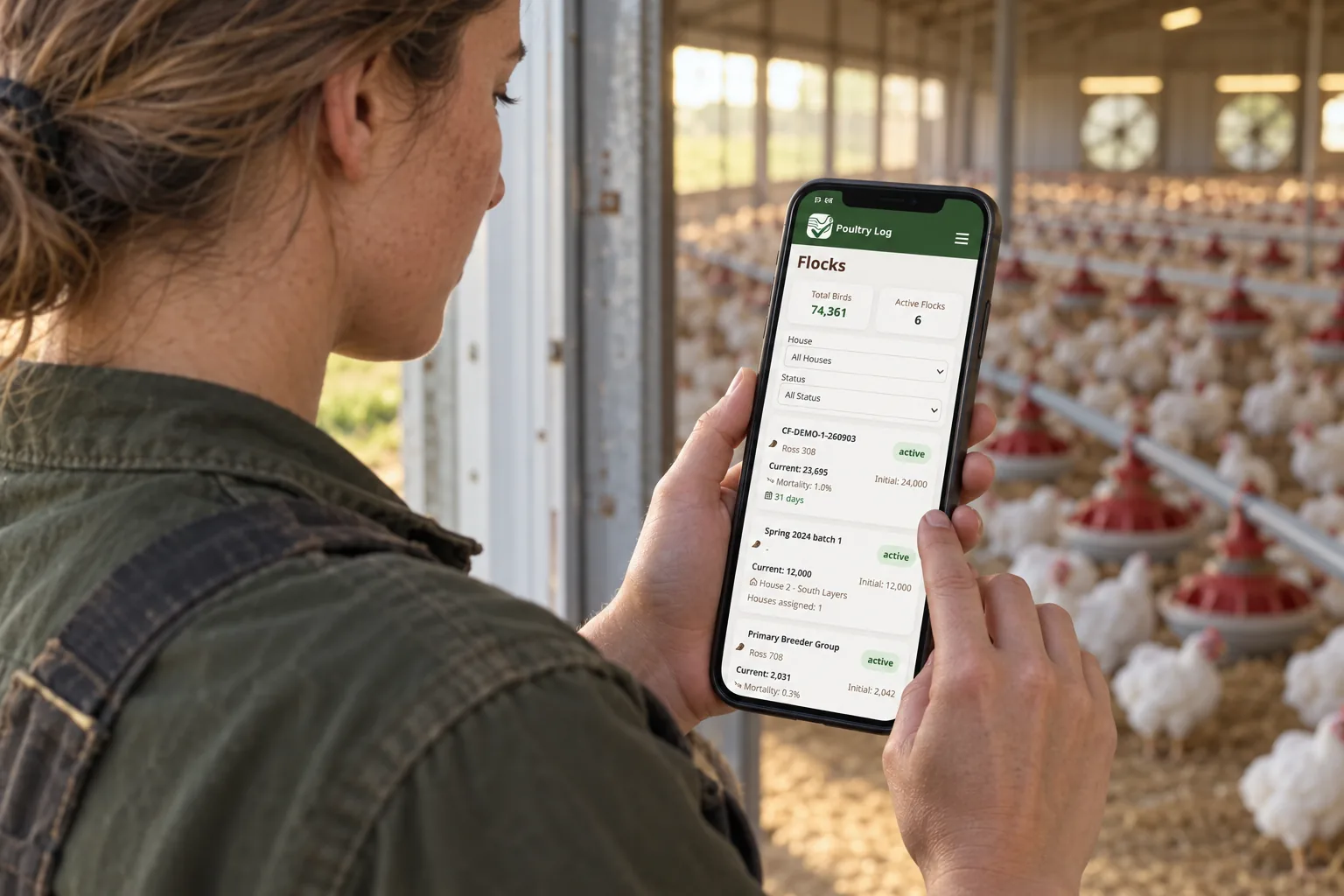
Processing exemptions are conditional, and the conditions are evaluated on the batches. Annual and per-batch bird counts, source records, buyer and sales-channel records, temperature and calibration records where the program requires them, and label records together demonstrate that the operation stayed inside its exemption. In Poultry Log, these sit in the compliance workspace alongside the farm's other records, searchable by date range and exportable for the review where they get examined.
What the Record Does Not Claim
State catalogs document the authorization paths and their recorded conditions; they do not determine whether a specific operation qualifies for a specific exemption. That determination rests with the state program and USDA FSIS as applicable, and the exemption's own conditions control. Completing a Poultry Log checklist does not certify legal compliance.
Where Poultry Log Fits
Poultry Log's state catalogs carry the processing authorization requirements with official source links and form templates, in the same workspace as the rest of the farm's records. State deep-dives are covered in the Georgia guide, the Alabama guide, the California guide, and the Arkansas guide. Confirm the applicable license class or exemption with your state program and USDA FSIS. Start free at poultrylog.com.
Frequently Asked Questions
Can poultry farms process their own birds for sale?
It depends on the state and the operation. The state catalogs record three paths: USDA FSIS federal inspection, a state plant license (such as California's CDFA poultry plant license or Georgia's GDA processing license), and documented exemptions with fact-specific conditions on bird limits, source, sales channels, labeling, and sanitation. Registration under an exemption does not excuse compliance with its conditions.
What records do poultry processing exemptions require?
The exemption basis and registration, facility and operator identity, annual and batch bird counts, poultry source, sales channel, and labeling and sanitation records, with program-specific additions such as Georgia's 48-hour slaughter notice and temperature and calibration records under the producer-grower program.
Does a state processing exemption replace federal inspection?
No. Federal inspection under the Poultry Products Inspection Act remains the baseline path for poultry processed for sale; state exemption paths are conditional and fact-specific, and the catalogs record that their conditions must actually be met. Confirm the applicable path with your state program and USDA FSIS.