

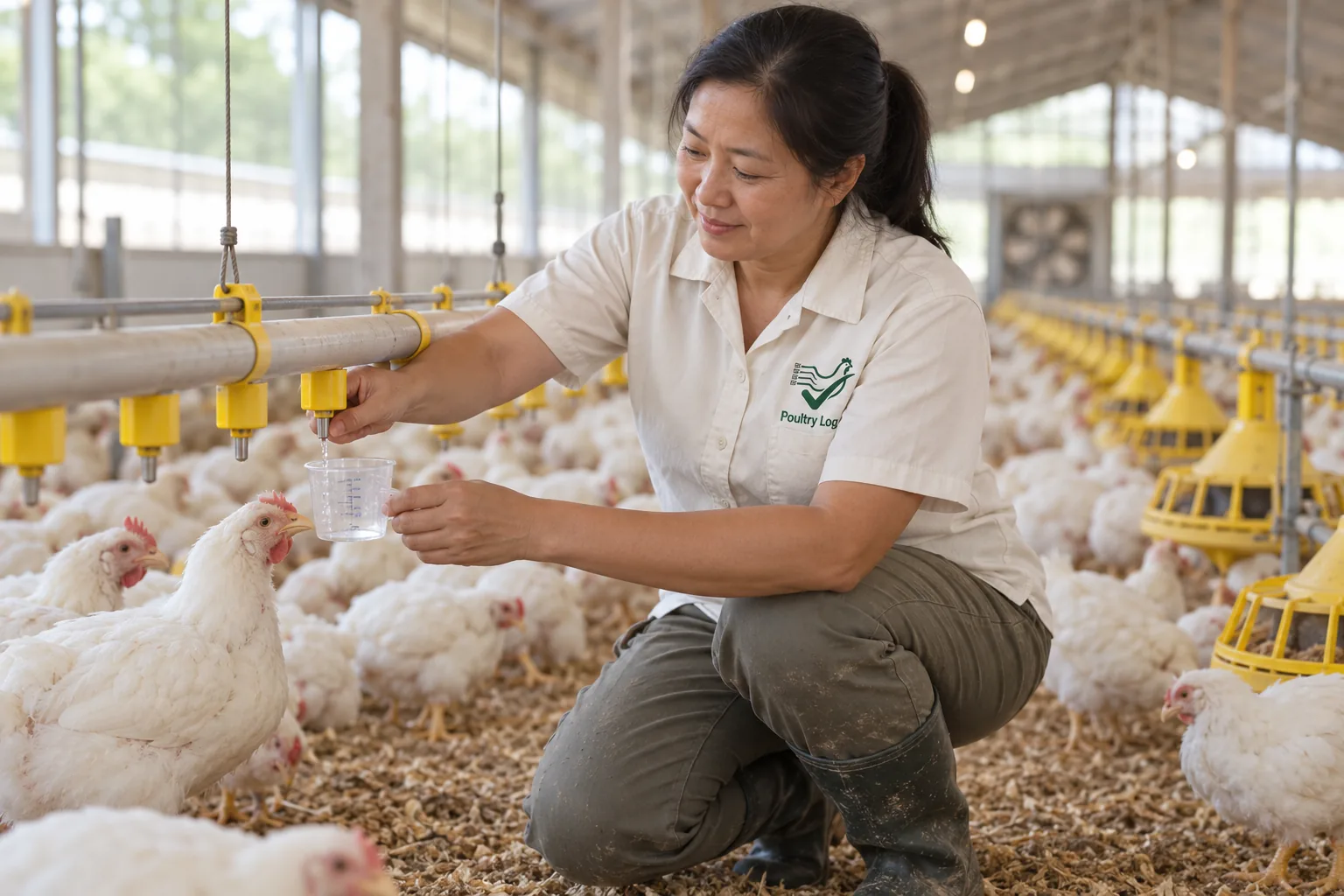
Water withdrawal registration is one of the quieter environmental duties a poultry operation can carry, and one of the easiest to miss, because the trigger is capacity rather than use. A farm whose combined withdrawal facilities can move more than a state's threshold in a single day is inside the registration regime whether or not it actually uses that much water, and the registration deadline runs from facility completion rather than from first use. Indiana records this duty explicitly, and the pattern appears in water-related permit conditions across the state catalogs. Poultry Log carries the registration record alongside the daily water records that feed both permit compliance and the performance metrics processors monitor.
Indiana's Threshold and Deadlines, as the Catalog Records It
Under IC 14-25-7-15, an owner whose combined withdrawal facilities can withdraw more than 100,000 gallons of ground or surface water in one day must register the significant water withdrawal facility within three months after completion and report water use annually. The catalog records two details that decide whether an operation is inside the regime: the threshold is based on combined withdrawal capacity, not merely actual use, and Great Lakes Basin withdrawals can require an additional permit at separate thresholds. The annual water-use report is due within three months after year end, by March 31, and the record set covers registration, source and pump details, capacity calculations, facility number, monthly withdrawal measurements or estimates, annual report, and confirmation.
Why Capacity, Not Use, Is the Trigger
- A newly installed or upgraded well or surface intake can move an operation across the threshold before a single season of heavy use.
- Multiple smaller facilities combine: the catalog's trigger is the combined capacity of the owner's withdrawal facilities, not each one separately.
- The registration deadline runs from facility completion, so the duty arrives before the first annual report is due.
- Great Lakes Basin locations carry separate permit thresholds on top of the general registration rule.
How Water Records Serve Two Masters
The same water numbers that support a withdrawal registration or a permit report are the numbers that drive performance review. Daily crop records capture water consumed per house per day with its declared unit, and the processor console converts those entries into average daily water in liters and water per bird in milliliters, with threshold policy per day, week, and flock period. Maryland's CAFO/MAFO discharge permit lists daily waterline inspections among its required operational records, which means the daily habit feeds an environmental compliance duty as well. For an operation inside a withdrawal regime, the monthly measurements the annual report asks for are a byproduct of records already being kept rather than a separate estimate project.
What the Record Does Not Claim
A water withdrawal registration documents facility capacity and reported use as recorded. It does not certify that water use complied with every condition of every permit, and completing a Poultry Log checklist does not certify legal compliance. Registration thresholds, permit conditions, and reporting deadlines come from the state program; the record layer's job is to keep the capacity calculations, measurements, and filings complete and findable.
Where Poultry Log Fits
Poultry Log keeps the daily water records and the state catalog entries in one workspace, so the withdrawal report is assembled from the year rather than reconstructed after it. The daily water evidence is covered in the daily crop records guide, the performance view in the water use monitoring guide, the permit-log shape in the water line inspection records guide, and the Indiana program in the Indiana compliance guide. Confirm current thresholds with your state water resources agency. Start free at poultrylog.com.
Frequently Asked Questions
When does a poultry farm need to register a water withdrawal?
Indiana records the trigger under IC 14-25-7-15: combined withdrawal facilities that can withdraw more than 100,000 gallons of ground or surface water in one day must register within three months after facility completion, with annual water-use reports due by March 31. The threshold is based on combined capacity, not actual use, and Great Lakes Basin locations can carry separate permit thresholds.
Does a poultry farm's water use reporting requirement apply if it uses less water than the threshold?
Indiana's catalog records the trigger as combined withdrawal capacity rather than actual use, so an operation can be inside the registration regime on capacity grounds even in a low-use year. Confirm your state's threshold basis with the water resources agency; Poultry Log's catalogs record each state's position with its official source.
Do daily water records support water withdrawal reporting?
Yes. Daily crop records capture water consumed per house per day with its declared unit, and monthly measurements the annual report asks for are a byproduct of records already being kept. Poultry Log keeps those records in the same workspace as the state catalog entries and exportable history the report assembles from.