

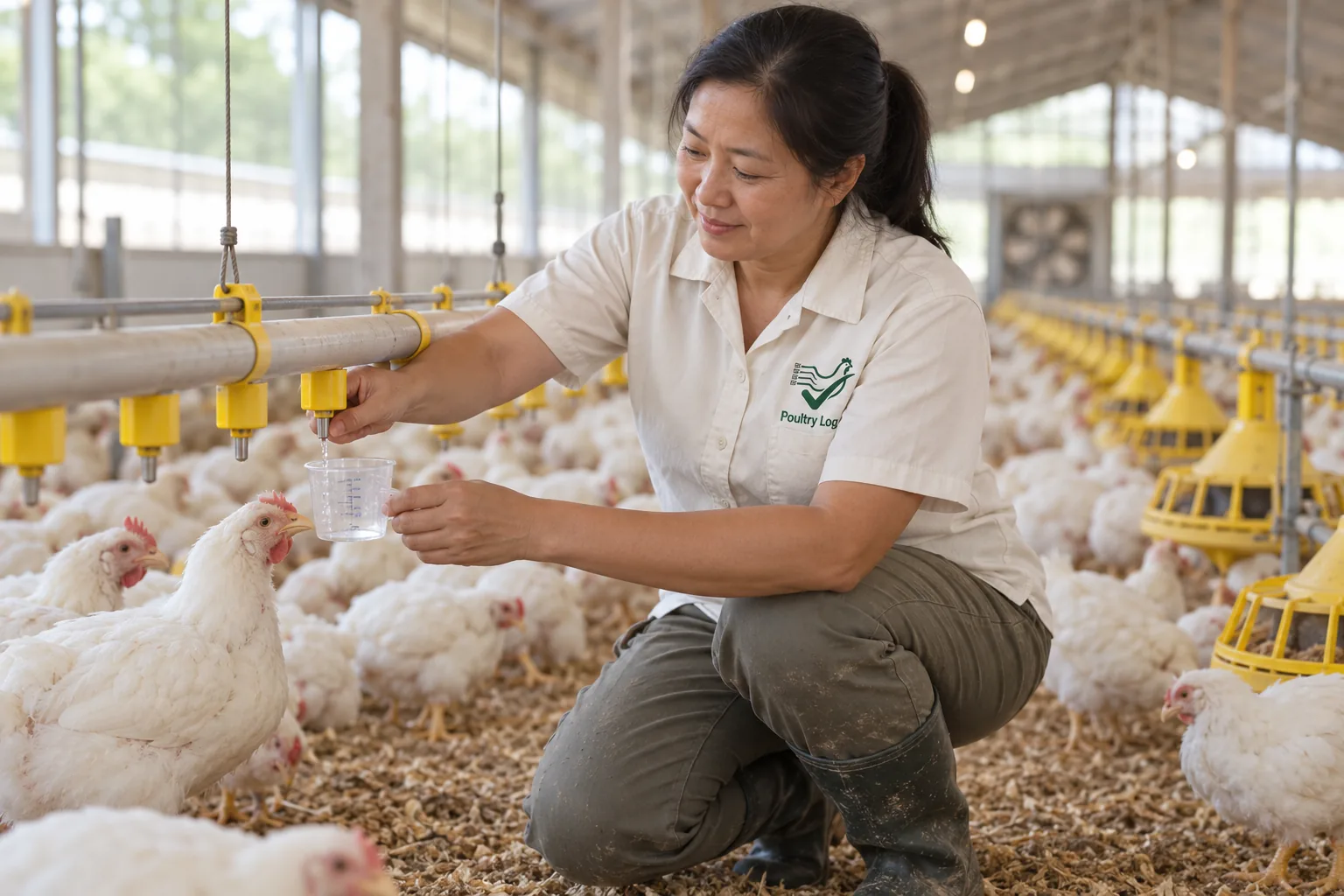
Water line inspection is the daily compliance record that doubles as an early warning system. A water line that is not delivering what the flock needs shows up first in water consumption per bird, and only later in mortality and weight numbers. State programs that require daily water line inspections know this, which is why the duty appears in permit conditions rather than in annual paperwork. Poultry Log carries the daily water line record as both a farm-level walkthrough confirmation and a state permit log, so the same daily habit serves both purposes.
Two Record Shapes, One Daily Habit
- Water line check (farm-level) - a daily walkthrough confirmation that waterlines were checked, scoped to the farm, tagged to meat, eggs, and breeder farm types, with search aliases including "waterline checked." It is the fastest possible record: open the app, confirm the walkthrough, move on.
- Daily water line inspection log (state permit) - a Maryland row-based daily water line inspection sheet for active daily entries and yearly printable logs, sitting in the waterline report group. It captures the inspection as dated rows that roll up into the yearly printable log a permit review asks for.
Why the Permit Conditions Ask for It Daily
Maryland's General Discharge Permit 25AF for CAFOs and MAFOs lists daily waterline inspections among its required operational records, alongside weekly waste-storage and stormwater inspections and annual samples and calibration. The pattern is deliberate: water lines fail gradually, and a daily confirmation catches the drift while it is still a maintenance issue rather than a mortality event. For processor network members, the same daily evidence sits behind the water per bird metric the console reports, so the inspection record and the consumption metric are two views of the same house on the same day.
How the Record Connects to Performance
Water consumed per bird is one of the console's first-class metrics, reported in milliliters and converted automatically from whatever unit the grower logged. When a house's water per bird drifts from its own history, the first question is whether the line was actually checked that day and what the inspection found. A daily record with a completion timestamp answers that question directly; a monthly estimate cannot.
What the Record Does Not Claim
A water line inspection record documents that the lines were checked and what was recorded. It does not certify water quality, and it does not certify compliance with any permit or standard; the applicable requirements come from the farm's permit and its state program. The record's job is to make the daily history complete and findable.
Where Poultry Log Fits
Poultry Log carries both record shapes in the same daily workflow, so the permit log and the performance metric come from the same habit. The water metrics are covered in the water use monitoring guide, the Maryland permit context in the Maryland compliance guide, and the daily evidence chain in the daily crop records guide. Start free at poultrylog.com.
Frequently Asked Questions
How often should poultry farms inspect water lines?
Daily is the working cadence both in integrator practice and in permit conditions: Maryland's General Discharge Permit 25AF lists daily waterline inspections among its required operational records. Poultry Log carries the daily confirmation as both a farm-level walkthrough record and a state permit log.
Why do poultry permits require daily waterline inspections?
Because water line failures are gradual, and a daily confirmation catches drift while it is still a maintenance issue rather than a mortality event. The daily record also sits behind the water per bird metric processors monitor, so the inspection and the consumption number describe the same house on the same day.
Does a water line inspection record certify water quality?
No. The record documents that lines were checked and what was recorded; it does not certify water quality or compliance with any permit or standard. The applicable requirements come from the farm's permit and its state program.