
Winter care for ducks centers on one species-specific question the chickens' winter does not pose: open water access. Ducks thermoregulate partly through water contact and bill vasculature, and they drink more per pound than chickens (the water guide covers the ratios) — which means a frozen drinker is not just an inconvenience but a direct hit to the mechanism ducks use to handle cold. The shared failure points from the chickens' winter guide — condensation, production decline, cold-energy demand — apply unchanged, with the water question amplified. This page covers the duck winter: the open-water decision's consequences, and the failure points in the order winter tests them.
The Duck Winter Failure Points
| Failure Point | What It Does To Ducks Specifically | The Prevention |
|---|---|---|
| Water freezing | Ducks lose the thermoregulation mechanism they rely on — and their higher intake demand (the water guide's ratios) means a frozen drinker starves faster than it starves a chicken | Heated bases or pond heaters per the fall's decision; check at the coldest hour, not at dawn — the winter guide's discipline applies amplified |
| Condensation (amplified) | Duck runs wet faster — the moisture load in an insulated coop condenses against cold surfaces, wetting litter and roosts (the vents guide covers the balance; duck moisture makes MORE ventilation more critical, not less) | The same counterintuitive rule the chickens' winter guide describes — dry cold is healthier than warm damp, and ducks make the damp arrive faster |
| Cold-energy demand (with a nuance) | Cold raises maintenance requirements — but ducks carry a subcutaneous fat layer and waterproof plumage that chickens lack; the duck's cold tolerance is real once water access is secured | Confirm the winter ration's energy density (the layer nutrition guide's maintenance-production framing applies); the niacin guide covers why corn-heavy winter rations fail ducks specifically |
| Frozen foraging grounds | Ducks forage less in frozen conditions — the dietary supplement the summer's foraging provided disappears, which is one more reason the winter ration has to carry the complete load (the feed budget guide's winter framing applies) | Formulated feed as the non-negotiable base — the treats guide covers why winter scraps do not substitute for the ration ducks need |
The Winter Discipline, Duck Edition
- Water check at the coldest hour — and the heater's own check. Heated bases fail silently (thermostat, cord, connection) — a morning check confirms the heater worked overnight, not just that water is unfrozen now.
- Ventilate more than feels right. The ducks-amplified version of the chickens' rule: the wetter run produces more condensation, and the instinct to seal against cold produces the respiratory problems owners then blame on the cold (the insulation guide covers condensation).
- Keep roosts dry. Ducks roost lower and wetter than chickens — the roost guide covers the height and dryness questions that duck winter confinement makes worse.
The Money Connection
Winter duck production costs more per dozen than any season — the pond heater or heated-water equipment, the winter ration premium, and suppressed lay rates over fewer dozens (the egg profit guide's per-dozen math frames it honestly). What winter management buys is the flock entering spring in condition — the spring guide covers what that looks like, and the niacin story (corn-heavy winter rations failing duck legs) is the season-specific version of the ration-quality question the margin framing scales from coop to commercial house.
Tracking Duck Records In Poultry Log™
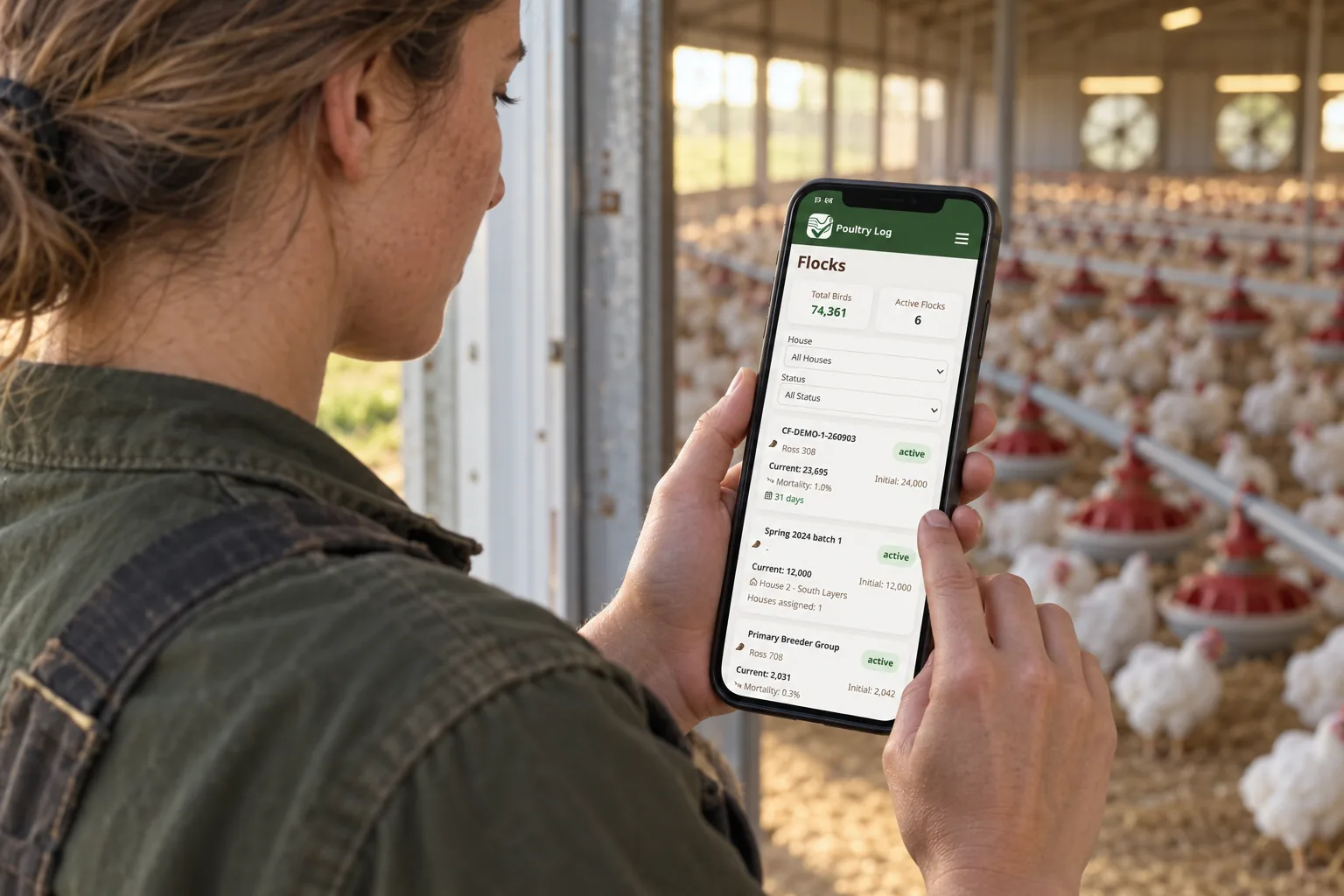
Feed, water, and egg records on one timeline let each winter's costs and production be compared against the last — whether the open-water decision prevented the problem it was bought for. The chickens' winter guide covers the shared failure points; the profitability dashboard carries the trend.
- 2026-10-06: Comprehensive rewrite — duck winter failure-point table (open water amplified) and duck-edition discipline section — replacing the earlier boilerplate version.
- Earlier version: short first-person note on ducks care in winter.