
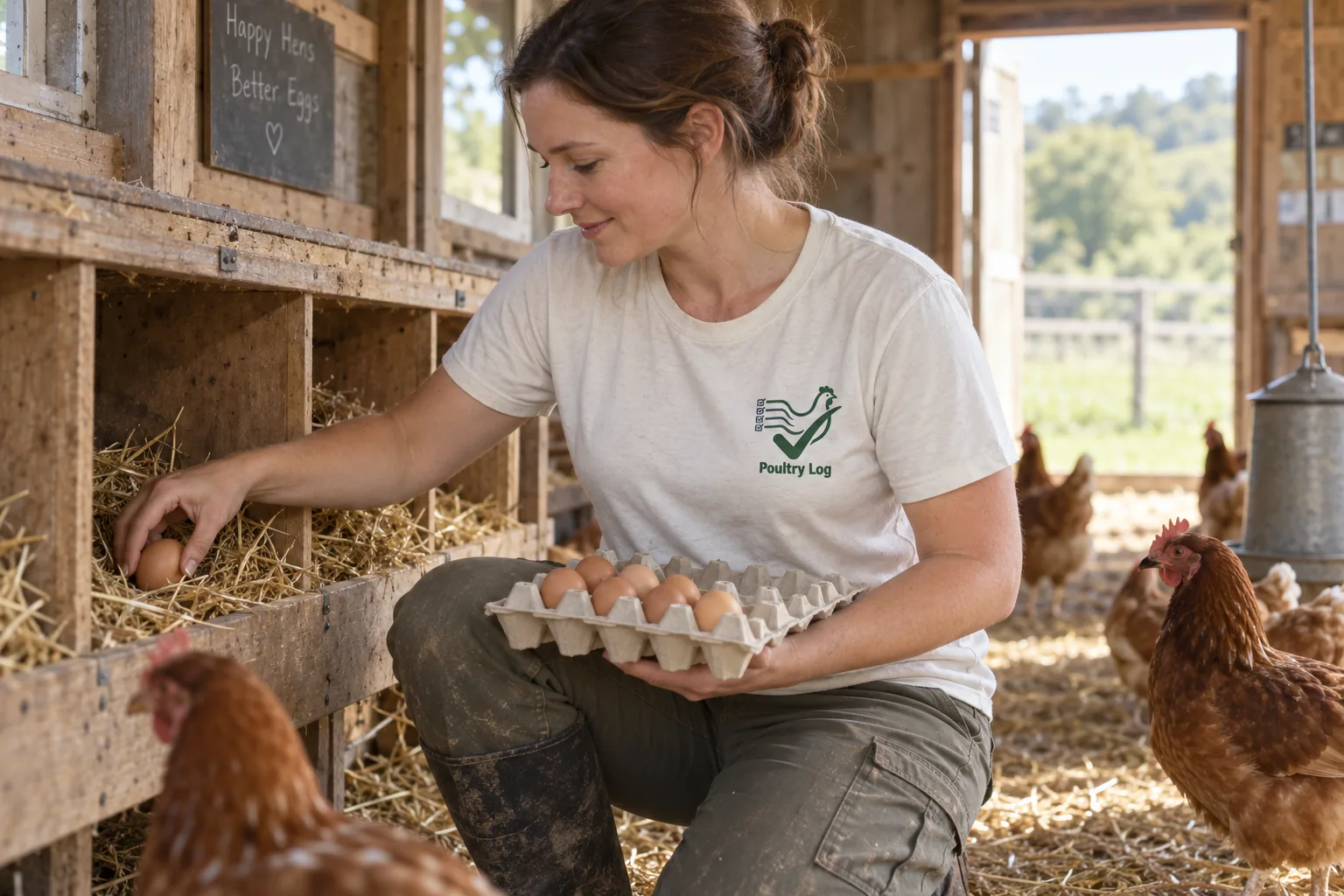
Scratching is the behavior chickens perform to uncover food — raking the ground with their feet to expose insects, seeds, and larvae beneath the surface. It is the species' default foraging motion, and it shows up in the run design as both an asset and a maintenance question: a flock that scratches effectively is a flock whose supplemental feed bill drops (the foraging guide covers the contribution), and a run whose litter gets scratched thin needs the rotation and replenishment that keep the behavior productive instead of destructive. This page covers what scratching does for the flock, how to manage the ground it works on, and the litter connection that matters most in confinement.
What Scratching Does
| Function | What It Does For The Flock |
|---|---|
| Food exposure | The behavior's purpose: raking the surface exposes insects, larvae, seeds, and grit the flock eats — the foraging contribution the foraging guide quantifies (real, partial, never a ration substitute) |
| Ground turnover | Scratching turns the surface layer — in a run, this mixes and aerates the top litter; in confinement, it concentrates wear at feeders and waterers where the flock gathers most |
| Behavioral engagement | Scratching-and-eating is the species' default activity pattern — a flock denied the behavior redirects it (the pecking order guide covers the redirection into pecking; the dust bathing guide covers the companion behavior) |
| Litter interaction (the confinement question) | Scratching moves litter, exposes the damp layer beneath in deep-litter systems, and concentrates at wet spots — which is why litter management and scratching behavior are one question in confinement, not two (the litter guide covers the moisture discipline) |
Managing The Ground It Works
- Rotation over replenishment. A run scratched to bare dirt stops contributing — rotation (the foraging guide's protected-run pattern) regrows what the flock works through, while replenishing a static run fights the flock's own success.
- Confinement litter depth and dryness. Deep litter exists partly to give scratching a safe medium — the damp layer beneath the dry top is where ammonia and pathogens live (the litter guide's discipline), and scratching that exposes the damp layer concentrates the problem at the birds' feet.
- Feed placement follows the behavior. Scattered feed converts scratching time into eating time (the treats guide's scattering logic applied to the base ration) — the engagement the behavior seeks, delivered at the ration level.
The Money Connection
Scratching's economics are the foraging economics at motion scale: effective scratching displaces supplemental feed (the feed budget guide's framing applies — genuine, partial) and manages pest populations, while the litter consequences it carries in confinement are what the litter guide's ammonia economics price. The egg profit guide's per-dozen math absorbs both sides; the margin framing scales the same question from coop to commercial house.
Tracking Behavior And Litter In Poultry Log™
Behavior observations and litter-condition notes on one timeline let scratching patterns be traced to their ground effects — whether the wear concentrated where the flock gathers, and whether the damp-exposure followed the scratching. The foraging guide covers the contribution; the profitability dashboard carries the trend across flocks.
- 2026-10-06: Comprehensive rewrite — function table (food exposure, ground turnover, engagement, litter interaction) and confinement-management section — replacing the earlier boilerplate version.
- Earlier version: short first-person note on why chickens scratch.