
How Technology Is Changing Broiler Management
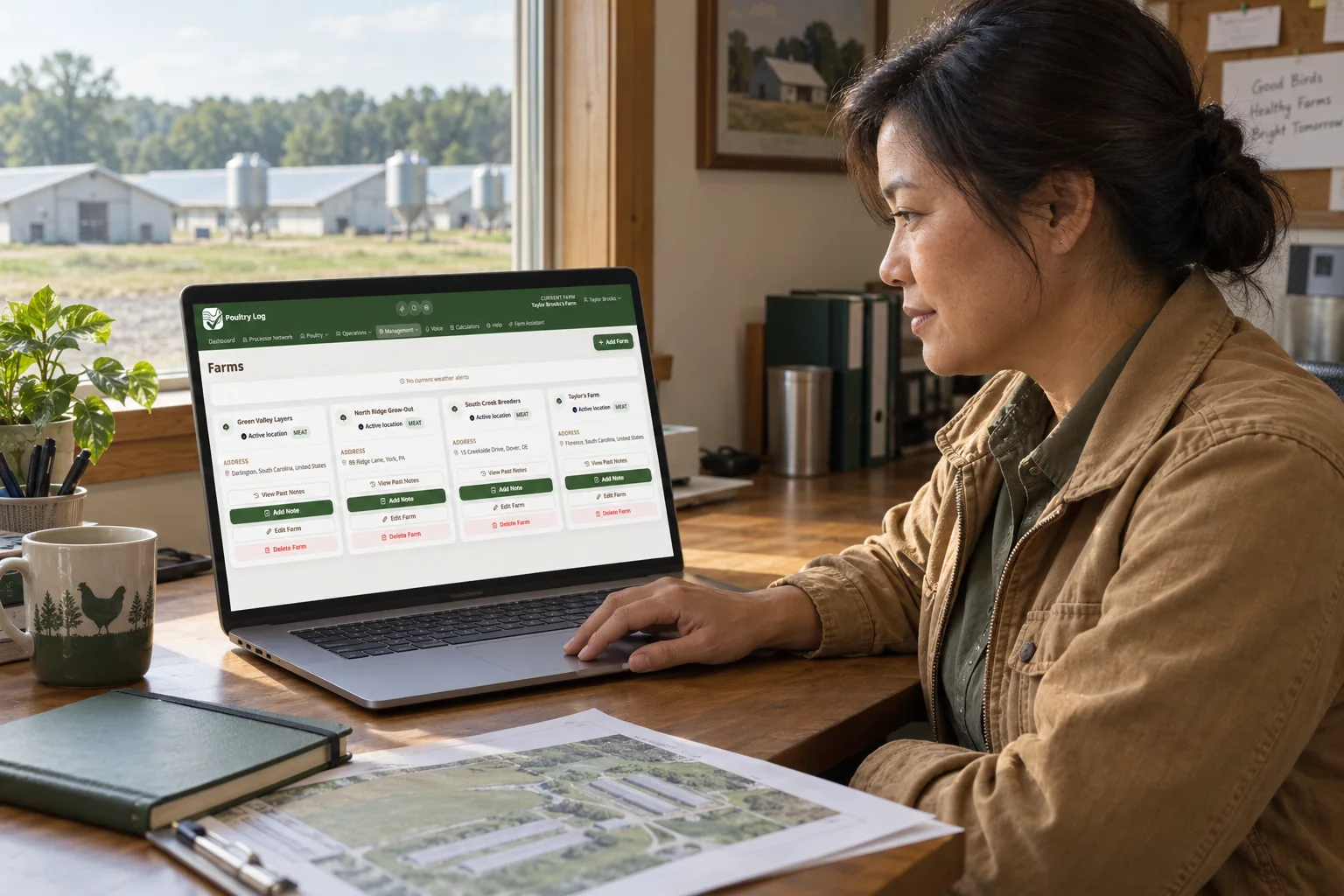
Broiler farming has always been a hands-on profession, but technology is changing how growers monitor, manage, and improve their operations. The changes are incremental rather than revolutionary, but over a few years they add up to significantly better performance and easier management.
The core of smart broiler farming is data. Sensors, controllers, and mobile apps generate streams of data that describe what is happening in each house at each moment. The challenge has moved from collecting data to using it — making sense of the information and turning it into management actions.
Environmental Monitoring and Control
Modern broiler houses use control systems that maintain temperature, humidity, and ventilation automatically. These systems coordinate heaters, fans, inlets, evaporative cooling pads, and curtains to maintain the target environment. The grower sets the parameters for each stage of the flock, and the system maintains conditions within the target range.
The most advanced systems allow remote monitoring from a phone. A grower can check house conditions from home, the feed mill, or the processing plant. Alerts notify the grower when conditions deviate from the target range, enabling faster response to equipment failures or environmental problems.
Sensor Technology
Sensors provide the data that makes control systems and monitoring effective. Temperature sensors at multiple locations in the house provide more accurate data than a single thermostat. Humidity sensors detect conditions that promote ammonia production and wet litter. Ammonia sensors alert the grower when levels approach thresholds that affect bird health and performance.
Water flow sensors detect consumption changes in real time. A drop in water flow that indicates a line blockage or pressure problem triggers an immediate alert instead of being discovered at the next walkthrough. Feed bin level sensors track feed consumption and alert when bins need refilling.
Data Analysis and Decision Support
The value of sensors and monitoring is realized through data analysis. Smart systems analyze data streams to identify patterns and deviations. A system that learns the normal water consumption pattern for each house can detect an early health problem when consumption deviates from the expected pattern.
Trend analysis across flocks identifies performance drift that might not be apparent when looking at individual flocks. A gradual FCR increase over five flocks that correlates with aging ventilation equipment provides a data-driven case for equipment replacement.
Integration and Connectivity
The most useful smart farming systems integrate data from multiple sources. House environment data, bird performance data, and financial data connected in one system provide a complete picture of operation health. Disconnected systems require manual data compilation that defeats the purpose of automation.
Cloud-based systems enable data sharing with service representatives, veterinarians, and nutritionists who can provide remote support based on real data rather than descriptions of problems.
Starting with Smart Farming
Growers do not need to adopt every technology at once. Starting with one data type — water consumption monitoring, for example — and using it consistently builds familiarity with digital data. Adding environmental monitoring and feed tracking one step at a time is more sustainable than a complete system overhaul.
The grower who adds one data stream per flock, learns to use it effectively, then adds the next data stream builds a comprehensive smart farming system over time without the disruption and learning curve of a full system installation.
Evaluating Technology Investments
Not every technology investment delivers a positive return. Growers should evaluate technology investments based on their specific operation's needs and the expected financial benefit. A technology that saves 30 minutes per day in data entry has a different value than a technology that reduces mortality by 0.5 percent. Growers should calculate the expected payback period for technology investments and prioritize technologies with the shortest payback periods and the clearest financial benefit. The goal is to invest in technology that makes the operation more profitable, not to adopt technology for its own sake.