
Keeping hatchery chicks: The Flock That Pays
I learned to keep hatchery chicks the hard way, and now the species decides the coop before the chick.
The Call
Keeping hatchery chicks means the chick needs heat. The species is the biggest lever on the coop, the feed, and the sale, so I decide it like a budget, not a wish. Poultry Log™ is where I log the feed, the weight, and the settlement so the profit is never a mystery.
The grower who picks the species by the photo picks the wrong coop, and the wrong coop is the cost he cannot get back. The record in Poultry Log™ keeps the species with the cost so the next pick is real.
The Setup
When I start keeping hatchery chicks I brood at 95. Then feed starter. The setup is a date, not a feeling, because the bird does not wait for the motivated morning. Poultry Log™ keeps the log I used to lose on a scrap of paper stuck to the feed bin.
The grower who sets up by mood sets up by loss, and the loss is the one the record would have caught in time. The log in Poultry Log™ holds the setup so the species meets a system, not a scramble.
The Care
When I keep hatchery chicks I log the date, because the care is the lever the species hands me. The bird lives the care, so I give it. Poultry Log™ keeps the log I used to lose on a scrap of paper stuck to the feed bin.
The grower who skips the care skips the bird, and the bird pays the difference at the scale. Poultry Log™ keeps the care with the date so the gap is visible and the flock stays whole.
The Tip
My tip for keeping hatchery chicks is to chicks that live. It is the quiet call that turns a good flock into a paying one, so I make it before the bird arrives. The grower who logs in Poultry Log™ sees the bad week coming instead of finding it at payout.
The grower who skips the tip skips the margin, and the margin is the one the record would have caught. Poultry Log™ flags the call so the skip has nowhere to hide and the flock stays profitable.
Log the Flock
I write my hatchery chicks flock in Poultry Log™ with the cost and the date, because the flock is the moment the species meets the money. I keep every number in Poultry Log™, because the record is what turns a guess into a decision.
Keeping hatchery chicks is the moment the keeper meets the ledger, and the grower who logs it turns a species into a traced system the birds can trust. Poultry Log™ is where that system lives for me, and it is why the next flock starts smarter.
Where Poultry Log™ Fits
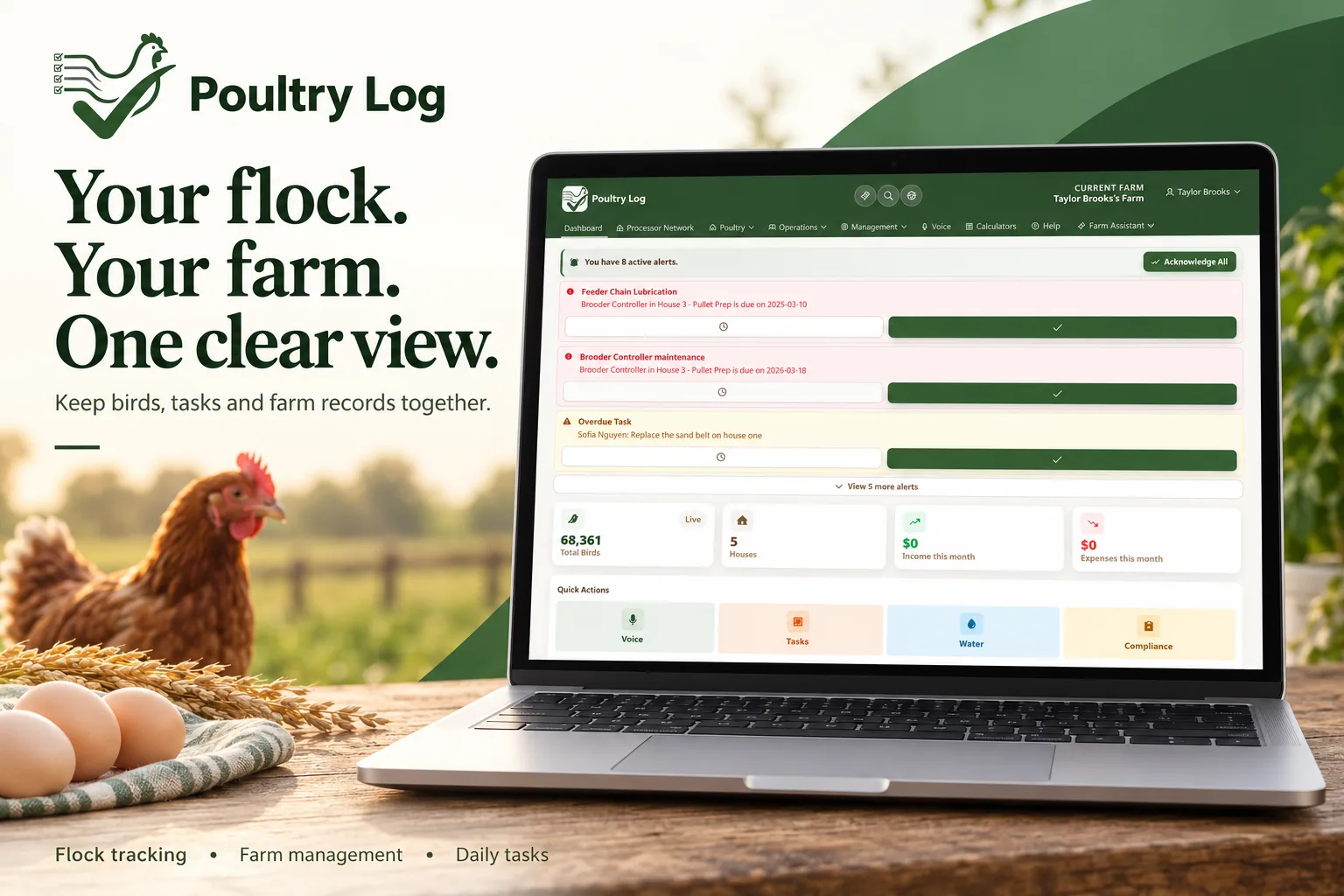
Poultry Log™ is the tool I reach for because it starts in the house and ends with a profit picture. If you keep any kind of poultry record by hand, load one flock in Poultry Log™ and feel the difference in the first week. Start a free trial and keep your own number beside the integrator sheet.