

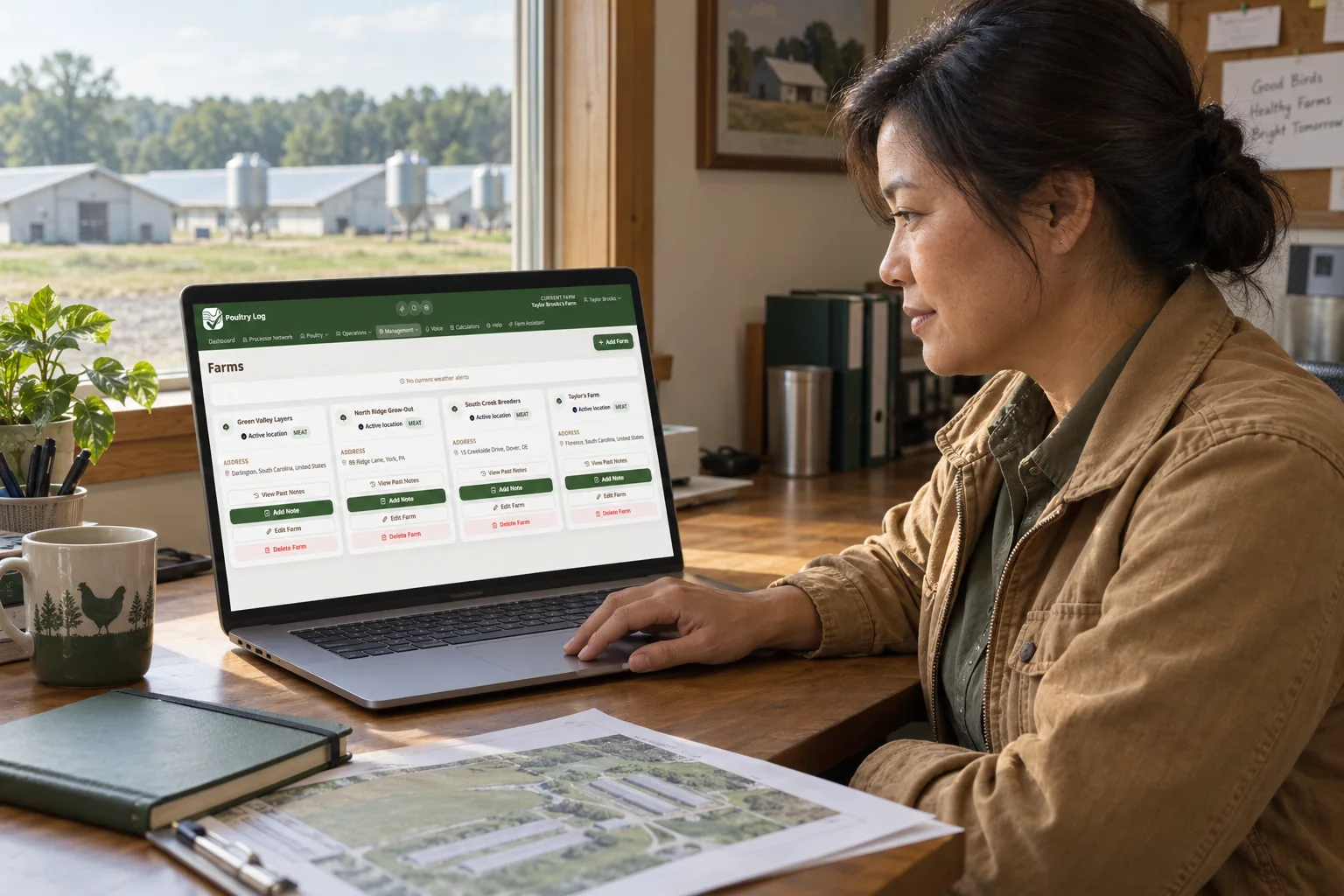
Rolling out a poultry processor network is not an IT project; it is a grower adoption project with a console attached. The technology part is small: issue codes, connect farms, set thresholds. The part that decides whether the network works is whether growers understand what they are sharing, trust the boundary, and keep logging the way they always did. This guide walks through how a processor launches a Poultry Log network in the order that actually works.
Step 1: Define the Template Scope First
Before a single code goes out, decide which compliance templates the network will review. Poultry Log's processor network covers seven grower templates: weekly equipment checks, weekly rodent inspections, feed delivery logs, chemical use records, manure disposal records, terminal hygiene forms, and daily crop records. Choosing the scope first keeps the grower conversation concrete: you are not asking them to "share their data," you are asking them to submit the weekly equipment check they should already be doing, and to let you see it.
Step 2: Issue Codes and Set the Consent Frame
Each grower receives a join code. When the grower enters it in Poultry Log Settings, the system returns the processor's name and region, and the grower reads a versioned consent disclosure before anything is shared. That disclosure is the rollout's trust document: it lists the shared fields (compliance checklists and completion history; mortality, culls, water and feed use, weights versus targets by house and flock; farm name, house count, capacity, and region) and the exclusion list (login credentials, billing details, precise GPS, street addresses, other processors' checklists). Processors who explain the exclusion list up front get fewer stalled links.
Step 3: Set Thresholds Before Data Arrives
The console's admin view lets the processor configure warning and critical limits for mortality, culls, and water use by day, week, and flock period, plus rise and drop percentage checks. Setting policy before the first submissions arrive means the alert stream is calibrated from day one instead of firing generic noise that growers learn to ignore.
Step 4: Run the First Weeks as a Conversation
- Watch compliance submissions by farm in the fleet view; a farm that stops submitting is the first call, not the last.
- Review the alert stream weekly with the operations team, acknowledging alerts as they are worked.
- Open alert details together with a grower once, so they see that the alert points back to their own logs rather than a black-box score.
- Use house benchmarking for coaching conversations, not surprise comparisons.
Step 5: Prove the Export Early
Run one compliance export to PDF or Excel in the first month, before an audit forces the question. Knowing the search, the record selection, and the export format works on real data is what turns the network from an experiment into infrastructure. Revocation stays available to growers throughout: the link can be removed at any time, and records already shared remain visible to the processor for audit purposes.
Where Poultry Log Fits
Poultry Log is grower-first software with a processor console on top, which is why rollout is a consent conversation rather than a data migration. The grower's side of the flow is covered in the how growers join a processor network guide, the consent boundaries in the grower data sharing consent guide, and the evaluation criteria in the best software for poultry processors guide. Start free at poultrylog.com.
Frequently Asked Questions
How does a poultry processor start a grower compliance network?
Define the template scope, issue join codes to growers, set threshold policy before submissions arrive, review compliance logs and alerts weekly, and prove one export early. In the Poultry Log processor network, growers join with a code and a versioned consent disclosure, and the console aggregates their submitted records from that point on.
How do you get growers to adopt a processor compliance program?
By making it the records they already keep, with a transparent consent boundary. Poultry Log growers log daily and weekly checklists in their own app; the processor network reads those submissions rather than asking for a second report, and growers can remove the link at any time.
What thresholds should a poultry processor set first?
Warning and critical limits for mortality, culls, and water use, by day, week, and flock period, plus rise and drop percentage checks for trend detection. Setting them before the first submissions arrive keeps the alert stream calibrated instead of noisy.