
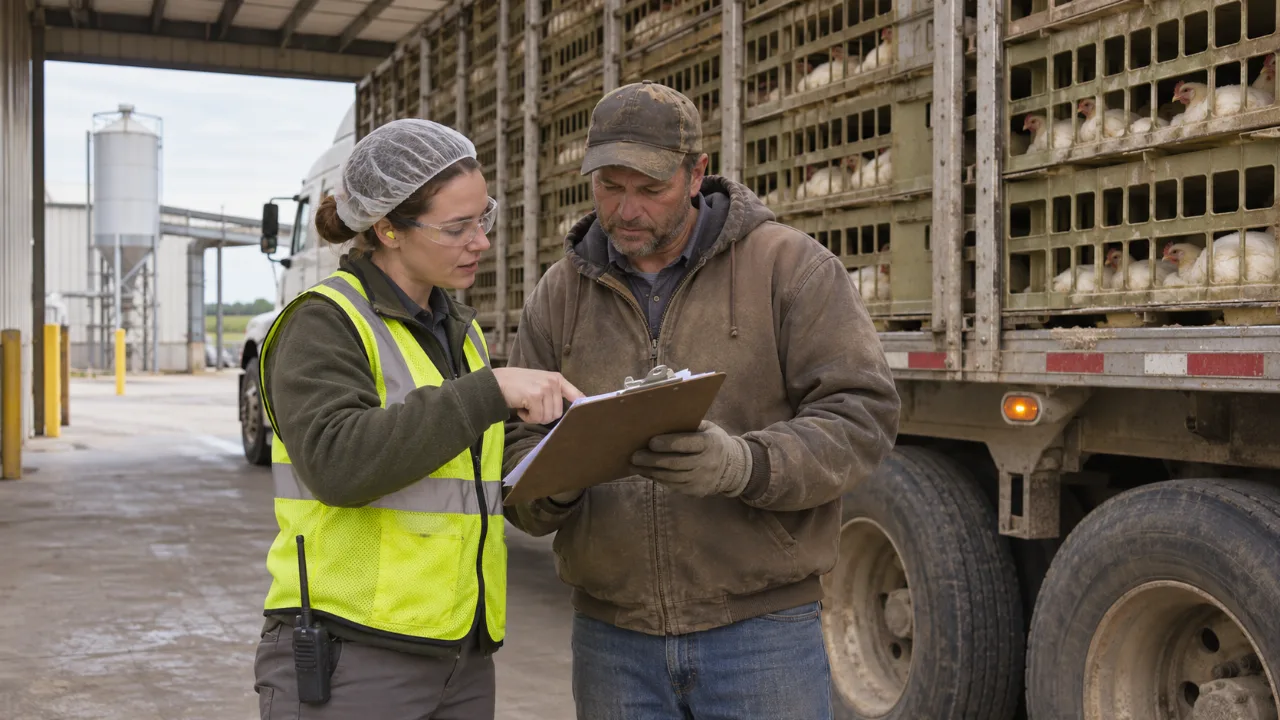
Give each load a reference both teams can use
Have live haul dispatch assign one reference per truckload and pass it to the grower and plant receiving team. Ask the grower to include that reference, the farm and house identifiers, the flock ID, and the pickup date on the handoff form. Receiving can record the same reference next to its own ticket number. Agree on which date each team enters if a truck leaves the farm before midnight and arrives at the plant the next morning.
Before the trial, confirm which records the grower has agreed to share and who on the processor side can review them. Use the processor network view to locate the shared grower submission, then open the receiving ticket where your plant keeps it. The poultry processor network guide provides more context on how growers and processors share records.
Decide which numbers receiving will verify
On the grower form, label the bird count as planned or counted at loading. If the grower supplies an estimated live weight, record the basis for it, such as a recent average weight in pounds per bird. On the plant ticket, use net live weight in pounds and check how receiving obtained it. If receiving calculates net weight from the loaded weight and tare, verify that both entries are in pounds and apply to that load.
Match the load reference and flock first. Then compare the weights and give any difference a clear label. An estimate-to-scale difference describes how far the forecast was from the measured weight. If a bird count also differs, check where and when each count was taken before assigning a cause.
Work through one load with conflicting paperwork
In this illustrative example, the grower submits a form for load LH-217 from House 3 with 5,000 broilers at an estimated 6.20 lb per bird. The estimated live weight is 31,000 lb. The plant ticket for LH-217 shows 69,440 lb loaded and a 39,000 lb tare, giving a net live weight of 30,440 lb. That is 560 lb below the estimate, or about 1.8 percent of the estimated weight.
The ticket also lists House 2. Receiving asks dispatch to check the load reference against the pickup record. Dispatch confirms House 3, and receiving corrects the house on the plant side using its usual correction procedure. The reviewer records the ticket number, the original and corrected house, and who confirmed the change. The 560 lb difference stays recorded as an estimate-to-scale difference. The house correction resolves which flock the weight belongs to. The figures alone leave the reason for the weight difference open.
Check what happens when the paperwork arrives late
Run a second pass with the grower form missing at the time of receipt. Give one person responsibility for follow-up and have the next shift check whether it can identify the open item, the load it belongs to, and the person handling it. Then try two loads from the same farm on the same day. Ask the reviewer to show which ticket matches each submission and which record they would consult if a reference were entered twice.
For software evaluation, time how long a receiving clerk takes to locate both records and count how many identifiers they have to retype. Have a second clerk repeat the check with the corrected ticket. Those observations help you decide whether the next improvement belongs in dispatch instructions, the grower form, or the receiving process.
Choose one broiler load on the next schedule and ask dispatch, the grower, and receiving to agree on its shared reference before pickup.