

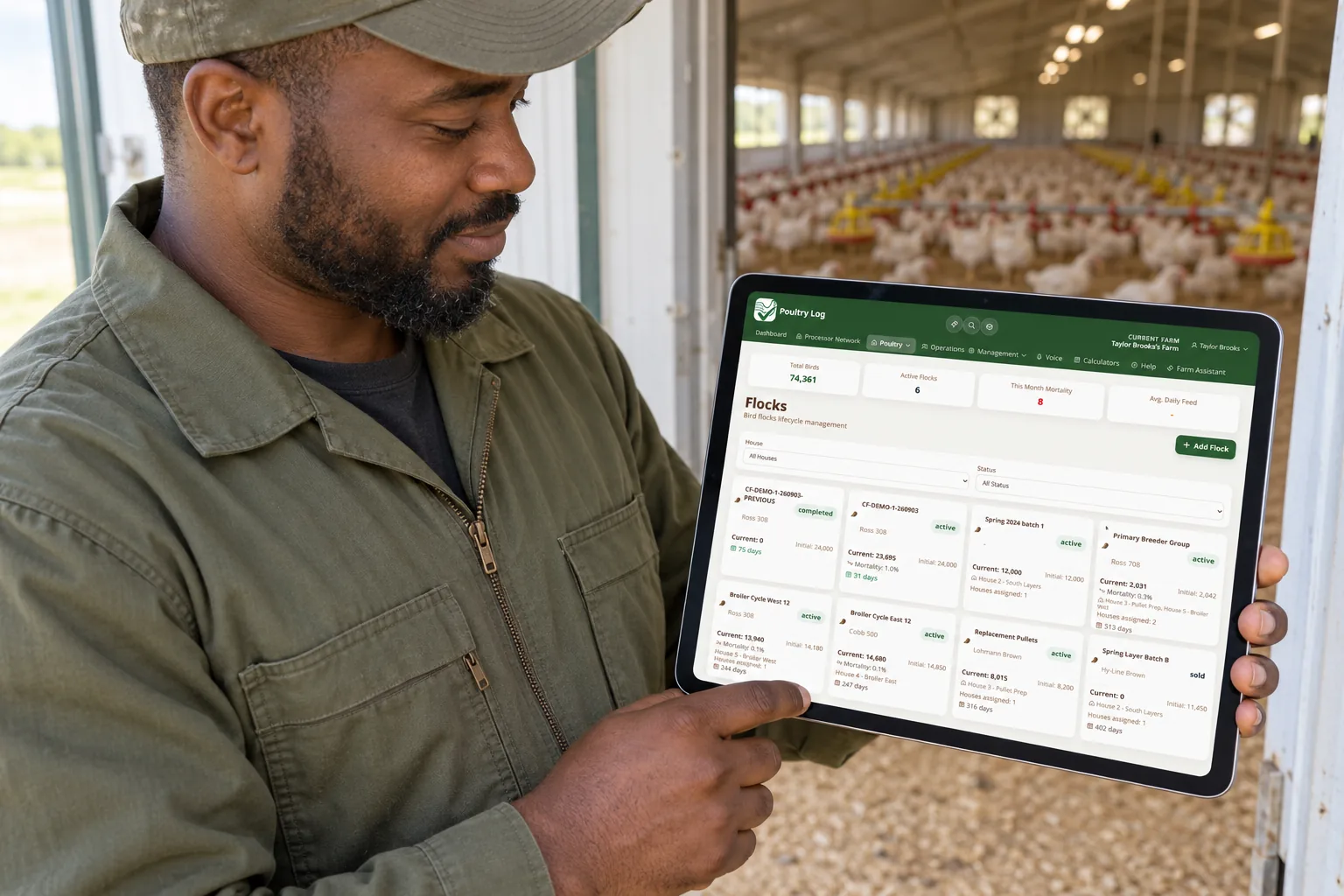
Every contract grower keeps two versions of the same flock: the one they lived day by day, and the one the integrator's performance sheet reports at settlement. When those two versions disagree, the conversation that follows is usually about whose record counts. The answer a grower can control is having their own record of the integrator paperwork in the same system as their daily logs, timestamped and searchable, so the comparison starts from evidence rather than memory.
What Poultry Log Tracks on the Integrator Side
Poultry Log's performance records capture the integrator paperwork that shapes settlement: livability percentage, average weight, feed conversion, APC rating, APC value, rank value, and pounds moved, each tied to a flock and a source. Placement disclosures have their own structured record, capturing the farm identity fields, entity flock number, average placement date, total head placed, grow-out, placement density, financial adjustments, health impairments, and house-level placement detail. Source documents can be uploaded with the entry, so the parsed record and the original paper sit together.
Why This Matters at Settlement
- Two records of the same flock make the payout conversation a comparison, not an argument.
- Placement disclosure trends surface across flocks, so density and adjustment patterns are visible before the next placement.
- Uploading the source document means the integrator's sheet is preserved exactly as received, not retyped from memory.
- Performance history lives next to the daily mortality, weight, and feed records that explain it.
How This Relates to the Processor Network
Performance sheets and placement disclosures are grower-side records: they track what the integrator reports to the grower. The processor network console reads the grower's operational records (checklists, mortality, culls, water, feed, weights against targets), not these settlement records. Many operations use both: the daily record builds the grower's own truth, and the performance record keeps the integrator's numbers accountable against it.
What These Records Do Not Claim
Poultry Log records the values as submitted in the integrator paperwork. It does not adjudicate whether the integrator's calculation was correct, and it does not guarantee a settlement outcome. Its job is to make the comparison possible: same flock, two records, one system, timestamps on both.
Where Poultry Log Fits
Poultry Log is the only place the grower's daily record and the integrator's paperwork sit side by side, which is why the settlement conversation finally has a reference point. The daily record behind it is covered in the poultry farm digital records guide, the contract relationship in the broiler contract farming guide, and the processor network in the processor network explained guide. Start free at poultrylog.com.
Frequently Asked Questions
How do poultry growers track integrator performance sheets?
By recording the settlement values in the same system as the daily farm records. Poultry Log performance records capture livability, average weight, feed conversion, APC rating and value, rank, and pounds moved per flock, with the source document uploadable alongside the entry.
What is a poultry placement disclosure?
The record of a placement as the integrator documents it: entity flock number, placement date, total head placed, grow-out, placement density, financial adjustments, health impairments, and house-level detail. Poultry Log stores placement disclosures as structured records with source document upload and cross-flock trend views.
Does Poultry Log calculate the integrator's settlement?
No. Poultry Log records the values as submitted in the integrator's paperwork and stores the source document, so the grower can compare the integrator's report against their own daily record. Adjudicating the calculation stays between the grower and the integrator, with evidence on both sides.