
Fermented poultry feed is ration that has been inoculated with lactic-acid bacteria — typically through a controlled wet-fermentation process — and fed during or after the fermentation window. The claimed benefits follow the microbiome logic that the probiotics guide and prebiotics guide describe from different angles: fermentation pre-digests some feed components, produces lactic acid that lowers gut pH, generates beneficial microorganisms, and may improve palatability and intake. The honest framing: fermented feed is a real practice with real mechanisms, and its practical economics depend on a question most demonstrations skip — what it costs to do at the scale of your operation.
What Fermentation Does
| Process | Claimed Effect |
|---|---|
| Lactic-acid production | Lowers feed pH — an environment that suppresses some pathogens in the feed itself and acidifies the gut lumen when consumed |
| Pre-digestion of components | Fermentation partially breaks down starches and proteins — the "pre-digested feed" claim, with digestibility effects that vary by substrate and fermentation time |
| Microbial generation | Lactic-acid bacteria multiply in the ferment — the probiotic effect delivered through the feed rather than a separate product |
| Palatability and intake | Sour, fermented feed is consumed readily by some birds — intake effects are real in some programs and inconsistent in others |
The Economics Question
- Scale is the honest test. Fermented feed demonstrations typically run small — a few birds, a bucket, labor the demonstrator donates. At commercial scale, fermentation requires mixing capacity, containment, timing discipline, and labor per batch — the feed budget guide's framing applies: the tool's value is what it delivers minus what it costs, per flock.
- Wet feed has a shelf life. Fermented feed spoils — the fermentation window closes and putrefaction begins, which means fermentation-to-consumption timing is a daily operational commitment, not a storage convenience. The storage guide covers the spoilage hazards that apply.
- The comparison baseline matters. Formulated feed already carries premix, amino acids, and enzymes at industrial precision — fermented feed competes against that baseline, not against backyard scratch. For most commercial operations the honest answer is that fermentation's mechanism is sound and its commercial economics are unproven at scale; for small and backyard flocks the labor-to-flock ratio improves.
What The Mechanism Is Worth
The gut-health mechanisms fermentation delivers — acidified gut environment, microbial generation, partial pre-digestion — are the same ones the prebiotics and probiotics target through commercial products with controlled delivery. That is the fair comparison: fermentation as a delivery method versus premix-formulated alternatives, measured on the feed chart's intake and conversion outputs per flock. The enzymes guide covers the industrial pre-digestion that formulators already apply. The decision belongs with your nutritionist against your operation's scale and labor reality.
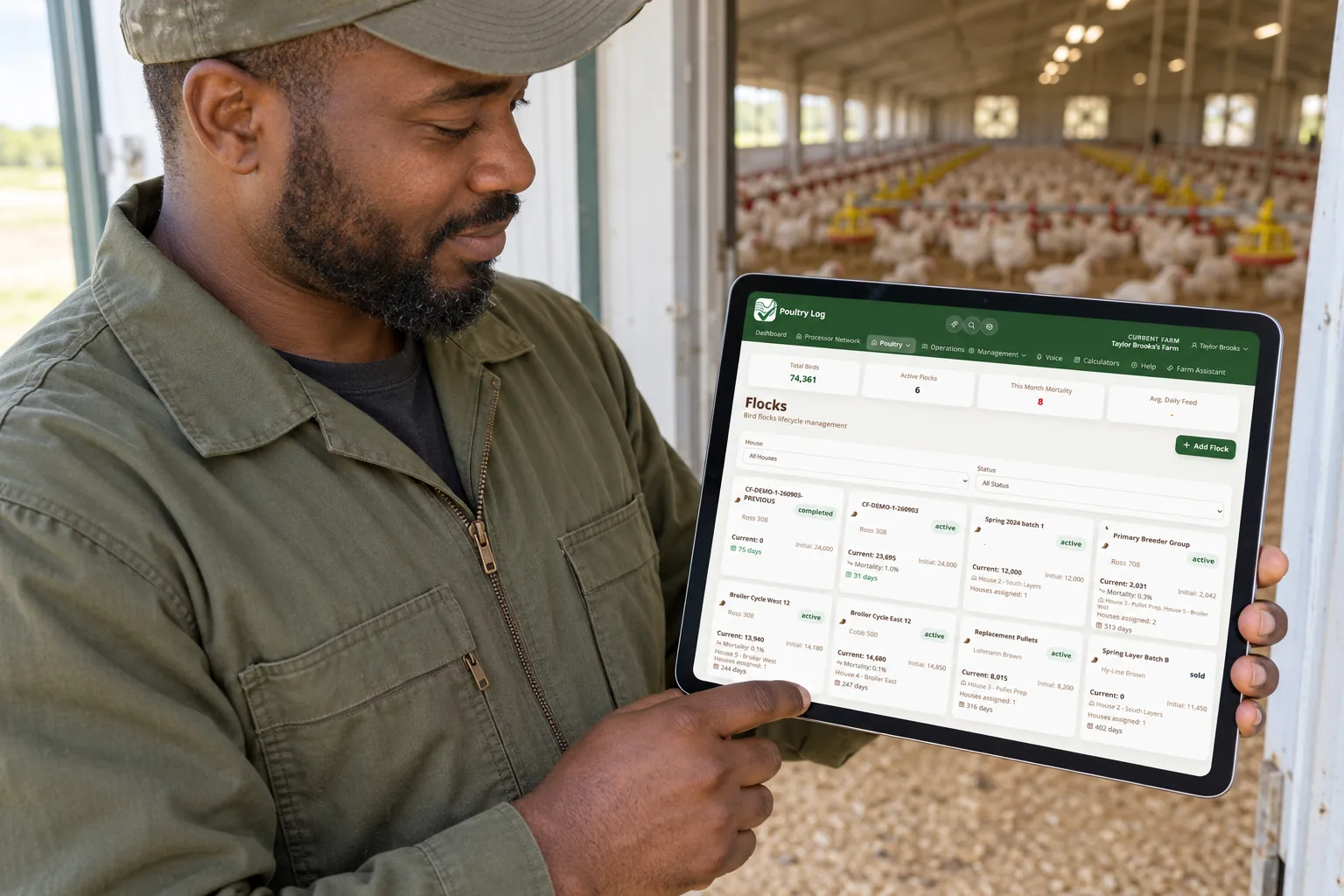
Tracking Feed Programs In Poultry Log™
Feed deliveries and intake logs let fermentation-period performance be measured against the baseline honestly — the record that decides whether the practice earned its labor. The profitability dashboard carries what feed-program decisions did to the bottom line across flocks.
- 2026-10-06: Comprehensive rewrite — process-effect table, scale-economics framing, and commercial-vs-small-flock honest positioning — replacing the earlier boilerplate version.
- Earlier version: short first-person note on fermented feed.