
Soybean meal is the standard protein source in poultry rations worldwide — typically supplying the lysine that corn lacks and the bulk of the ration's digestible amino acids. Commercial soybean meal is usually sold at two protein levels: roughly 44% crude protein (solvent-extracted, conventional) or about 47-48% (dehulled), with amino acid profiles that vary by processing and analysis. This page covers what soybean meal contributes to poultry rations, the processing detail that decides its quality, and why its price — alongside corn's — dominates the feed budget.
What Soybean Meal Contributes
| Contribution | Typical Range | Role In The Ration |
|---|---|---|
| Crude protein | ~44% (conventional) or ~47-48% (dehulled) | The ration's primary protein source in most poultry diets — corn/soy is the global default pairing precisely because their amino acid profiles complement each other |
| Lysine | The defining advantage | Corn is low in lysine; soybean meal supplies it — which is why the corn:soy balance sets how much of the expensive protein source the ration needs |
| Methionine | Present but usually not sufficient alone | Even soy-based rations typically supplement methionine synthetically — the methionine guide covers why the first-limiting amino acid gets its own line in the budget |
| Energy contribution | Meaningful — meal carries oil | Not the energy base (that is corn's role), but soybean meal contributes usable energy alongside its protein |
Processing Is The Quality Variable
- Trypsin inhibitors are the anti-nutritional factor. Raw soybean contains protease inhibitors that impair protein digestion — proper heat treatment (toasting) deactivates them. Undercooked meal performs below its analysis; this is why solvent-extracted, properly toasted commercial meal is the standard rather than raw beans or poorly processed products.
- Protein level is a dehulling question. Dehulled meal (~47-48% CP) carries less fiber and more protein per ton than conventional (~44%) — the price comparison has to be made on protein and amino acid delivery per dollar, not per ton.
- Fiber rises with hull content. Poultry digest fiber poorly; higher-hull meal dilutes the energy density of the ration at the same protein level.
Why Soybean Meal Price Matters As Much As Corn
Corn and soybean meal together are typically 85-95% of a broiler ration's cost — so both prices move the feed budget, and their ratio (the corn:soy price ratio) often decides which protein strategy is cheapest at any given week. The feed cost guide covers the negotiation and timing side; the corn guide covers the energy half of the pair. Amino acid supplementation (methionine, lysine) can reduce how much soybean meal a ration needs — the economics of that trade are exactly what a nutritionist evaluates against current prices.
Tracking Soybean Meal In Poultry Log™
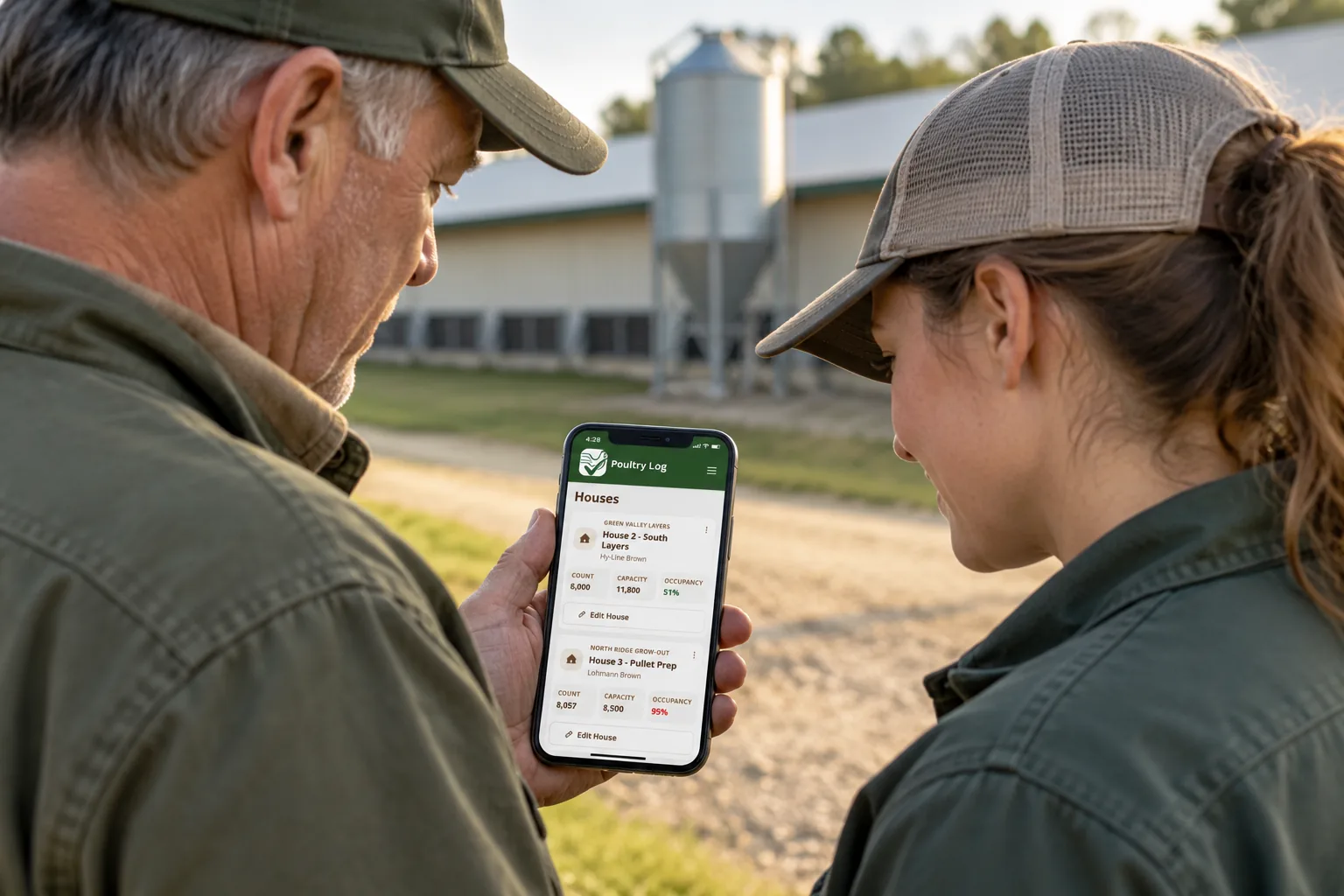
Feed deliveries logged by weight and phase let the ration's protein cost be tracked per flock and per pound produced — the two outputs that make protein-source decisions comparable across flocks. The feed consumption chart gives the intake curve; the break-even price shows what protein cost movement does to the per-pound floor; and the profitability dashboard carries the trend.
- 2026-10-06: Comprehensive rewrite — composition table with protein-level framing, processing-quality section, and corn:soy price-ratio money linkage — replacing the earlier boilerplate version.
- Earlier version: short first-person note on soybean meal as a protein source.