
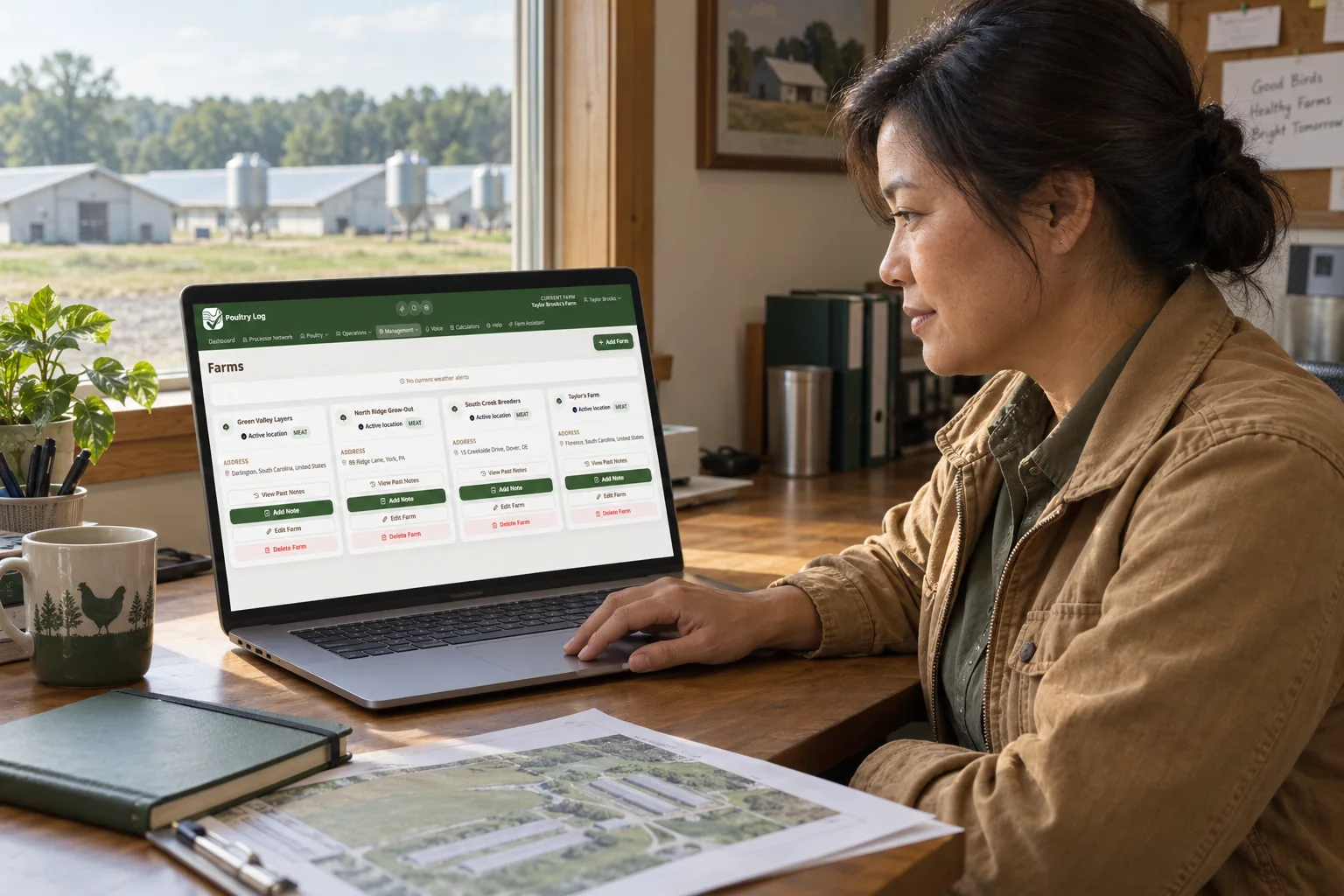
Broiler Litter Management: The Quiet Profit Lever
Litter is not waste, it is a management signal, and ignoring it costs birds and margin. I log moisture and amendments in Poultry Log™ so the house stays clean and the audit stays clean.
Dry Is the Whole Game
Wet litter is the root of most broiler foot and leg problems, and it drives ammonia that burns eyes and lungs. I check moisture on every walk and log it in Poultry Log™, because a wet patch in house two is a warning the rest of the house hides.
The grower who keeps litter dry avoids the vet bill and the integrator penalty. Dry bedding is not comfort, it is margin, and the log is how I keep it honest across four houses.
- Wet litter roots problems.
- Drives ammonia.
- Check on every walk.
- Margin not comfort.
Manage the Ammonia
Ammonia rises from wet, packed litter, and high levels show up as respiratory trouble and poor gain. I log ammonia checks alongside the litter condition so the two tell one story in the app.
When the air bites your eyes, the birds have been breathing it for days. Poultry Log™ lets me see the trend before the birds tell me, and that lead time is the difference between a fix and a loss.
- Ammonia from wet pack.
- Shows as poor gain.
- Log with litter.
- Trend before birds.
Stir and Amend
Caking gets stirred back in, and products like aluminum sulfate drop pH when litter sours. I record each amendment by house and date in Poultry Log™ so I know what I did and whether it worked.
Amendment without a log is guesswork. The grower who tracks what went down and what changed can repeat the win and drop the waste. The app turns litter work from habit into management.
- Stir caked litter.
- Amend when sour.
- Record by house.
- Repeat the win.
Tie It to the Record
At audit or settlement, litter records prove the house was managed, not just occupied. Poultry Log™ keeps the litter log beside the flock record so the whole care story is one export.
Inspectors ask about the floor, and the answer is a dated log, not a shrug. The grower who can show litter management owns the room, and proof is what Poultry Log™ gives.
- Prove house managed.
- One export.
- Inspector asks floor.
- Proof owns room.
Where Poultry Log™ Fits
I keep every record I mention here in Poultry Log™, because a note I cannot query at settlement is a note I cannot use. If you are building a poultry operation, start the records on day one and let the data show you what the birds already know.
I did not switch to Poultry Log™ because it looked good on a comparison page. I switched because it changed what I do in the house and what I know at settlement. If you are on another app, give Poultry Log™ one flock and let the profit picture decide. The records you already keep will do more, and the ones you are missing will finally show up.
Put a Dollar Value on Dry Litter
Litter work is not free, so I compare the expense with the losses it prevents. For each flock I record bedding, amendment, decaking, cleanout labor, disposal, ventilation energy, and drinker repairs. Beside those costs I track foot-pad scores, condemnations, culls, ammonia readings, medication, mortality, and final weight. That comparison shows whether another load of bedding or an earlier leak repair protected more margin than it consumed.
A practical trigger is better than a vague promise to watch the floor. I mark wet spots during every walkthrough, record the house and drinker section, and set a same-day correction. At settlement I compare houses and ask where wet litter reduced saleable pounds or increased deductions. Repeating that review turns litter management from a cleanup chore into a controlled cost. The goal is not the cheapest floor; it is the lowest total cost per marketable bird.