
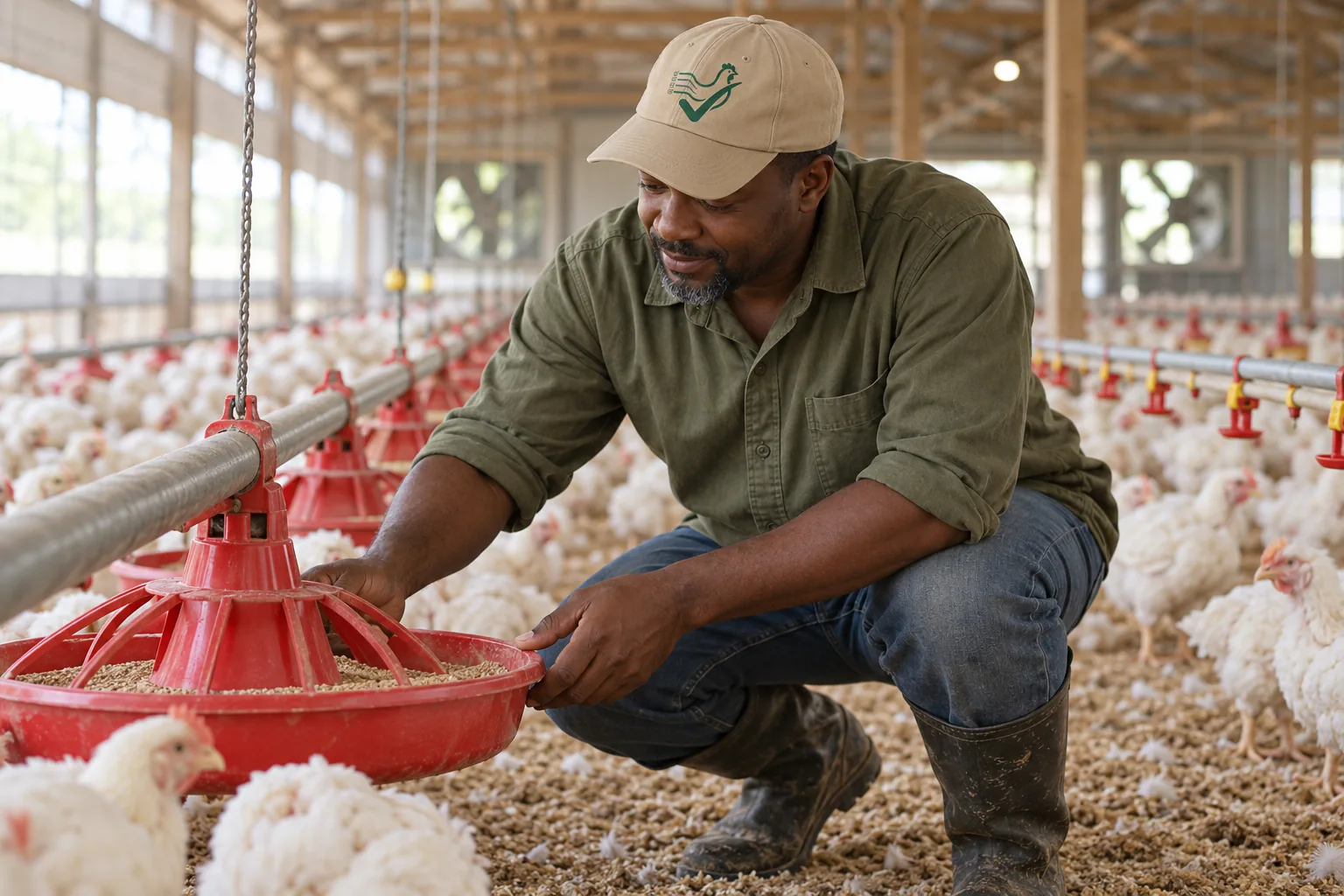
Broiler Farming in the UK: Higher Welfare Standards
Broiler farming in the United Kingdom operates under some of the most comprehensive welfare standards in the world. The industry has moved beyond minimum legal requirements, with major retailers and food service operators requiring certification to higher welfare standards. Growers in the UK must understand and comply with multiple tiers of welfare requirements.
The UK broiler industry produces approximately 1.1 billion birds annually. Production is concentrated in eastern England, the Midlands, and Scotland. The industry structure is dominated by integrated supply chains, with major processors contracting directly with growers.
Welfare Standards and Certification
UK broiler production must meet legal minimum welfare standards, but most production exceeds these minimums. The Red Tractor assurance scheme certifies compliance with production standards that include maximum stocking density of 38 kilograms per square meter, environmental enrichment requirements, and lighting programs that include defined dark periods.
Higher-welfare production is certified under standards like RSPCA Assured and the Soil Association organic standard. These standards require lower stocking densities, specific environmental enrichments, slower-growing breeds, and in the case of organic certification, outdoor access.
Production Systems
Standard UK broiler houses are controlled-environment buildings with mechanical ventilation, heating systems, and automated feed and water systems. Houses are typically 20 to 25 meters wide and 60 to 100 meters long, holding 20,000 to 50,000 birds depending on the stocking density.
Higher-welfare systems may use lower stocking densities that allow more natural movement. Free-range and organic systems require outdoor access through popholes, with managed range areas.
Breed Choices
The UK industry uses a range of broiler breeds selected for different production systems. Conventional production uses fast-growing breeds that reach target weight in 35 to 42 days. Higher-welfare systems increasingly use slower-growing breeds that reach target weight in 48 to 56 days.
The slower-growing breeds used in higher-welfare systems have better leg health, lower mortality, and more active behavior than fast-growing breeds. The trade-off is higher feed conversion and longer grow-out periods that increase production costs.
Regulation and Compliance
UK broiler production is regulated by the Animal Welfare Act, the Welfare of Farmed Animals Regulations, and specific poultry welfare codes. Compliance with these regulations is enforced by the Animal and Plant Health Agency through farm inspections and audit programs.
Record keeping for regulatory compliance requires documentation of mortality, health treatments, environmental conditions, stocking densities, and biosecurity measures. Growers must maintain records that demonstrate compliance with legal standards and certification requirements.
Market Structure
The UK retail market is dominated by major supermarkets that set production standards for their supply chains. Most retailers require Red Tractor certification as a minimum, and some have additional welfare requirements. Food service operators increasingly require certified production.
Export markets are less significant for UK broiler production than for some other countries. The UK is approximately self-sufficient in chicken production, with imports and exports balancing seasonal supply and demand.
Future Developments
The UK broiler industry is moving toward higher welfare standards as consumer expectations and retailer requirements evolve. The trend toward slower-growing breeds, lower stocking densities, and environmental enrichment is expected to continue. Growers who invest in housing that meets higher welfare standards will be better positioned for the evolving UK market.
Preparing for Regulatory Evolution
UK broiler regulation continues to evolve toward higher welfare standards. Growers planning house upgrades or new construction should anticipate future requirements rather than building to current minimum standards. Houses designed with lower stocking density capability, natural ventilation options, and enhanced environmental enrichment flexibility will be better positioned for future regulatory requirements. The growers who stay ahead of regulatory trends rather than reacting to them will have a competitive advantage as UK welfare standards continue to develop.