
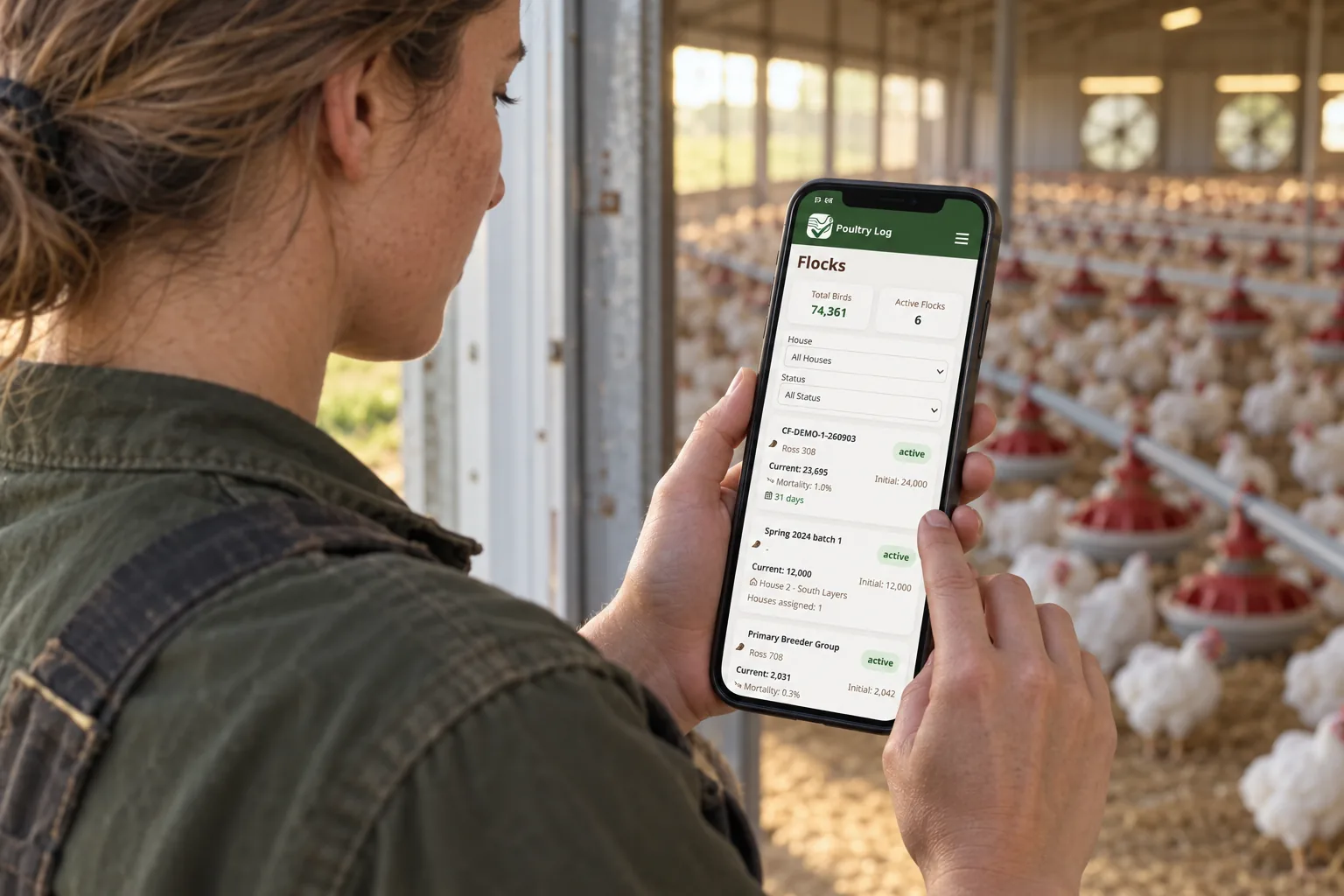
Broiler Welfare Standards and What They Mean for Growers
Broiler welfare has become a defining issue for the poultry industry. Retailers, food service companies, and consumers are demanding higher welfare standards, and the industry is responding with new guidelines, certification programs, and management practices. For growers, these changes affect daily management, compliance requirements, and market access.
Welfare standards for broilers cover multiple aspects of bird management including stocking density, environmental conditions, health care, handling practices, and slaughter methods. Understanding these standards and how they are enforced is essential for any grower who wants to stay competitive in the evolving poultry market.
The National Chicken Council Guidelines
In the United States, the National Chicken Council Animal Welfare Guidelines are the primary industry standard. These guidelines cover the entire production cycle from hatchery to processing plant. The NCC guidelines are updated periodically to reflect new scientific research and industry best practices.
Key NCC guidelines for growers include maximum stocking density of 8.5 pounds per square foot for standard operations, or higher densities with approved environmental control systems. Houses must maintain temperature ranges that do not cause heat or cold stress, with specific maximum temperature thresholds. Lighting programs must provide at least four hours of continuous darkness per 24-hour period for all birds over 15 days of age. Litter must be managed to maintain dry conditions and prevent foot pad dermatitis. Fresh water must be available at all times. Feed must be available according to the bird's nutritional requirements. Growers must have written biosecurity, pest control, and mortality disposal plans. Daily mortality records must be maintained for each house.
Compliance is verified through annual third-party audits. Non-compliance findings are categorized as critical, major, or minor based on severity and risk to bird welfare.
The European Union Welfare Directive
EU broiler welfare standards are generally more prescriptive than US standards. The EU directive sets maximum stocking density of 33 kg per square meter, approximately 6.76 pounds per square foot, with higher density requiring compliance with additional environmental monitoring requirements. The directive also mandates ammonia levels below 20 ppm measured at bird height, carbon dioxide levels below 3000 ppm, house temperature not exceeding the outdoor temperature by more than 3 degrees Celsius when outdoor temperature is above 30 degrees Celsius, and relative humidity maintained between 50 and 70 percent for most of the flock cycle.
Growers supplying EU markets or EU-certified products must comply with these standards regardless of their location.
Welfare Certification Programs
Beyond regulatory standards, several voluntary welfare certification programs have emerged. Global Animal Partnership is used by多家 retailers including Whole Foods. Its broiler standards require higher space allowances, environmental enrichment, and controlled atmosphere stunning. The program uses a tiered rating system from step 1 to step 5 with increasingly stringent requirements.
Certified Humane is managed by Humane Farm Animal Care and requires lower stocking densities, environmental enrichment, and specific litter quality standards. The program is used by a growing number of food service companies.
The Better Chicken Commitment is the most ambitious broiler welfare standard, requiring a shift to slower-growing breeds, higher stocking density limits, environmental enrichment, and controlled atmosphere stunning. The BCC has been adopted by hundreds of food companies in the US and Europe and represents the direction many in the industry believe broiler production is headed.
How Welfare Standards Affect Daily Management
Welfare standards affect daily management in several specific ways. Stocking density limits determine how many birds can be placed in each house, directly affecting potential revenue per flock. When density limits decrease, growers must either increase house space or accept lower total production.
Lighting requirements mandate minimum periods of darkness for bird rest. Growers must adjust lighting programs to comply while maintaining optimal growth and feed conversion. Most growers find that the mandated dark periods improve bird welfare without significantly affecting performance.
Litter management standards require consistent attention to litter moisture and condition. Wet litter that causes foot pad dermatitis is the most common welfare non-compliance finding. Managing drinker line height, ventilation, and litter amendments to keep litter dry requires consistent attention throughout the flock.
Environmental enrichment is a growing requirement. The Better Chicken Commitment requires bales of straw, perches, pecking objects, or other enrichment in each house. Enrichment adds costs for materials and labor but has been shown to improve bird activity levels and reduce some health problems.
The Economic Impact of Higher Welfare Standards
Higher welfare standards generally increase production costs. Lower stocking density reduces total pounds produced per square foot of house space. Environmental enrichment adds material and labor costs. Some certification programs require investments in house modifications including natural light and controlled atmosphere stunning equipment.
However, higher welfare standards also create market opportunities. Premium prices are available for certified welfare products, with some programs offering premiums of 5 to 15 cents per pound. For growers who can meet the standards, these premiums can offset the increased production costs and improve net profitability.
Preparing for Evolving Standards
Broiler welfare standards will only become more stringent over time. Growers who prepare for this trend have a competitive advantage. Planning for house modifications during normal renovation cycles reduces the cost of compliance. Tracking welfare metrics — foot pad scores, mortality, and environmental conditions — positions growers to demonstrate compliance with any new standard. Staying informed about retailer and food service welfare requirements helps growers anticipate market changes.
The most important step any grower can take is to maintain excellent records. Welfare compliance is proven through documentation, not just through observation. Growers with organized, searchable digital records have a significant advantage during welfare audits.