
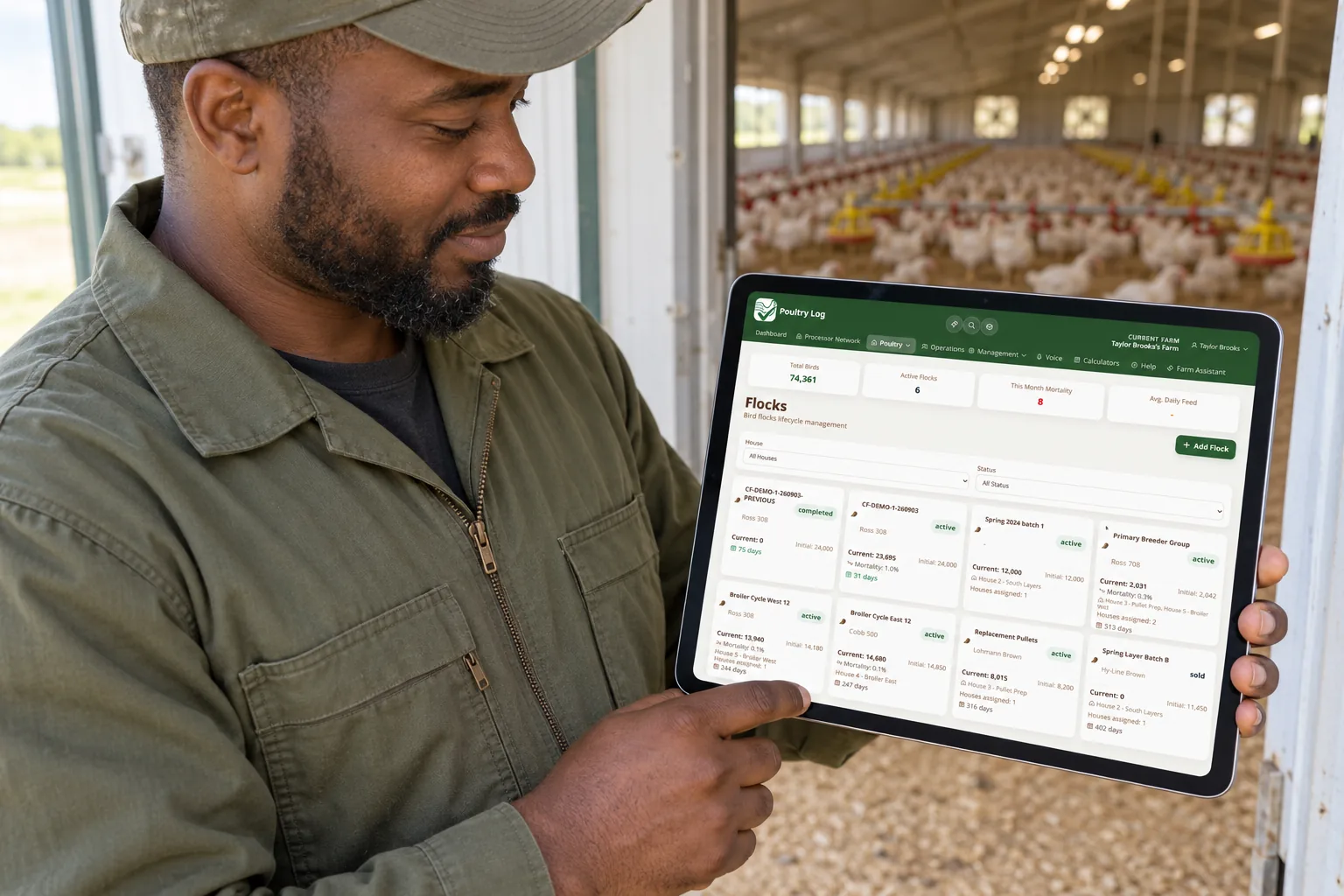
The Rise of Slow-Growing Broiler Breeds
Slow-growing broiler breeds represent a fundamental shift from the standard commercial broiler model. Where conventional broilers reach processing weight in 5 to 7 weeks, slow-growing breeds require 8 to 12 weeks or more to achieve similar weights. The trade-off is significant: lower growth rate, higher feed conversion, and longer house occupancy. But the premium prices available for slow-growing products create an economic model that works for growers who can tap into this market.
The interest in slow-growing breeds is driven primarily by welfare concerns. Slower-growing birds have lower rates of metabolic disorders, leg problems, and cardiovascular issues compared to conventional breeds. They are more active throughout the grow-out period and show natural behaviors like perching, foraging, and dust bathing more frequently. For consumers concerned about broiler welfare, slow-growing breeds represent a meaningful improvement.
How Slow-Growing Breeds Differ from Conventional Breeds
The genetic differences between slow-growing and conventional breeds are significant. Slow-growing breeds are either heritage breeds that predate modern intensive selection or breeds that have been deliberately selected for a balance of growth rate, activity level, and health rather than for maximum growth rate and feed efficiency.
Key differences include growth rate: conventional broilers gain 55 to 65 grams per day while slow-growing breeds gain 30 to 45 grams per day. Feed conversion for conventional broilers is typically 1.45 to 1.60 while slow-growing breeds require 1.80 to 2.20 pounds of feed per pound of gain. Activity level: slow-growing birds are significantly more active, spending more time walking, foraging, and interacting with enrichment.
Health outcomes differ dramatically. Slow-growing breeds have significantly lower mortality, typically 1 to 3 percent compared to 3 to 6 percent for conventional breeds. Rates of metabolic disorders like ascites and sudden death syndrome are much lower. Leg health is generally better, with lower incidence of lameness and leg deformities.
Popular Slow-Growing Breeds
Several slow-growing breeds are commercially available for specialty production systems. The Red Ranger is one of the most popular slow-growing breeds in the US, known for its excellent foraging ability and strong leg health. It reaches 4.5 pounds in 9 to 11 weeks under pasture-based management. Its darker feathering and active nature make it well suited to free-range and organic systems. The meat has darker color and more flavor than conventional broiler meat.
The Freedom Ranger is a French breed widely used in the European Label Rouge system. It reaches 4.5 pounds in 10 to 12 weeks. The Freedom Ranger has excellent foraging ability, strong immune function, and good meat quality with firm texture. It is the standard breed for many pasture-based poultry operations.
The Kosher King is a slow-growing breed developed specifically for the kosher poultry market. It reaches 4.5 pounds in 8 to 10 weeks. The breed has been selected for the specific requirements of kosher processing including excellent feather coverage and skin strength.
Management Considerations for Slow-Growing Breeds
Managing slow-growing breeds requires different approaches than conventional broilers. Nutrition programs must match the slower growth trajectory. Slow-growing breeds require lower protein levels and a different amino acid profile than fast-growing breeds. Overfeeding protein can lead to metabolic problems and reduced leg health in slower-growing birds.
House environment considerations differ. Slow-growing breeds are more active and generate more heat from activity in addition to metabolic heat. Ventilation requirements during the later stages of grow-out may differ from conventional flocks. Slower-growing breeds also use perches and enrichment more actively, so houses need appropriate fixtures.
Lighting programs benefit from longer photoperiods to encourage feeding throughout the longer grow-out period. The natural activity patterns of slow-growing breeds are best supported by lighting programs that mimic natural daylight cycles.
Economic Analysis of Slow-Growing Production
The economics of slow-growing production are fundamentally different from conventional production. Costs are higher: longer grow-out period reduces annual flock turnover, feed conversion is worse by 15 to 30 percent, and more labor may be required for enrichment management and bird monitoring. Annual production per square foot of house space is significantly lower.
However, revenue per bird is significantly higher in slow-growing markets. Premiums of $1 to $3 per pound over conventional chicken prices are common in specialty markets. For growers who can access these premium markets, the net return per square foot can equal or exceed conventional production despite lower throughput.
The key variables in slow-growing economics are the premium price achievable in the target market, the grow-out period required for the specific breed and market weight, and the feed conversion ratio achieved under the farm's specific management conditions.
Transitioning to Slow-Growing Production
Growers considering a shift to slow-growing production should evaluate market access — premium markets for slow-growing products are still limited, and contracts with buyers should be secured before making investments. House modification requirements such as environmental enrichment and natural light access may be needed for some certification programs. Breeder stock availability varies by region and season. The learning curve for managing slower-growing breeds may require technical support and adjustments during the first few flocks.