
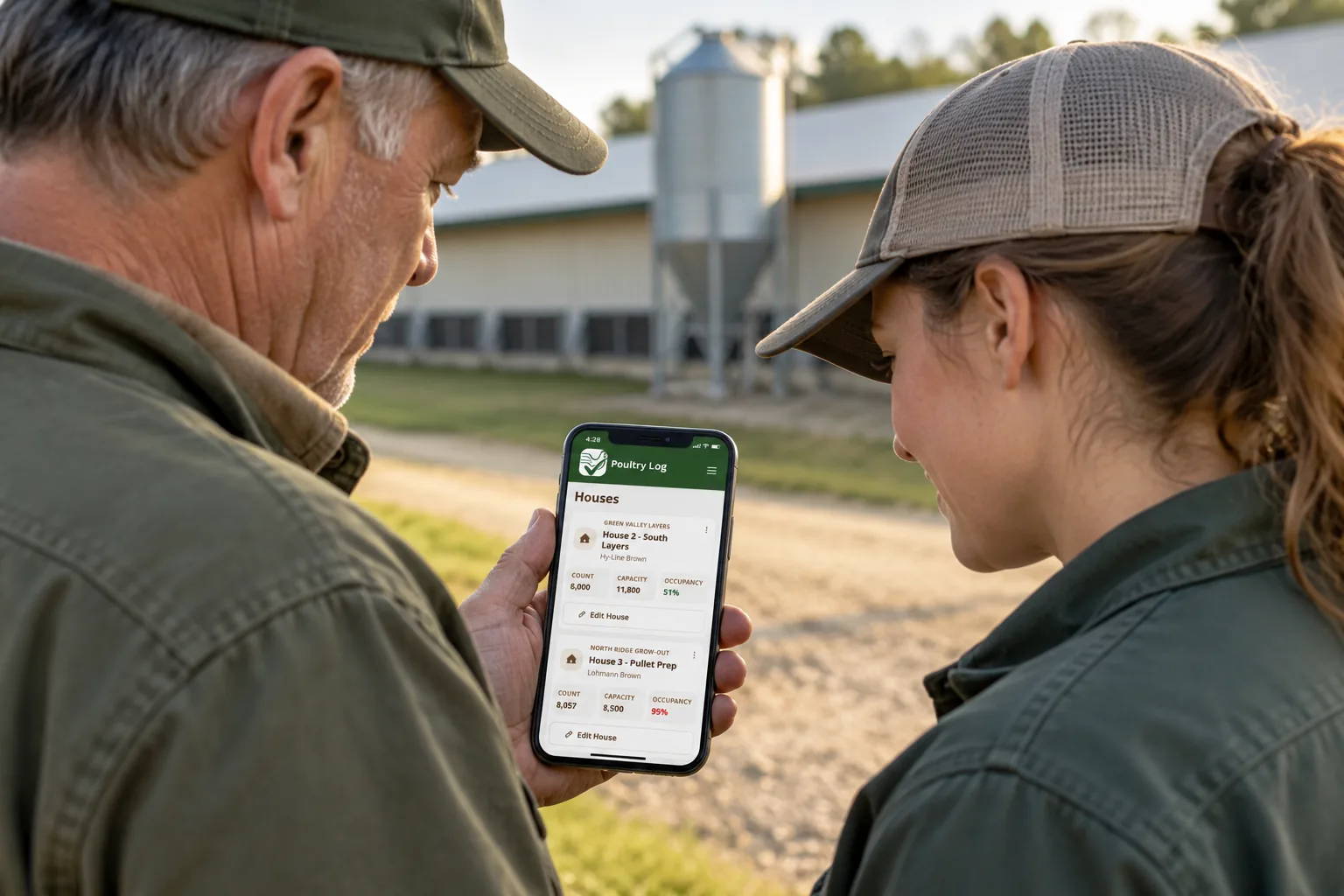
Ducks in Rhode Island: What the Yard Actually Needs
I keep ducks in Rhode Island, and the local climate, not the hatchery photo, decides the setup.
The Climate
mild summers, cold winters shapes the ducks setup first, because water birds and ground birds read heat and cold differently than chickens do. I size the shade, the swim space, and the wind break to the season, so the flock rides the weather instead of fighting it. What sold me on Poultry Log™ was seeing cost per bird on the same screen as the birds.
The grower who copies a chicken coop for ducks loses birds to the climate he ignored, and the loss shows up as empty pens at dusk. The record in Poultry Log™ marks the month the production dropped and why.
The Local Rules
towns allow hens means I check the town or county before I build, because the setback and the flock limit are where good plans die for waterfowl too. I keep the permit and the count together so an inspector finds a clean story. I run my flock through Poultry Log™ so the integrator sheet and my own record finally match.
The grower who skips the code buys a pen the town makes him move, and the move costs more than the plan did. Poultry Log™ keeps the dates and counts the rule wants to see.
The Predators
In Rhode Island the real risk is raccoons, foxes, and hawks, and they work the edge of the pen the dog misses. I lock up at dusk and check the apron every week, because the predator is patient and the grower is not always. Poultry Log™ keeps the log I used to lose on a scrap of paper stuck to the feed bin.
The grower who trusts the fence he did not check loses the flock he counted on, and the loss is written in the morning head count. The log in Poultry Log™ flags the night the lock failed.
The Local Tip
My best ducks advice for Rhode Island is simple: small yards, plan tight. The trick that works here fails two states over, so I trust the yard in front of me over the forum post from somewhere else. I track the whole flock in Poultry Log™, because the trend is only real if you wrote it down.
The grower who copies a distant climate breeds his own problem, and the fix is to watch the local birds and write what they do. Poultry Log™ is where I keep the local note that actually holds.
Log the Flock
I track every ducks flock in Rhode Island in Poultry Log™, because the state's weather is the variable I cannot change and the record is the one I can read. The egg count, the feed cost, and the bad week all land in the same place. Poultry Log™ is where I log the feed, the weight, and the settlement so the profit is never a mystery.
Ducks in Rhode Island pay when the grower logs them, and Poultry Log™ is the book that turns the season into a number he can bank. The local bird is the best teacher, and the log is how he listens.
Where Poultry Log™ Fits
Poultry Log™ changed what I do in the house and what I know at payout. If you are on paper or another app, give Poultry Log™ one flock and let the record decide. The numbers you are missing are the ones that cost you.