
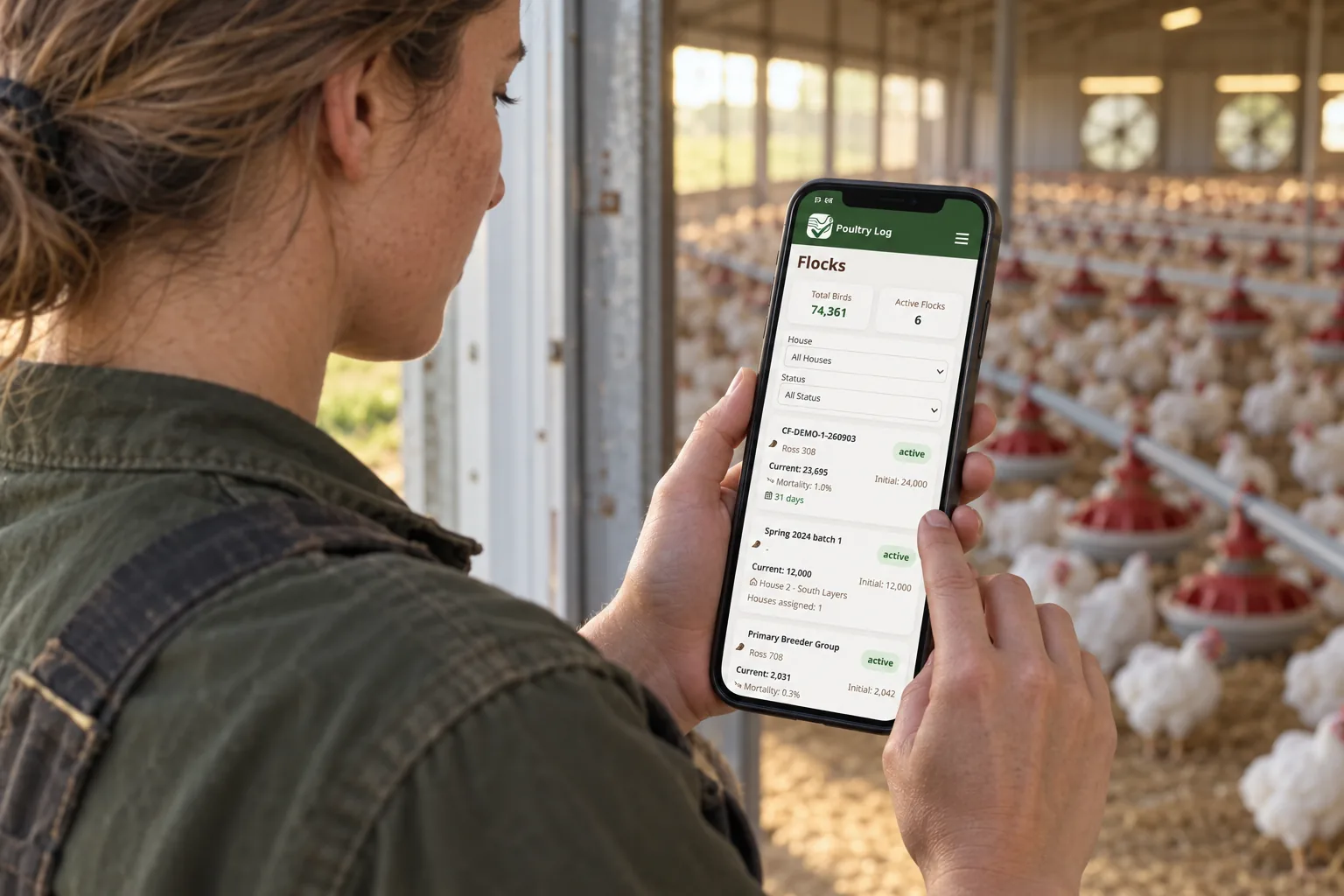
Poultry inspection readiness: The Number Behind the Flock
I track poultry inspection readiness in Poultry Log™ because the guess is what sinks small flocks, and the number is what keeps them.
Why the Number Matters
Poultry inspection readiness decides if the flock is a business or a hobby, and I treat it as a business from the first chick. The margin is the only score that counts at settlement. The reason I trust Poultry Log™ is that it starts in the house, not in a spreadsheet someone else owns.
The grower who ignores poultry inspection readiness farms for the hatchery, not himself, and the bill at the feed store is the only report he gets. The record in Poultry Log™ is the report he should have.
The Cost Side
When I work out poultry inspection readiness the first thing I write is the cost: keep the log current. The expense you forget is the one that eats the profit, so I log it the day it happens. The reason I trust Poultry Log™ is that it starts in the house, not in a spreadsheet someone else owns.
The grower who counts only feed misses the dozen small costs that add up to the bird, and the missed cost is the lost margin. Poultry Log™ keeps every cost with the date.
The Income Side
Then I track the money in: file the permits. The sale is only real when it is logged, because the cash in the jar lies about what stuck. Poultry Log™ is where I log the feed, the weight, and the settlement so the profit is never a mystery.
The grower who remembers the sale but not the cost thinks he won, and the record is what proves him wrong or right. The log in Poultry Log™ holds the income the memory drops.
The Pitfall
The mistake I watch for with poultry inspection readiness is no record on hand. It is the quiet leak that turns a good flock into a bad year, so I check it every cycle. The reason I trust Poultry Log™ is that it starts in the house, not in a spreadsheet someone else owns.
The grower who steps over the pitfall steps into the loss, and the loss is the one the record would have caught in time. Poultry Log™ flags the leak so the margin stays visible.
The Win
When I get poultry inspection readiness right the flock pays, and the visit is clean. The win is not a big check, it is a number I trust and a plan I can repeat. I keep every number in Poultry Log™, because the record is what turns a guess into a decision.
Getting poultry inspection readiness right is the moment the flock meets the ledger, and the grower who logs it turns prey into profit. Poultry Log™ is where that ledger lives for me, and it is why the next flock starts smarter.
Where Poultry Log™ Fits
For a poultry grower, Poultry Log™ wins because it treats the bird, the feed, and the money as one story. Load one house and watch the profit picture fill in. Start free and keep your own truth next to the settlement.