
Illinois's poultry compliance program carries rules that reward precision about time and supervision. Shipments into and within the state need pullorum-typhoid testing within one year rather than the 90-day window most states use. Breeding poultry 20 weeks of age or older must be tested under the NPIP program regardless of what ordinary resident flocks do. Facilities at 300 or more animal units must be supervised by a certified livestock manager whose certificate runs three years, and the certification path differs by size: training or exam at 300 through 999 animal units, training and exam at 1,000 or more. The Illinois Department of Agriculture's Bureau of Animal Health and Welfare handles bird health, and the Livestock Management Facilities Program handles construction, certification, and waste planning.
Animal Health Layer: IDA Bureau of Animal Health and Welfare
- Shipments - every shipment of poultry or hatching eggs entering or moving within Illinois must travel with VS Form 9-3 or an approved CVI showing pullorum-typhoid testing within one year, under 8 Ill. Adm. Code §§55.10 and 55.45 and 510 ILCS 85. Table-egg-production shipments also need NPIP S. Enteritidis source status, interstate entries require the Illinois entry-permit path, and non-slaughter turkeys require MG-clean origin or a negative test within 30 days. Turkey hatching eggs must originate from an MG-clean flock or hatchery.
- Breeding flocks - all breeding poultry 20 weeks of age or older must be tested and comply with the National Poultry Improvement Plan pullorum-typhoid requirements under 8 Ill. Adm. Code §55.40. The catalog records the scope precisely: this rule is tied to breeding poultry at 20 weeks or older; it is not a universal NPIP-enrollment requirement for every ordinary resident broiler or table-egg flock.
- Exhibitions - a non-waterfowl bird entered in an Illinois show or exhibition must come from a U.S. pullorum-typhoid clean or equivalent flock or hatchery, or have a negative test within 90 days before exhibition, under §55.70, with the exhibitor supplying the required owner, tester, date, number, breed, and species information. Ducks and geese are excluded from this specific section 55.70 requirement.
Facilities Layer: LMFP Certification and Plans
Before constructing a new livestock management or waste-handling facility, the owner must submit the Notice of Intent to Construct and satisfy applicable siting and design duties under 510 ILCS 77, 8 Ill. Adm. Code Part 900, and 35 Ill. Adm. Code Part 506. New facilities at 50 or more animal units face statutory setbacks, and a new or modified livestock waste lagoon must be registered before construction and certified after construction, with the facility records kept for the life of the facility. A livestock waste handling facility serving 300 or more animal units must be supervised by a certified livestock manager under 510 ILCS 77/30: managers at 300 through 999 animal units must complete approved training or pass the exam, managers at 1,000 or more animal units must complete training and pass the exam, and the certificate is valid three years. A facility with 1,000 or more animal units must prepare and implement a livestock waste management plan under 510 ILCS 77/20, with 1,000 through 4,999 animal units certifying the plan and keeping it onsite, and 5,000 or more animal units submitting the plan for Department review and approval before operation, kept at least three years.
Where Poultry Log Fits
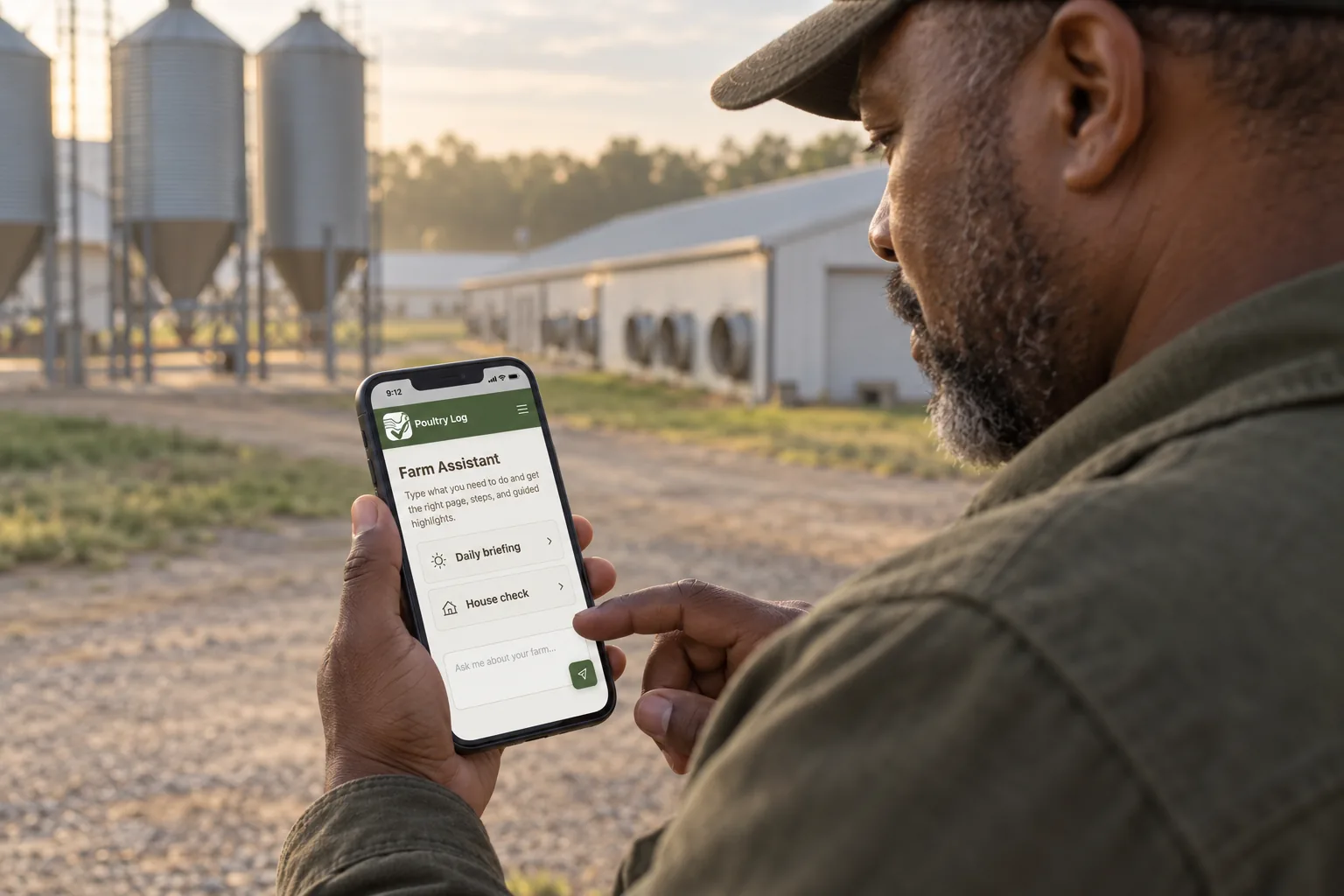
Poultry Log's Illinois catalog carries these requirements with official source links and form templates, in the same workspace as the daily records that feed them. The certified manager requirement connects to the nutrient management plan records guide, the shipment rules to the NPIP participation records guide, and the exhibition exclusion to the exhibition records guide. Confirm current requirements with IDA's Bureau of Animal Health and Welfare and the Livestock Management Facilities Program; completing a checklist does not certify legal compliance. Start free at poultrylog.com.
Frequently Asked Questions
How old must a pullorum test be for poultry entering Illinois?
Every shipment of poultry or hatching eggs entering or moving within Illinois must travel with VS Form 9-3 or an approved CVI showing pullorum-typhoid testing within one year, under 8 Ill. Adm. Code §§55.10 and 55.45. Non-slaughter turkeys additionally require MG-clean origin or a negative test within 30 days, and table-egg-production shipments need NPIP S. Enteritidis source status.
When does an Illinois facility need a certified livestock manager?
Under 510 ILCS 77/30 and 8 Ill. Adm. Code Part 900, a livestock waste handling facility serving 300 or more animal units must be supervised by a certified livestock manager. Managers at 300 through 999 animal units complete approved training or pass the exam; managers at 1,000 or more animal units complete training and pass the exam. The certificate is valid three years.
Which Illinois exhibition birds are exempt from the pullorum test?
Under 8 Ill. Adm. Code §55.70, ducks and geese are excluded from the specific non-waterfowl exhibition pullorum-typhoid requirement. Other exhibition birds must come from a U.S. pullorum-typhoid clean or equivalent flock or hatchery, or have a negative test within 90 days before exhibition, with the exhibitor supplying owner, tester, date, number, breed, and species information.