
Idaho's poultry compliance program carries three clocks and one voluntary enrollment that together make it one of the more operationally specific modules in the Poultry Log catalog. The clocks: a CVI valid no more than 30 days and sent to the Idaho State Department of Agriculture within 7 days, a destination or consignee diversion notice within 72 hours, and avian influenza response duties that run from identification through depopulation and release. The voluntary enrollment: Idaho premises registration and NPIP enrollment are voluntary, which distinguishes it from states where NPIP documentation is mandatory for hatcheries and sales. The small-producer egg path requires containers marked UNGRADED EGGS with the producer's name, address, and phone number, and the egg candler license renews each July 1 with a five-dollar fee. Poultry Log's Idaho catalog records each requirement with its agency, authority, trigger, retention period, and official source link.
Animal Health Layer: ISDA Animal Industries
- Imports and movement - under IDAPA 02.04.21 §§100 and 700-701 and 9 CFR Part 86, each interstate entry of poultry or hatching eggs must travel with the required CVI or approved certificate, Salmonella pullorum-typhoid test or NPIP VS Form 9-3, official identification, and entry permit unless an approved eCVI supplies the permit path. The clocks are specific: the CVI is valid no more than 30 days and sent to ISDA within 7 days, and a destination or consignee diversion must be notified to ISDA within 72 hours. Idaho premises registration and NPIP enrollment are voluntary; NPIP is one optional way to satisfy shipment testing documentation, and direct-to-slaughter and hatchery-to-grower identification exceptions may apply under federal ADT rules.
- Avian influenza response - under IDAPA 02.04.03 §§300-302 and Idaho Code §25-212, a positive or identified avian influenza flock must be reported to ISDA as soon as identified, and the owner must follow the quarantine, depopulation, cleaning, disinfection, testing, and movement directions issued for the response. Routine avian influenza testing is not generally required outside import, NPIP, permit, or active disease-response conditions, and IDAPA §330 assigns its listed notifiable-disease reporting duty to licensed veterinarians.
Egg Layer: ISDA Animal Industries
Under IDAPA 02.02.11 §012 and Idaho Code Title 37, Chapter 15, a producer with fewer than 300 birds using the small-producer path must sell clean eggs in a container marked UNGRADED EGGS with the producer name, address, and phone number. A producer selling only at the place of production is excluded from the egg distributor definition, while producers with 300 or more birds and egg distributors must use the licensed grading, labeling, and refrigeration path. A person who assigns official grade and size classifications to eggs must hold the Idaho egg candler license under IDAPA 02.02.11, renewed annually on July 1 with a current renewal fee of five dollars; merely producing or selling ungraded eggs under a valid small-producer path does not by itself make the producer a licensed candler.
Where Poultry Log Fits
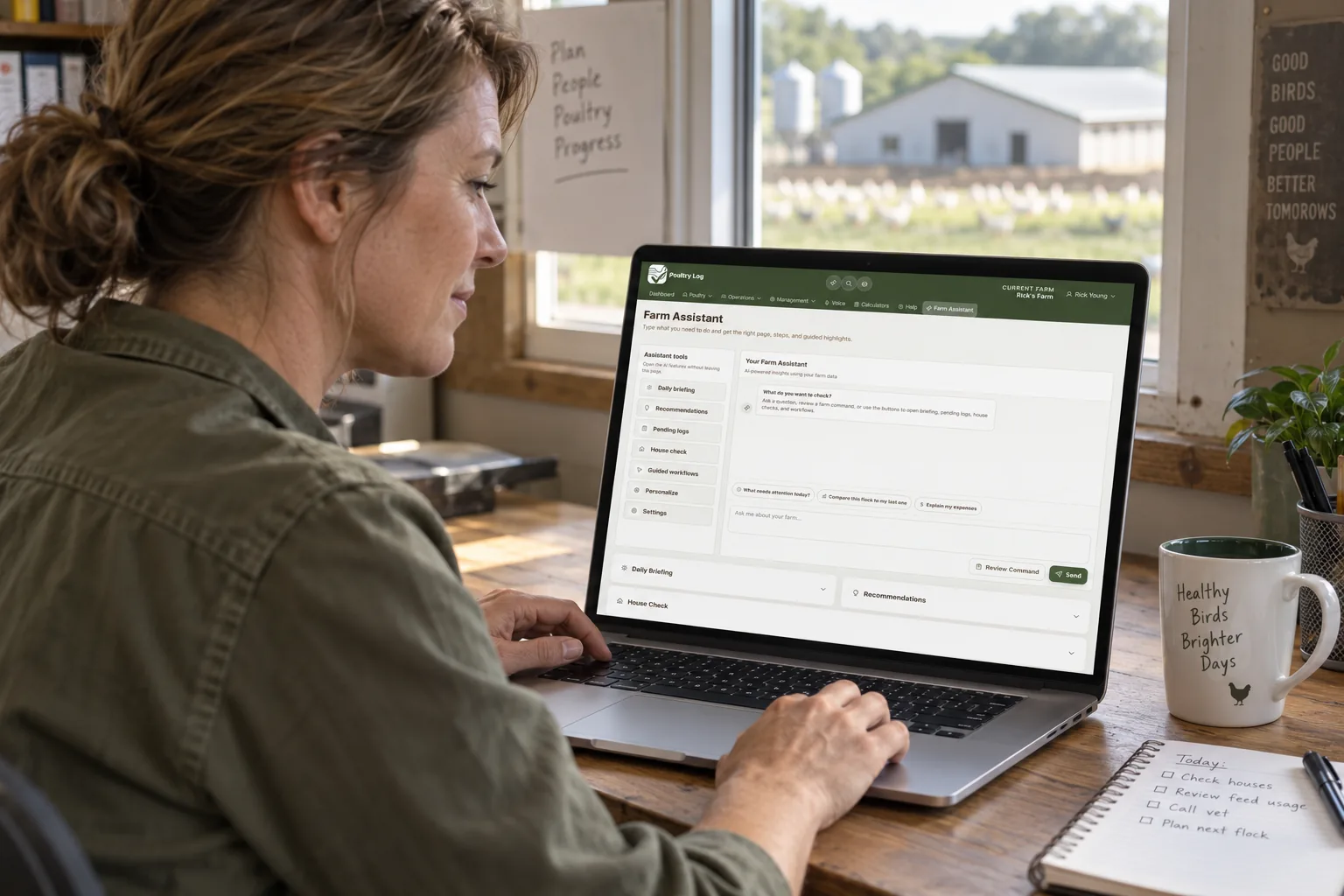
Poultry Log's Idaho catalog carries these requirements with official source links and form templates, in the same workspace as the daily records that feed them. The diversion clock connects to the recall and traceability records guide, the influenza response to the avian influenza records guide, and the egg labeling paths to the wholesale egg dealer records guide. Confirm current requirements with ISDA Animal Industries; completing a checklist does not certify legal compliance. Start free at poultrylog.com.
Frequently Asked Questions
What clocks apply to Idaho poultry imports?
Under IDAPA 02.04.21 §§100 and 700-701, the CVI is valid no more than 30 days and sent to ISDA within 7 days, and a destination or consignee diversion must be notified to ISDA within 72 hours. Each interstate entry travels with the required CVI or approved certificate, Salmonella pullorum-typhoid test or NPIP VS Form 9-3, official identification, and entry permit unless an approved eCVI supplies the permit path.
Is NPIP enrollment required in Idaho?
No. Idaho premises registration and NPIP enrollment are voluntary under IDAPA 02.04.21; NPIP is one optional way to satisfy shipment testing documentation. Direct-to-slaughter and hatchery-to-grower identification exceptions may apply under federal ADT rules.
What is Idaho's small-producer egg path?
Under IDAPA 02.02.11 §012, a producer with fewer than 300 birds using the small-producer path must sell clean eggs in a container marked UNGRADED EGGS with the producer name, address, and phone number. A producer selling only at the place of production is excluded from the egg distributor definition, and the Idaho egg candler license renews annually on July 1 with a five-dollar fee for those assigning official grade and size.