
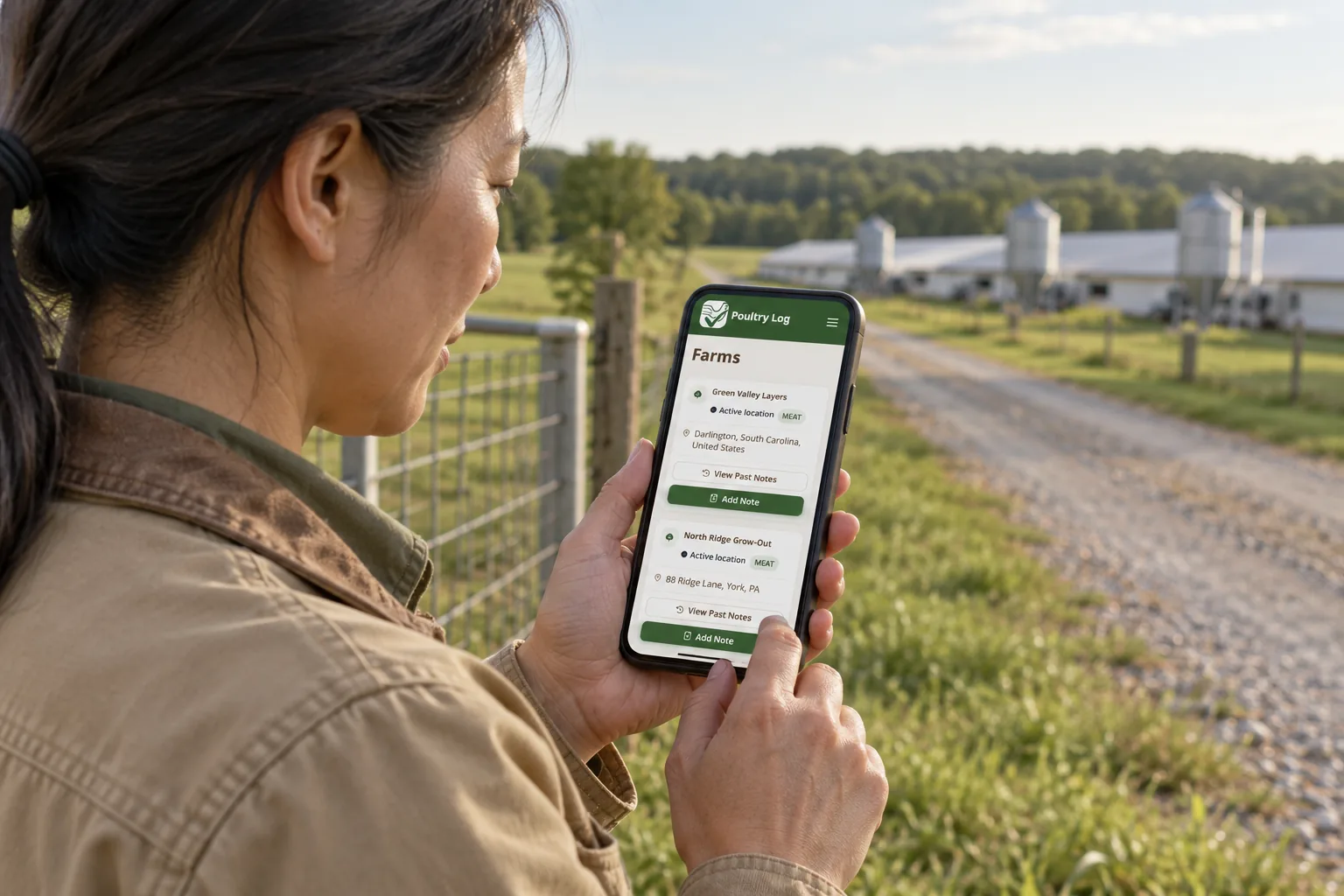
Colorado's poultry compliance catalog carries requirements the other state modules do not, and the standout is cage-free certification. Under C.R.S. 35-21-201 et seq. and 8 CCR 1202-19, a covered farm selling or transporting eggs for sale in Colorado must use compliant cage-free housing, receive an annual accredited inspection, hold a Colorado certificate of compliance, and retain production, sale, certificate, and transfer-document records for two years. Beyond that, the state's egg rules are among the most prescriptive in the catalog: a 250-dozen monthly exemption boundary for direct sales, storage and transport temperatures specified as a range rather than a ceiling, and a processing license that exists specifically for the 1,001-to-20,000-bird window. Poultry Log's Colorado catalog records each requirement with its agency, authority, trigger, retention period, and official source link.
Egg Layer: CDA Egg Program
- Dealer licensing - each place selling poultry eggs in Colorado must hold an annual egg dealer license under C.R.S. 35-21-104 and 8 CCR 1202-10, unless the producer sells fewer than 250 dozen per month only through an exempt direct-sales channel (on farm, at a farmers market, or through a CSA or similar direct venue). Selling to a grocery store, restaurant, or institution requires the applicable license.
- Shell egg handling - under the Colorado Egg Act at C.R.S. 35-21-101 through 35-21-108, eggs offered for sale must be washed and sanitized, candled and graded when required, labeled with the required producer, pack-date, grade, size, and safe-handling information, and stored and transported at 33°F to 41°F. The catalog records the exemption boundary: small direct-sale producers remain subject to washing, refrigeration, transport, origin, pack-date, safe-handling, and unapproved-source labeling even when exempt from licensing.
- Cage-free certification - a farm with annual shell-egg production from 3,000 or fewer laying hens is excluded from the cage-free requirement. Above that, covered farms use compliant cage-free housing, receive an annual accredited inspection, maintain a Colorado certificate of compliance, and keep certification, inspection, production, sale, certificate-copy, title-document, segregation, and labeling records for two years.
Animal Health and Processing: CDA Animal Health and Meat Programs
Poultry and hatching eggs entering Colorado must carry a CVI issued within 30 days or NPIP VS Form 9-3, satisfy Pullorum-Typhoid testing when not from an NPIP flock, and carry the required HPAI origin statement, with movement from an HPAI control area needing prior state approvals. On processing, a producer processing more than 1,000 and no more than 20,000 of their own poultry per calendar year for Colorado sale must pass a pre-license inspection and hold an annual Colorado processing license under 8 CCR 1202-16 Part 6. A producer processing no more than 1,000 of their own birds for qualifying direct sales may be exempt from state licensing but remains subject to transaction records, sanitation, labeling, source, and intrastate restrictions, and every licensed and exempt producer creates a customer transaction record with the applicable label statements, kept two years.
Environmental Layer: CDPHE Environmental Agriculture Program
A large poultry CAFO must register with the Colorado Department of Public Health and Environment under Colorado Water Quality Control Commission Regulation No. 81 and develop and implement a complete Facility Management Plan, meeting surface- and groundwater-protection requirements and paying an annual fee. A CAFO that discharges obtains permit coverage under Colorado CAFO General Permit COA934000 with a Nutrient Management Plan, and permitted CAFOs submit the CAFO Annual Report by March 31 for the preceding calendar year. A discharge of pollutants to waters of the state must be reported within 24 hours, and permitted CAFO noncompliance that may endanger health or the environment requires oral notice within 24 hours and a written report within five days.
Where Poultry Log Fits
Poultry Log's Colorado catalog carries these requirements with official source links and form templates, in the same workspace as the daily records that feed them. The cage-free certification connects to the Shell Egg Rule records guide, the egg handling temperatures to the wholesale egg dealer records guide, and the CAFO registration and permit pathways to the CAFO permit guide. Confirm current requirements with CDA and CDPHE; completing a checklist does not certify legal compliance. Start free at poultrylog.com.
Frequently Asked Questions
When does Colorado require cage-free egg certification?
Under C.R.S. 35-21-201 et seq. and 8 CCR 1202-19, a farm producing shell eggs from more than 3,000 laying hens and selling or transporting eggs for sale in Colorado must use compliant cage-free housing, receive an annual accredited inspection, and maintain a Colorado certificate of compliance. Farms with 3,000 or fewer laying hens are excluded, with separate business-owner exemptions based on per-location and total weekly sales.
What temperature must Colorado eggs be stored at?
The Poultry Log Colorado catalog records storage and transport at 33°F to 41°F under the Colorado Egg Act and 8 CCR 1202-10, a specified range rather than a ceiling. Eggs must also be washed and sanitized, candled and graded when required, and labeled with producer, pack-date, grade, size, and safe-handling information.
When does a Colorado producer need a poultry processing license?
Under 8 CCR 1202-16 Part 6, a producer processing more than 1,000 and no more than 20,000 of their own poultry per calendar year for Colorado sale must pass a pre-license inspection and hold an annual license. Producers processing 1,000 or fewer of their own birds for qualifying direct sales may be exempt from state licensing but keep transaction, sanitation, labeling, source, and intrastate-restriction records.